Sunglasses Manufacturer | OEM & ODM Eyewear Factory | Seesun
Sunglasses Manufacturer | OEM & ODM Eyewear Factory | Seesun
COMPARISON GUIDE
Choosing OEM or ODM depends on how much of your eyewear design is already defined. OEM generally suits a brand that controls the frame design and key specifications but needs a manufacturer to review feasibility, make samples and execute production. ODM fits projects where important decisions about the frame, materials or construction still require development. Private label usually begins with an available frame and concentrates on its approved branding and configuration.
For brands comparing OEM vs ODM eyewear, the useful question is not which label sounds more comprehensive. It is who defines the remaining details, who approves changes and what the production team will eventually manufacture against. Those boundaries can vary within one collection. The distinction becomes clearer in three completed SEESUN customer projects: a metal optical frame built from detailed brand drawings, a retro sunglasses concept developed collaboratively, and an existing-frame order with buyer-controlled technical requirements.
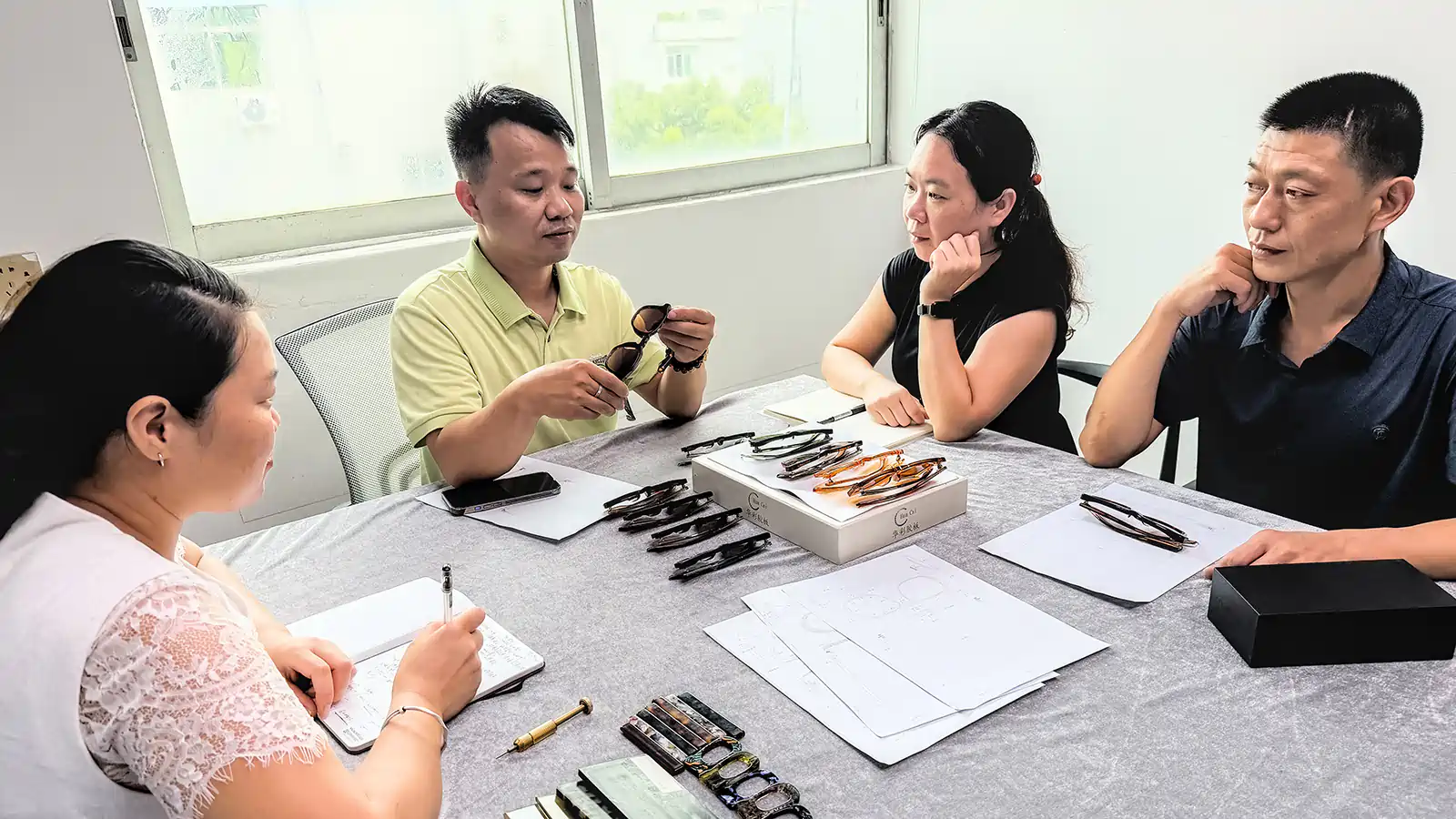
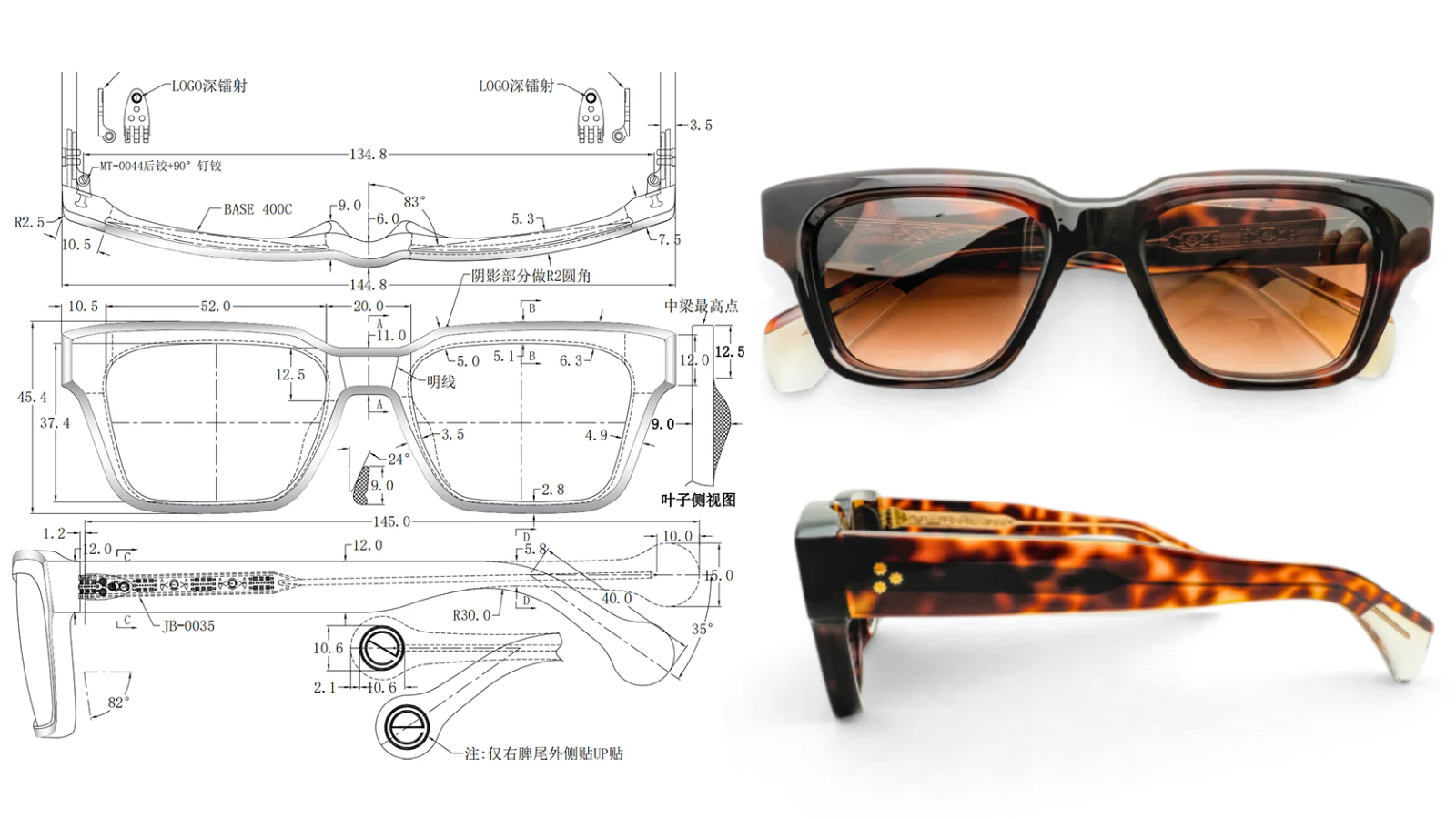
In OEM eyewear manufacturing, the buyer normally supplies a substantially defined product: CAD or a tech pack, critical dimensions, material and component requirements, and sometimes a physical reference or approved sample. The brand retains control of the features that must not change. The factory assesses how those requirements can be produced and checks the resulting samples against them.
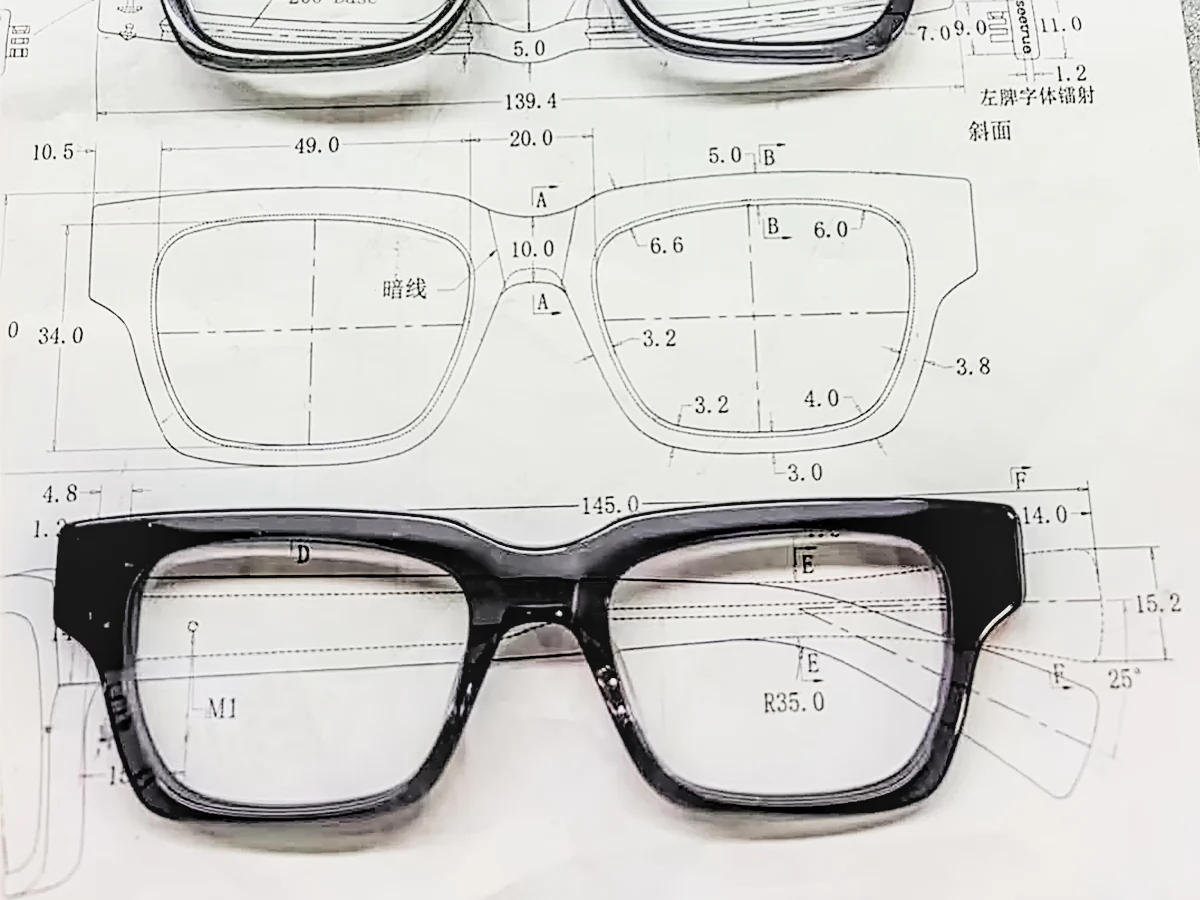
SEESUN’s engineering review covers manufacturability, material and hardware availability, component fit and the proposed production route. A technical correction may be necessary even when the drawing is complete. That does not give the factory permission to change a locked silhouette, fitting dimension or specified component without the brand’s approval.
Consider OEM sunglasses for which a specified hinge becomes difficult to source. An alternative may be available, but the manufacturer should identify its implications and obtain approval before substitution. The same principle applies to changes in surface finish or assembly construction. OEM is not manufacturing without engineering input; it is manufacturing with a clearly defined decision owner.
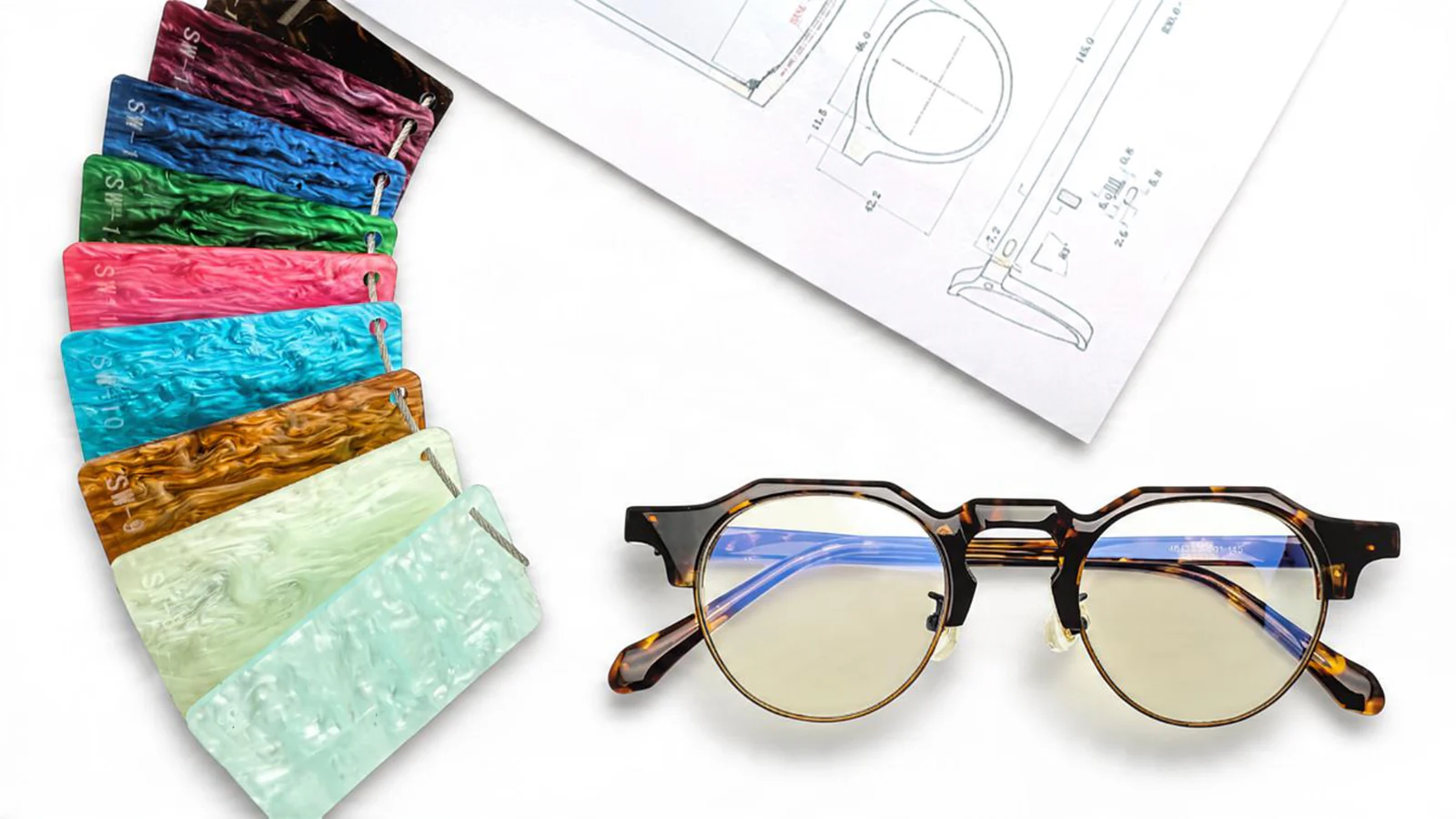
ODM eyewear development gives the manufacturer a larger role in defining the product. A buyer may have a brand identity, target market and style references but still lack confirmed frame dimensions, material thickness, lens specifications or component construction. Those open decisions form part of the development scope.
The meaning of ODM varies between suppliers. It may involve a supplier-originated design or a frame developed jointly from the buyer’s concept. In SEESUN projects, supplier-led or shared design work can include proposals for structure, materials, dimensions, samples and, where agreed, packaging. The buyer still approves the choices affecting its product; the manufacturer does not acquire unlimited design authority because a project is called ODM.
When evaluating ODM sunglasses, ask what the quoted service actually delivers. Will the factory prepare or refine drawings? Develop an unresolved hinge or component? Coordinate sampling and revisions? Are new tooling and custom parts included? Each answer changes the budget and the point at which a design can be released to production. SEESUN’s OEM and ODM eyewear manufacturing page covers the available service scope; the quotation should specify what applies to your project.
A useful OEM vs ODM eyewear comparison follows design responsibility and approval requirements, not just the origin of the first drawing.
| Buyer decision | OEM | ODM | Private label |
|---|---|---|---|
| Starting point | Buyer-defined frame and main specifications | Brand concept, supplier design or partially defined frame | Available frame approved for use |
| What the factory contributes | Feasibility review, samples and production execution | Design proposals, engineering development, samples and production | Permitted branding and configuration of the base frame |
| What the buyer controls | Fixed specifications and approval of changes | Brand direction and approval of developed options | Selected style, colors, lenses, logo and packaging |
| Production reference | Approved sample plus final specifications | Developed master sample plus frozen specifications | Approved base style plus customization specifications |
| Main quote question | Which corrections or special processes are excluded? | Which design deliverables, revisions and tooling are included? | Which changes are permitted, and are any exclusive? |
Private label is not synonymous with unrestricted customization. SEESUN uses available, open styles for such projects, not confidential designs belonging to other customers. Further details about available options belong in its private label eyewear program; the decision here is whether the existing design is sufficiently close to what the brand wants to sell.
Brand size is a poor shortcut for choosing a manufacturing model. A new label can be ready for OEM if it controls a complete, workable specification; an established company may still require ODM for a frame whose construction has not been defined. The deciding factor is which product decisions remain open and who has authority to close them.
Mark each major requirement as buyer-defined, supplier-proposed or awaiting joint approval. An available ODM design may require less new work than a complex, buyer-defined OEM frame; the label alone cannot determine price or speed. An existing frame with buyer-specified lens and inspection criteria may need strict production controls without becoming an ODM design. By contrast, an unresolved hinge mechanism is development work even if the external frame dimensions are fixed.
Compare OEM vs ODM sunglasses style by style: list each open decision, its owner and the evidence required for approval. Two approved frames and one new design can carry different development deliverables even when they share a purchase order or launch date.
The metal optical frame arrived with a detailed technical package. The customer supplied CAD files, front and side views, dimensional tolerances, requirements for the nose pads and metal components, and a physical appearance reference. Frame shape, temple proportions, surface color and fitting dimensions were not open to unilateral redesign.
SEESUN compared the drawing set with the reference frame, checked material and component availability and worked on the welding-positioning and assembly-fixture approach. Samples were assessed against the specified dimensions and appearance. The customer retained authority over the design and any proposed deviation; the approved sample and production documents provided the manufacturing reference. The project reached mass production.
Welding positions and assembly fixtures needed engineering attention even though the brand had already defined the frame. SEESUN could propose how to make and inspect it, but any change to the specified design still required the customer’s approval. That is the practical boundary of this OEM project.
The retro sunglasses project arrived as references rather than a finished specification: photographs, a target market, an approximate retail position and a request for a light-feeling square collection in coordinated colors. The brand had not yet fixed frame size, acetate thickness, lens specification, temple construction or the production route.
The first commercial decision was therefore the development scope. SEESUN and the customer established which aspects of the appearance should be preserved. The technical team then proposed structural dimensions, acetate and lens options, and considerations around bridge and temple thickness. These were decisions the finished product still needed, not specifications already supplied by the brand.
The customer reviewed the concept and physical samples for appearance, fit, lenses and components. The development process kept proposed changes tied to the relevant drawing and sample version. With the key decisions approved, the project moved forward using an approved master sample and frozen specifications. The developed collection entered mass production.
Here the factory’s deliverable was a developed frame definition the brand could review and approve. A logo on an existing style would not have resolved the missing dimensions, lens requirements or temple construction. The approved drawings and master sample provided the basis for production.
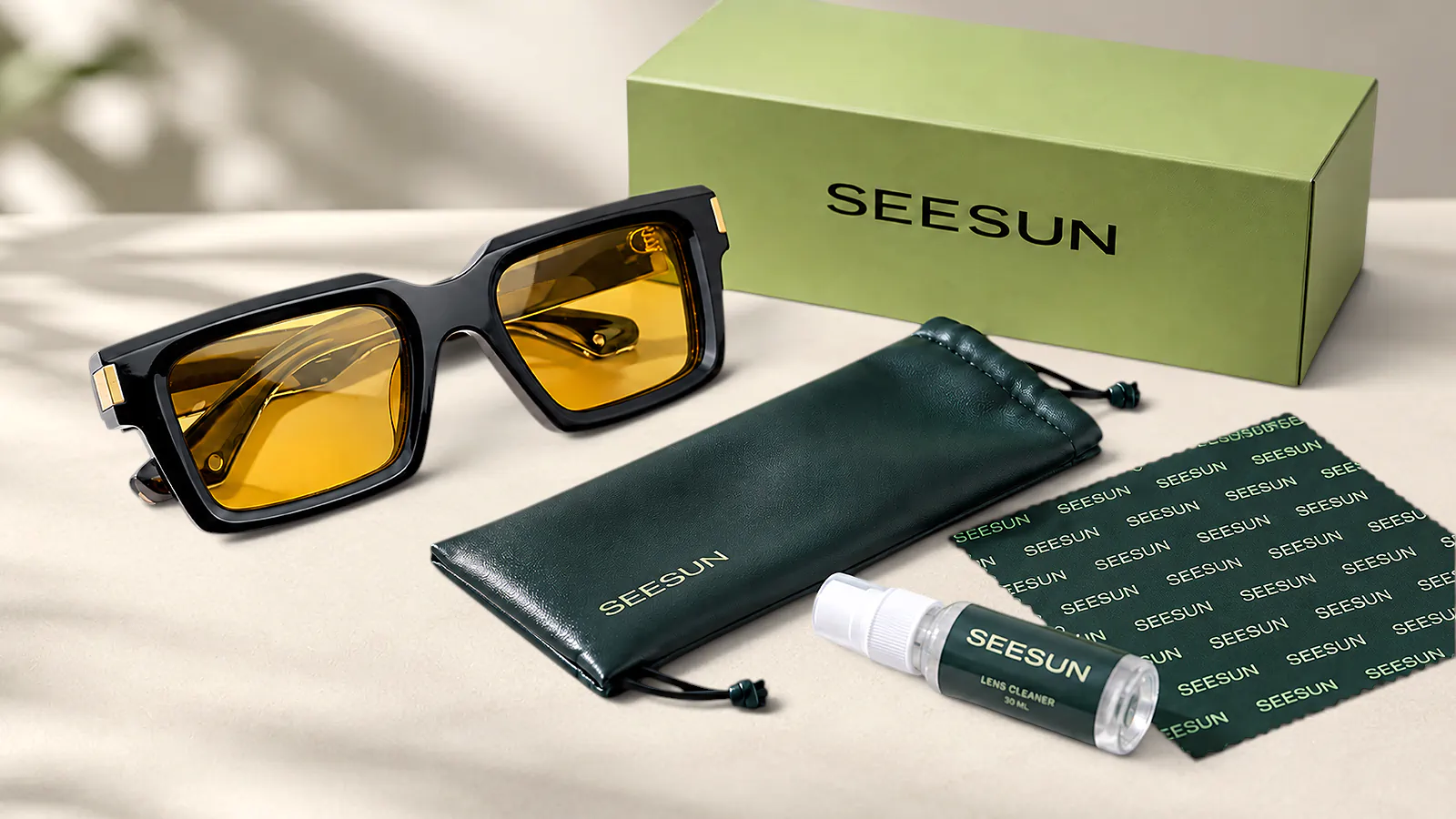
The scope of a third SEESUN project changed after the buyer had selected an existing frame. Initially, it was a familiar private label arrangement: chosen acetate colors, lens colors, logo and packaging. The brand later supplied its own lens parameters and inspection requirements, making those specifications part of the production commitment.
The basic frame was not redeveloped. SEESUN had to check the feasibility of the requested configuration, prepare the final combination sample for customer approval and manufacture against the additional buyer-controlled criteria. The customer order went into mass production. More detailed production control did not turn it into a new ODM design.
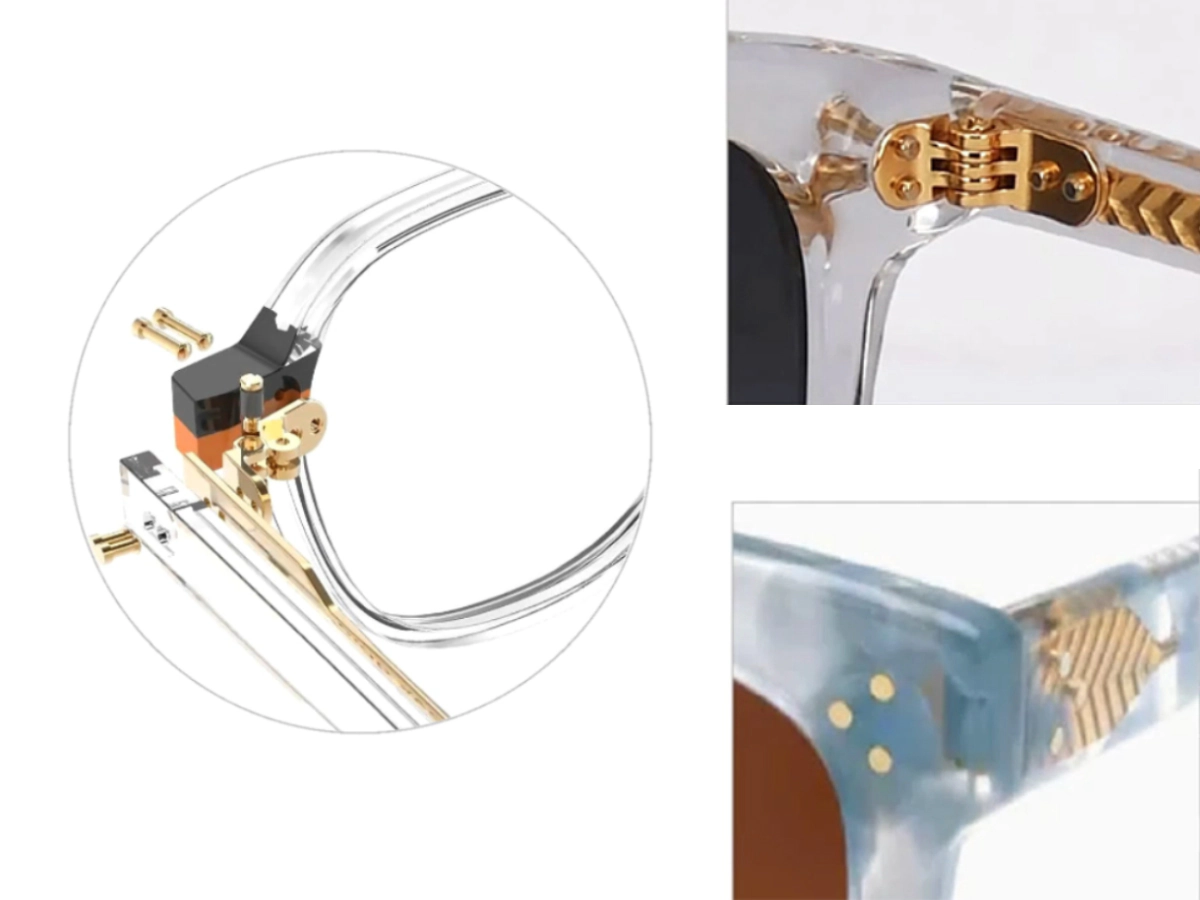
Illustrative responsibility example (separate from the completed customer project above): A brand may fix the exterior and main dimensions while asking the manufacturer to develop an unresolved hinge or internal connection. The overall scope would be OEM-led, with one defined area of additional development. In that situation, responsibilities could be recorded as follows:
| Item | Proposed responsibility | Required approval |
|---|---|---|
| Front shape and fixed dimensions | Brand supplies final design | Brand |
| Unresolved hinge construction | Engineering proposes an option within agreed scope | Brand before production release |
| Alternative material or component | Manufacturer explains feasibility and consequences | Brand when requirements would change |
| Production master reference | Project team consolidates approved drawing and sample | Brand’s authorized decision-maker |
Where those additional tasks require dedicated drawings, samples or tooling, define them in the quote. The custom eyewear development route is more relevant when the frame itself needs substantial new engineering, but the responsibility boundary still belongs in the project agreement.
An OEM or ODM quotation should separate the unit price for manufacturing an approved frame from product development work that is still open. For each unresolved component or specification, identify who will complete the work, what the supplier will deliver and whether its cost is included. Two prices per pair are not comparable if one includes engineering work that the other excludes.
In custom manufacturing, check whether the quotation covers revised drawings, extra samples, dedicated fixtures, new tooling and custom components. Agree which revisions are included, what triggers an additional charge and whether any development fees may be credited against a production order. These are commercial terms to settle before work begins, not assumptions to make after the first sample.
Where design, product management and sourcing are handled by different teams, identify who can approve technical substitutions, additional development charges and the final production release. Each approval should refer to the relevant drawing or sample revision.
Payment for tooling does not by itself establish design ownership or exclusivity. Agree who owns newly commissioned drawings and components, who keeps physical tooling, and what may be reused or transferred. An NDA addresses confidentiality, not all design rights.
Before releasing production, match the approved sample to the current drawings, final specifications and record of authorized changes. Those references tell the factory what to make and inspect. Approval responsibilities may differ among OEM, ODM and private label projects, but the approved requirements still need to reach factory production and quality controls.
The OEM vs ODM eyewear decision rests on how much design work remains and who can approve it. OEM can still require feasibility corrections to a largely defined frame. ODM must close open design decisions before it provides a repeatable production reference. Later orders may involve much less development once the specification is fixed. A private label order starts with an available frame, but buyer-defined lenses or inspection criteria may still require precise production controls.
Before requesting a fixed quotation, share your project brief with the drawings or references you have, the decisions still open and your expected quantities. SEESUN can review which development tasks, approvals and production references should be agreed first.
We use cookies to support essential website functions. You can find details about the cookies used on this site in our Cookie Policy.