Sunglasses Manufacturer | OEM & ODM Eyewear Factory | Seesun
Sunglasses Manufacturer | OEM & ODM Eyewear Factory | Seesun
Lens requirements affect more than the opening size. For an optical frames manufacturer, rim profile, bridge geometry and front thickness need to be reviewed against the intended lens before sampling. SEESUN applies those checks across acetate, metal and titanium frame constructions.
MATERIAL & CONSTRUCTION OPTIONS
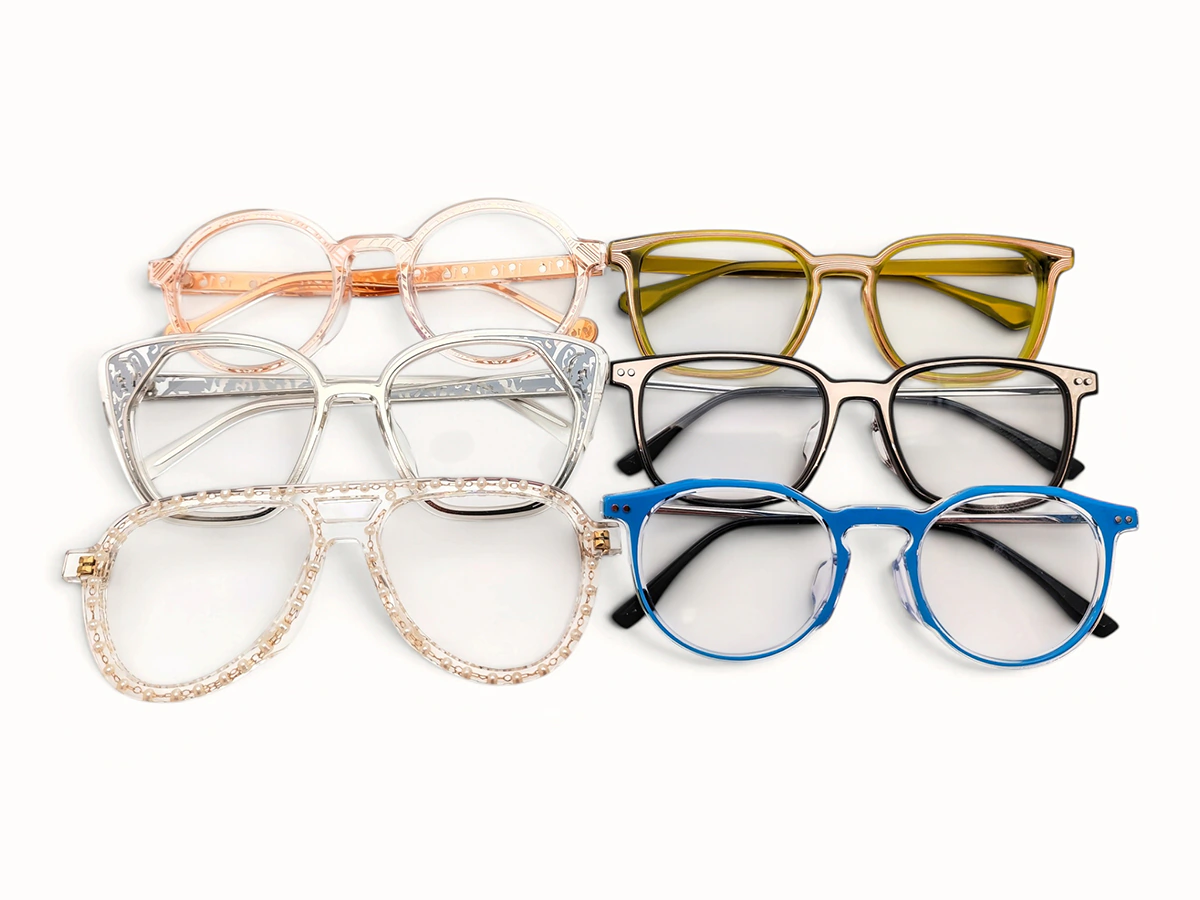
Material and construction choices change more than the appearance of custom glasses frames. Acetate, metal, titanium and laminated structures distribute thickness, weight and component detail differently, while processes such as metal infusion change how decorative elements become part of the frame itself. Those differences shape the review, sampling and production references used by the optical frames manufacturer.
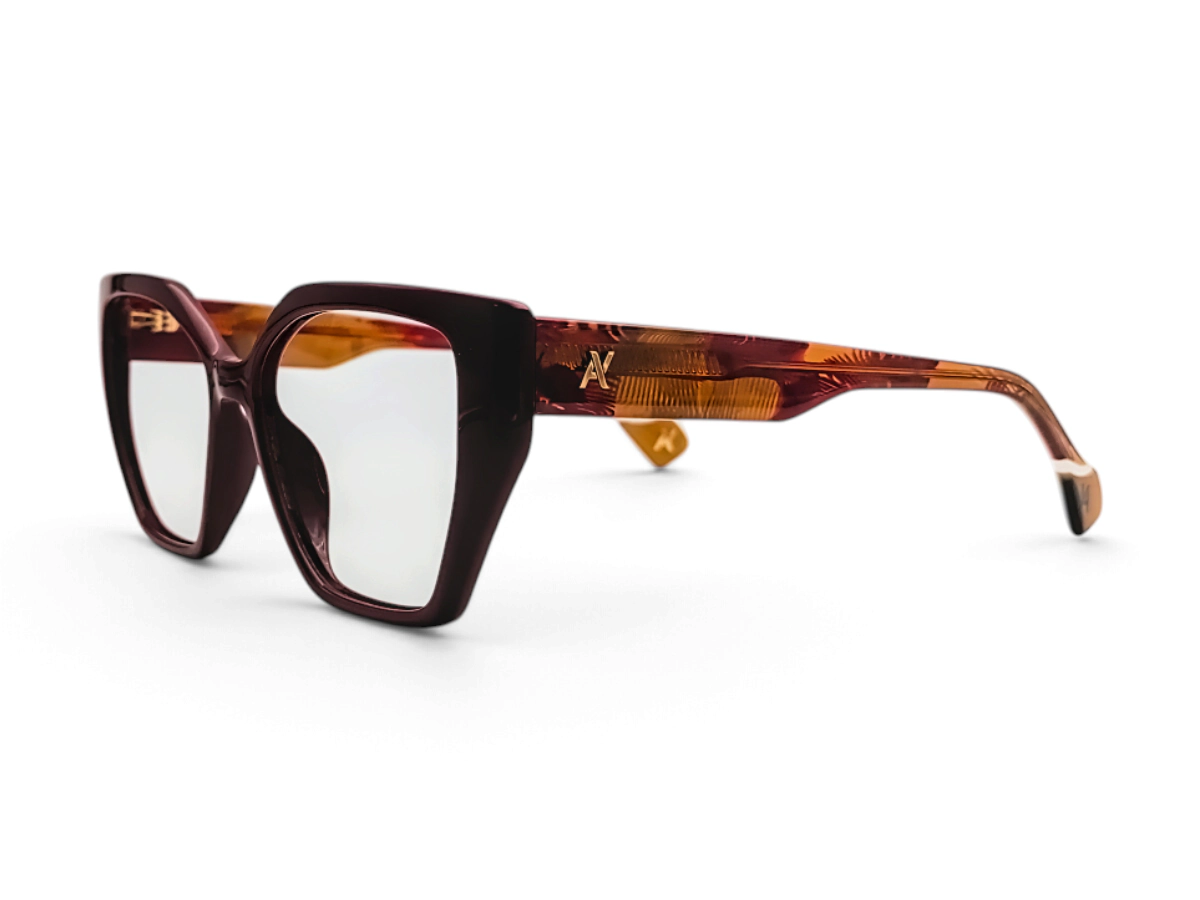
Thickness, edge shape and transparency all affect how an acetate front reads around the lenses. In custom glasses frames, those proportions also need to work with the endpiece and temple construction, especially where a thicker front moves into a finer side structure.
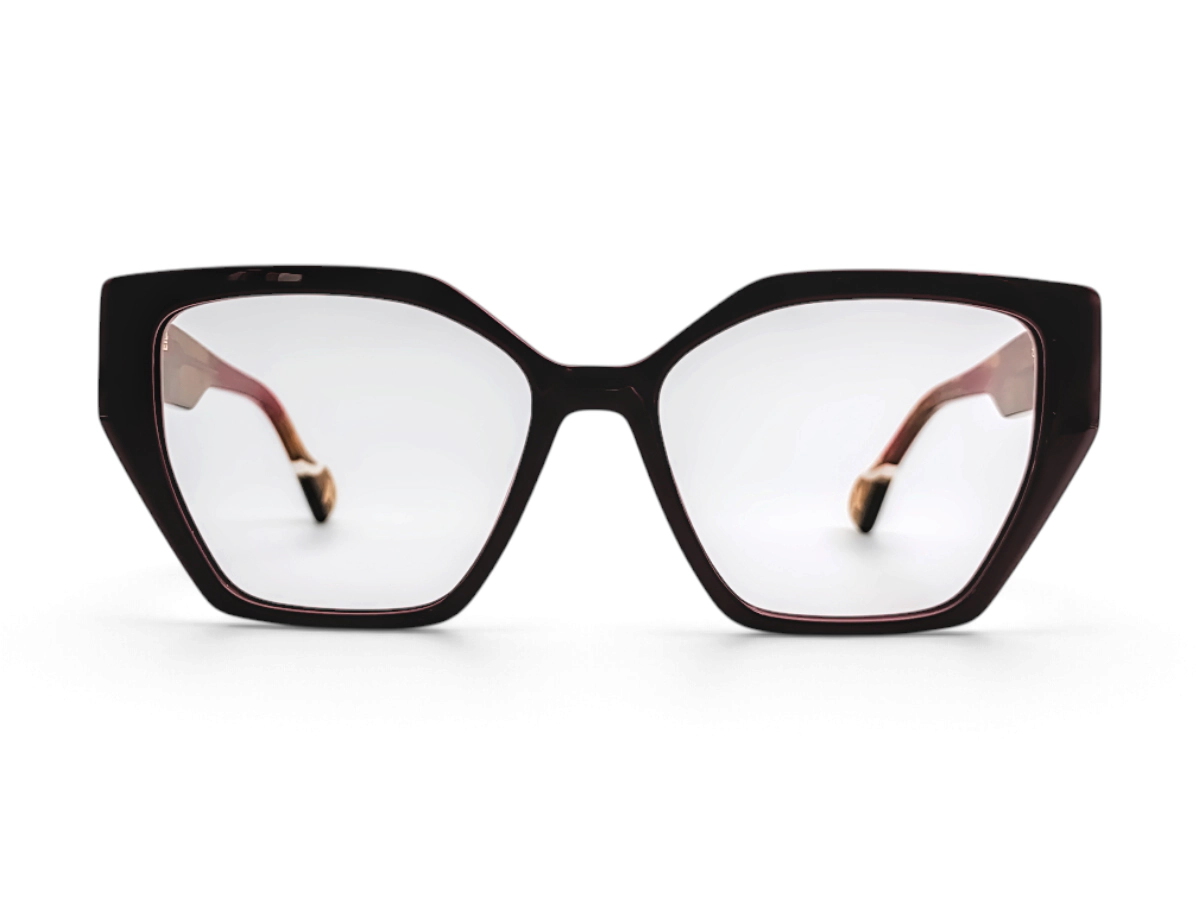
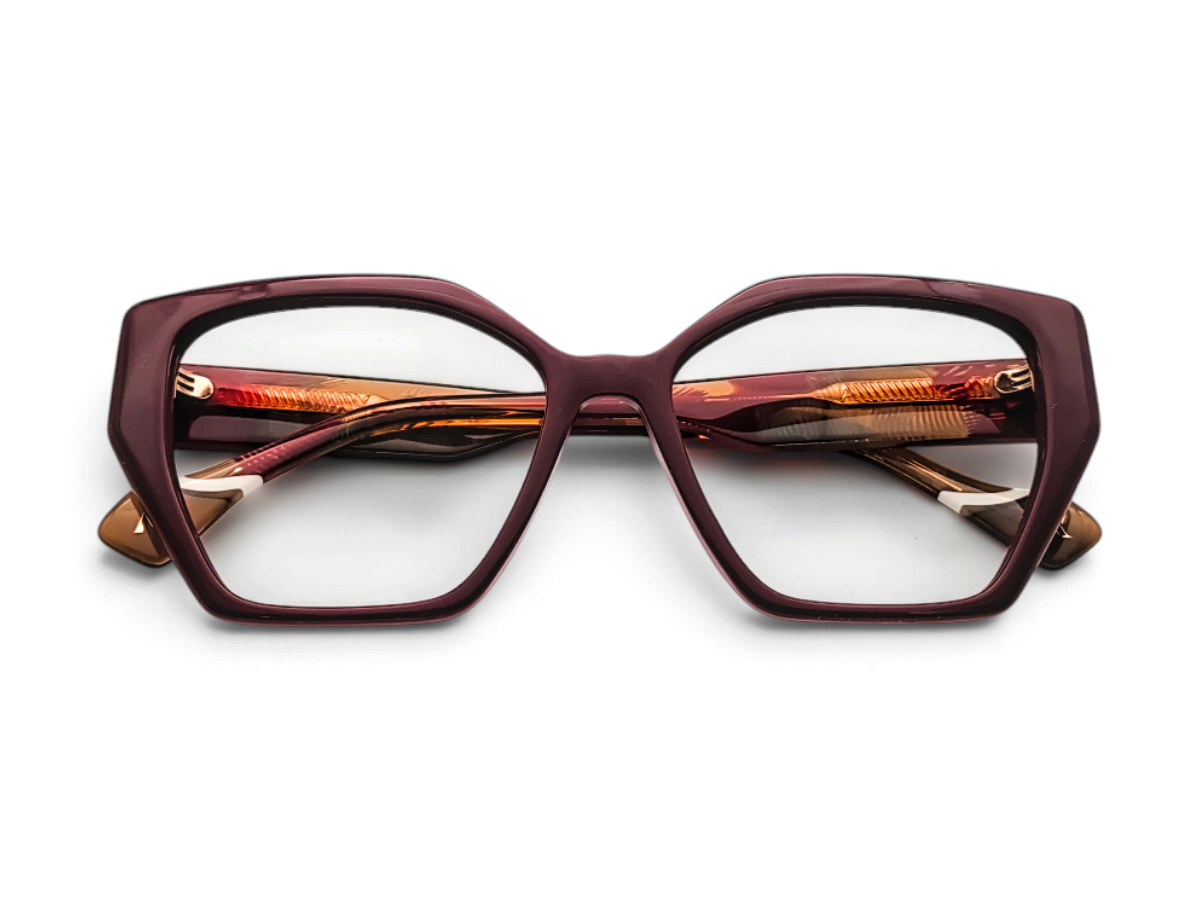
SA-B3532
The angular brow and rim lines give the dark acetate front a defined lens shape, while the patterned temple carries the same visual direction into the side profile.
Acetate · Clear Lens
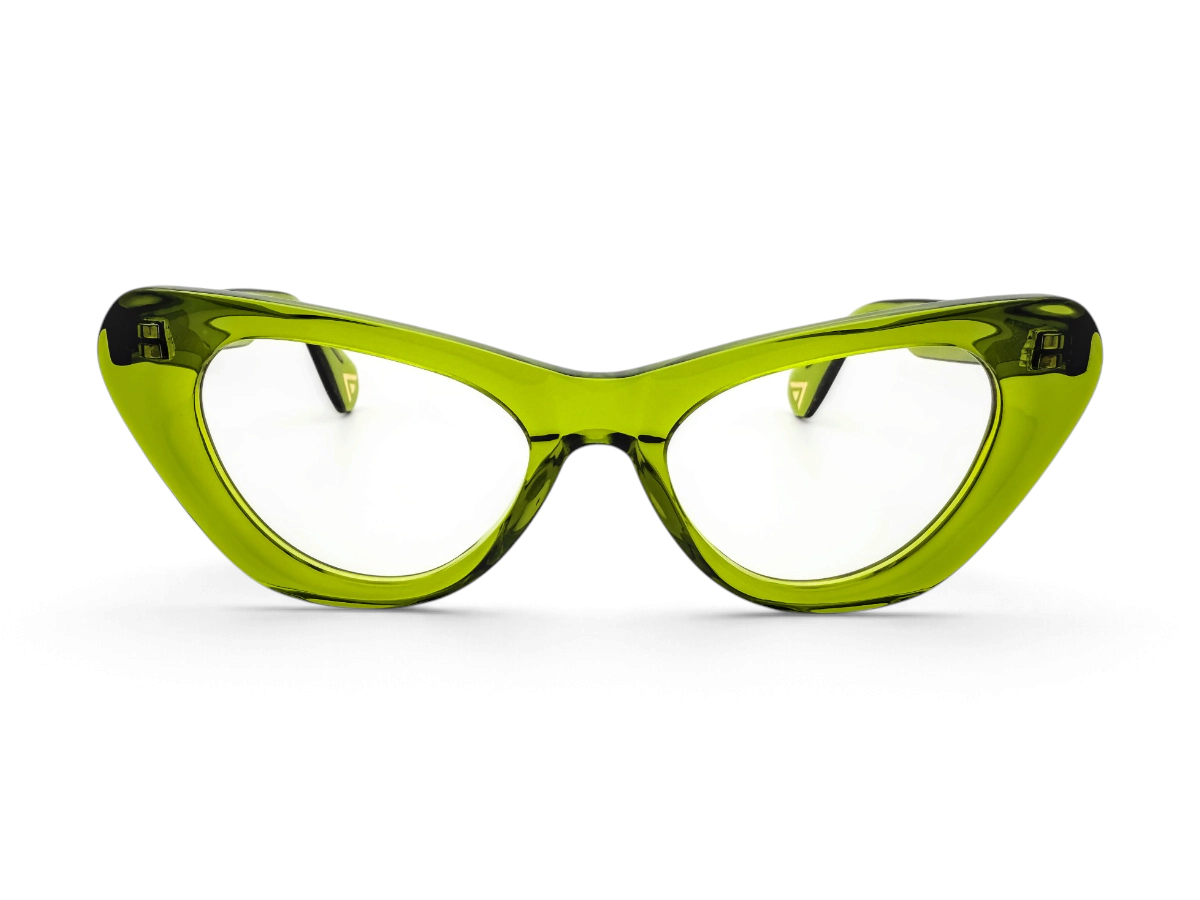
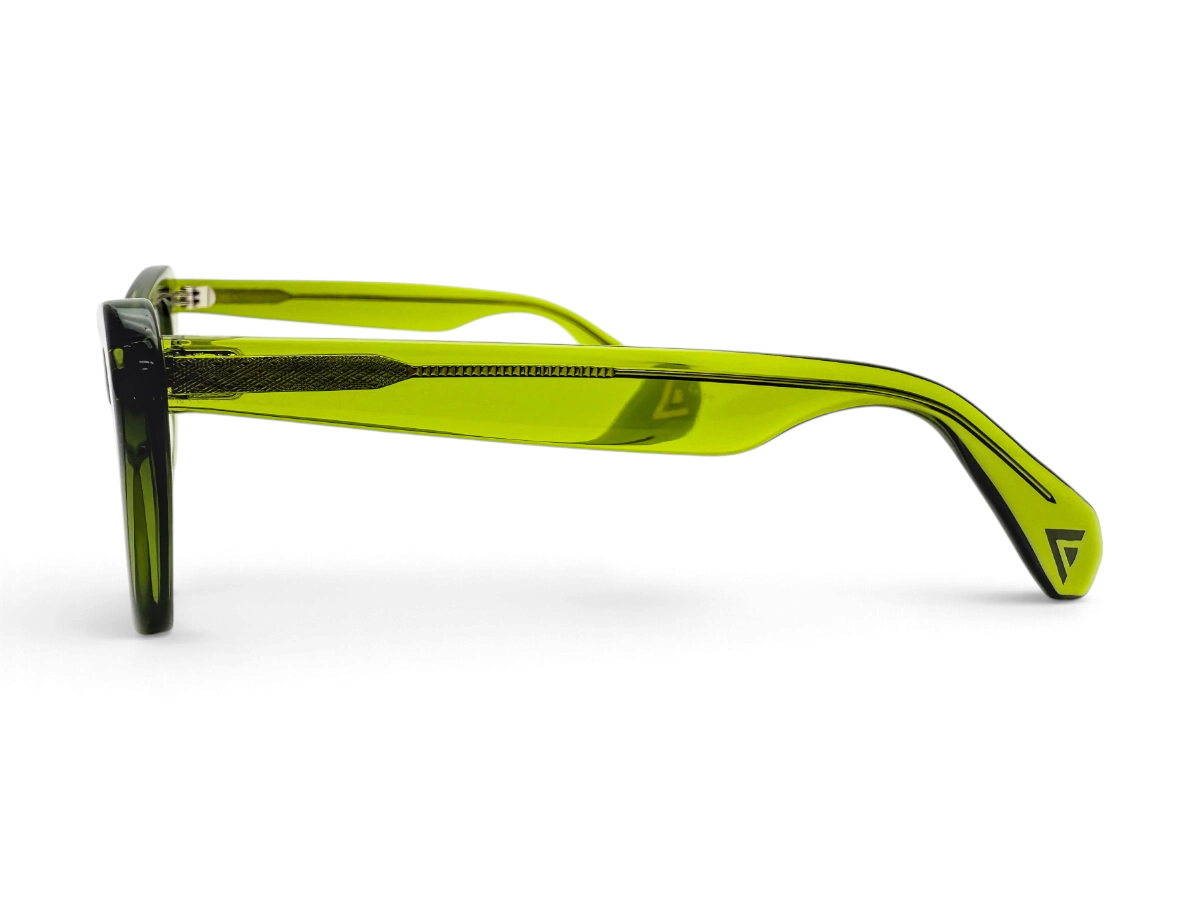
SA-B5231
The transparent green acetate makes thickness and curvature easy to read across the front, with the temple core remaining visible through the side profile.
Acetate · Clear Lens
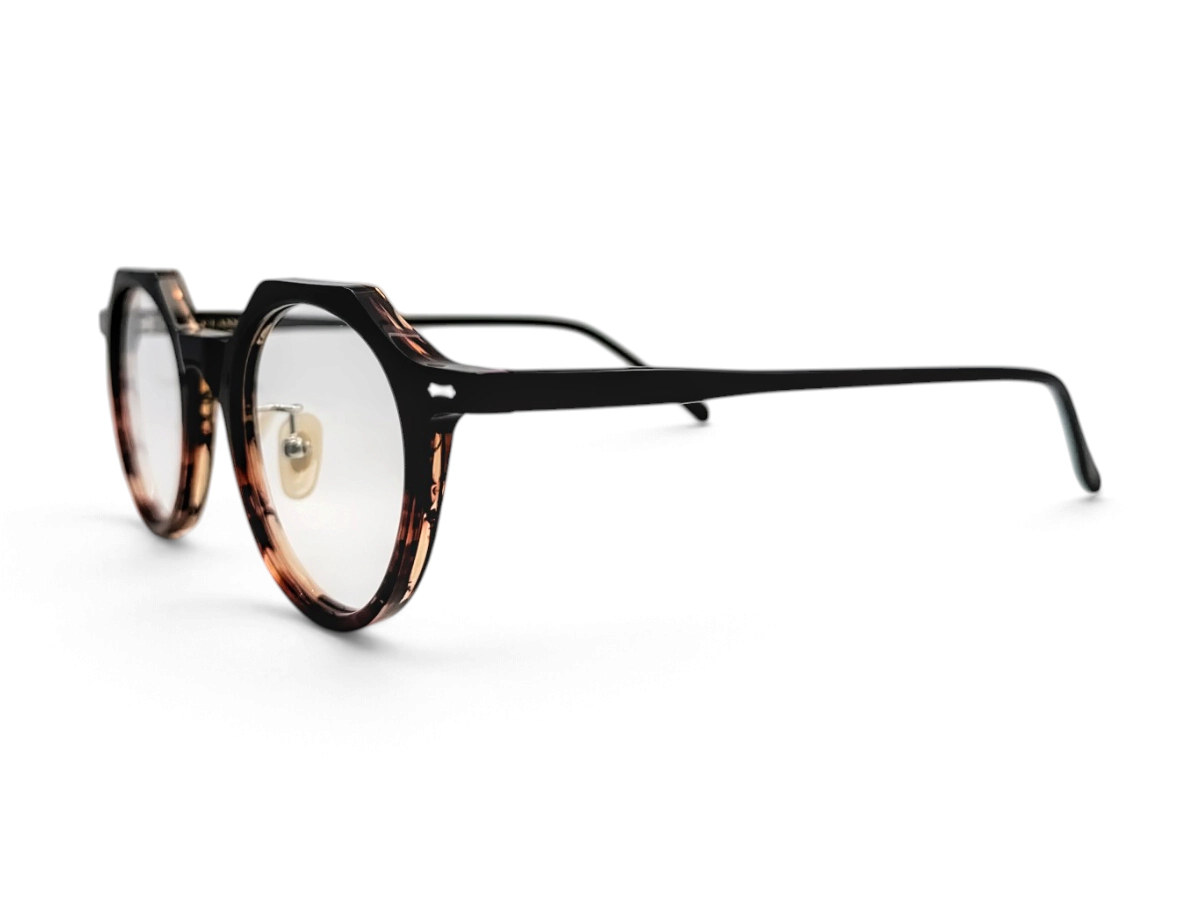
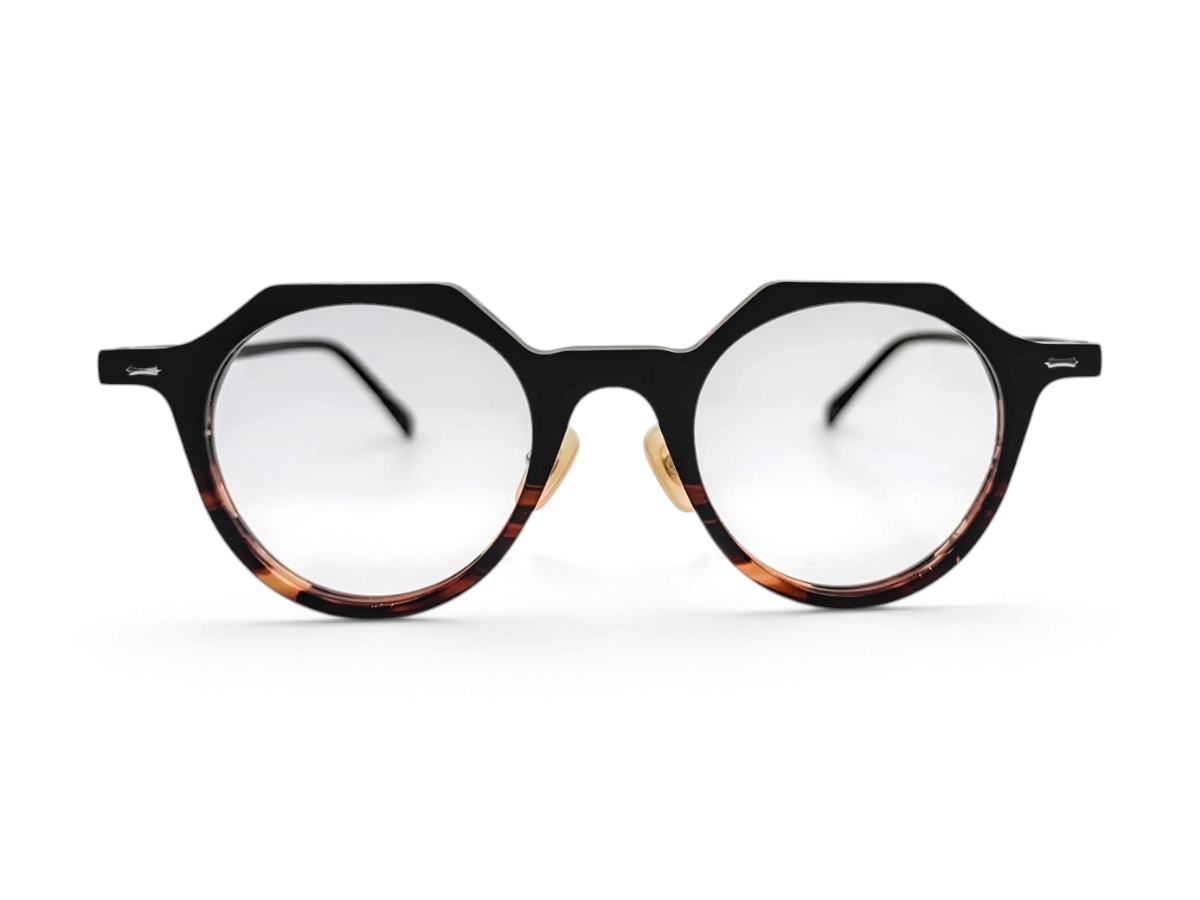
SA-B4207
The rounded acetate front uses a darker tone and a slimmer side profile, keeping the frame visually light without changing its acetate-led construction.
Acetate · Acetate · Clear Lens
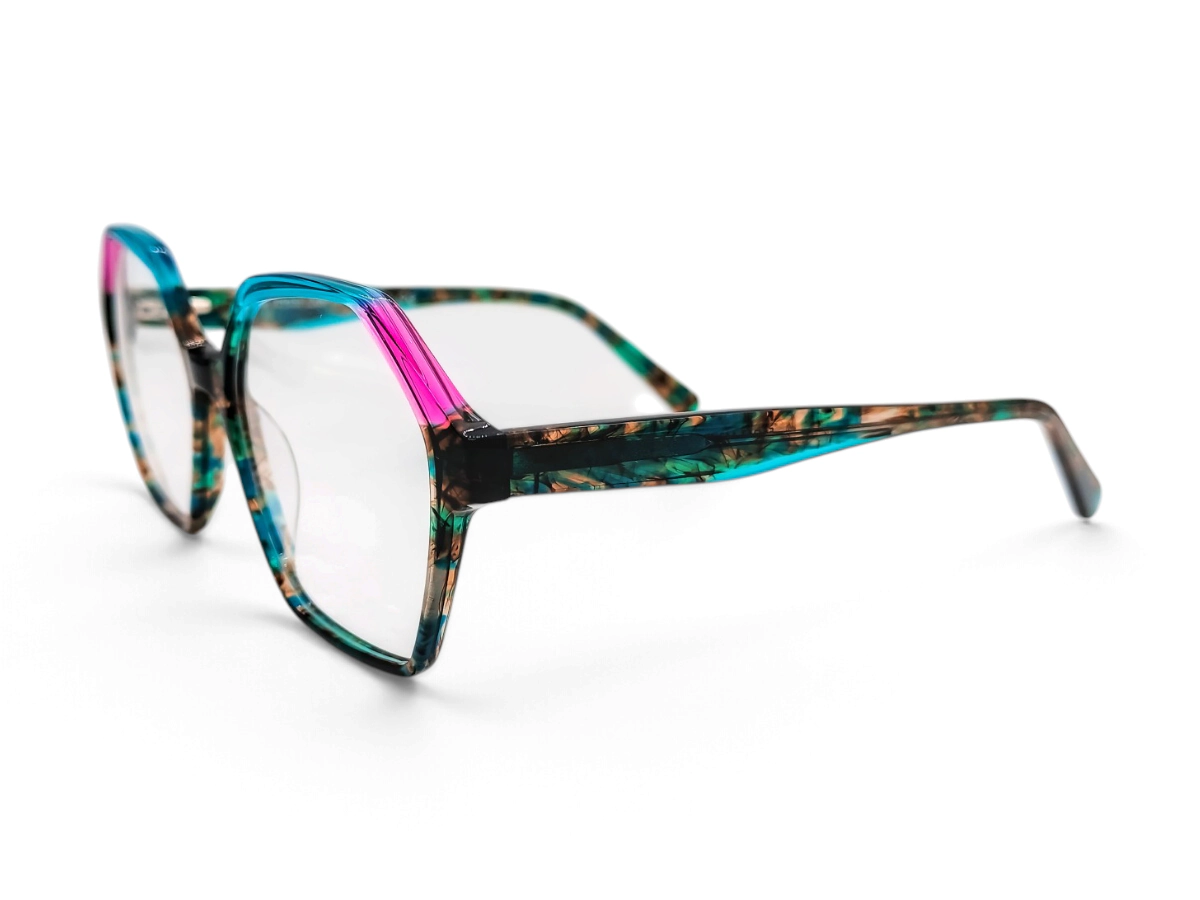
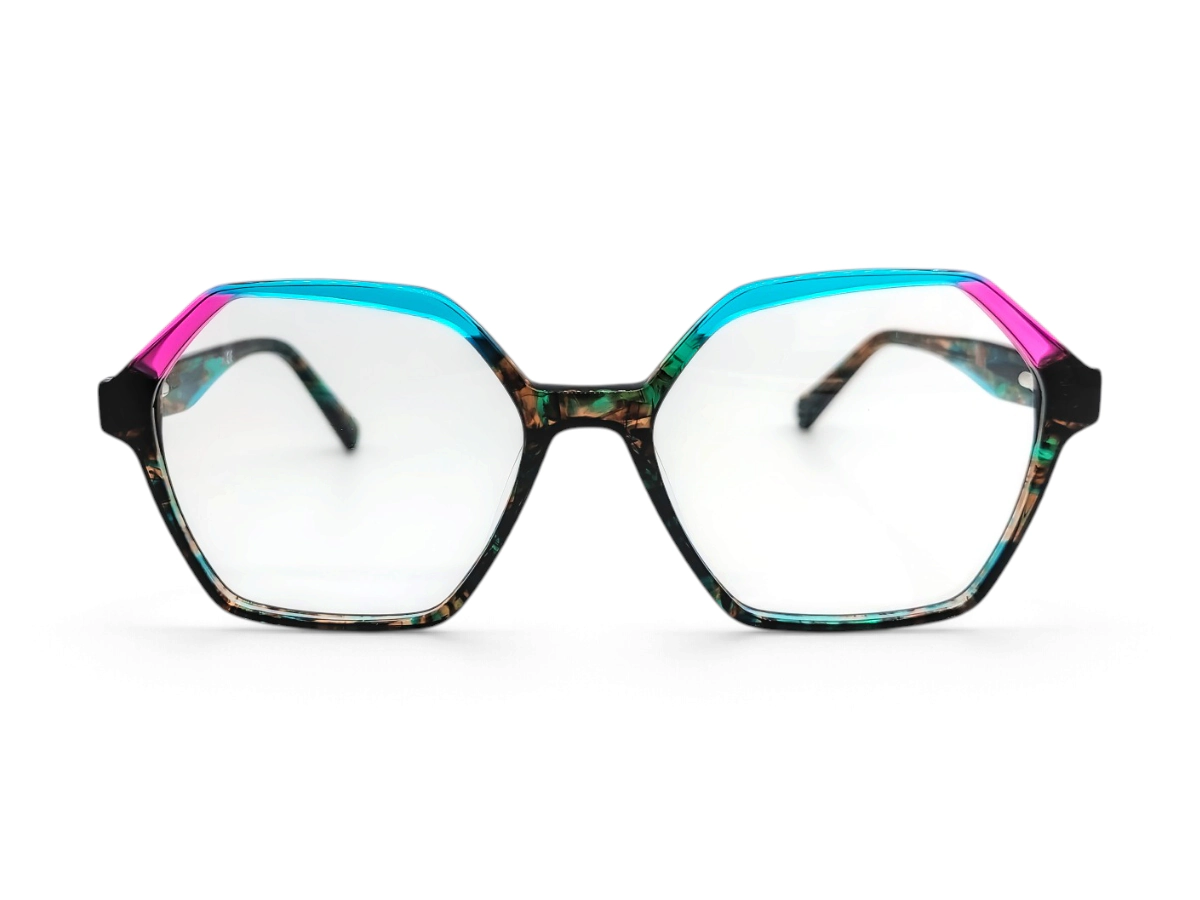
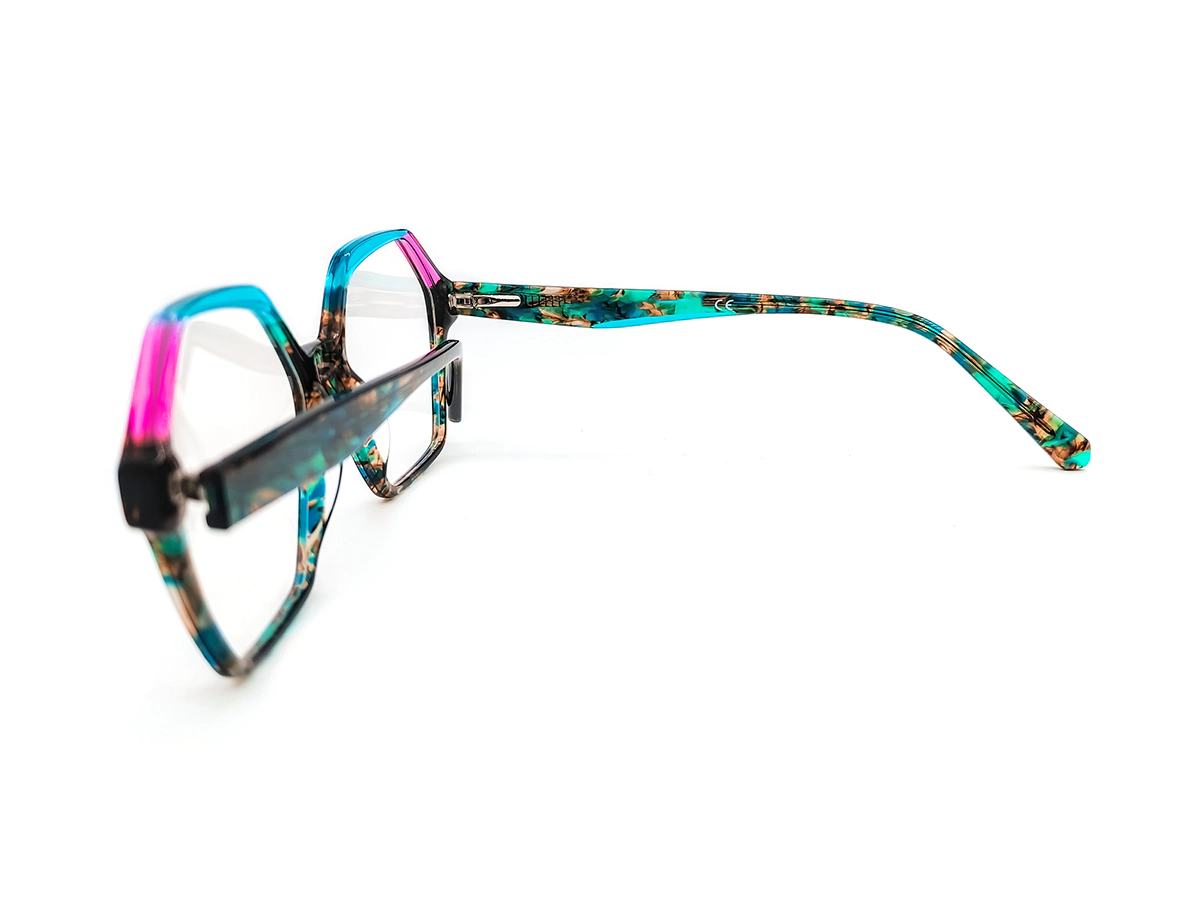
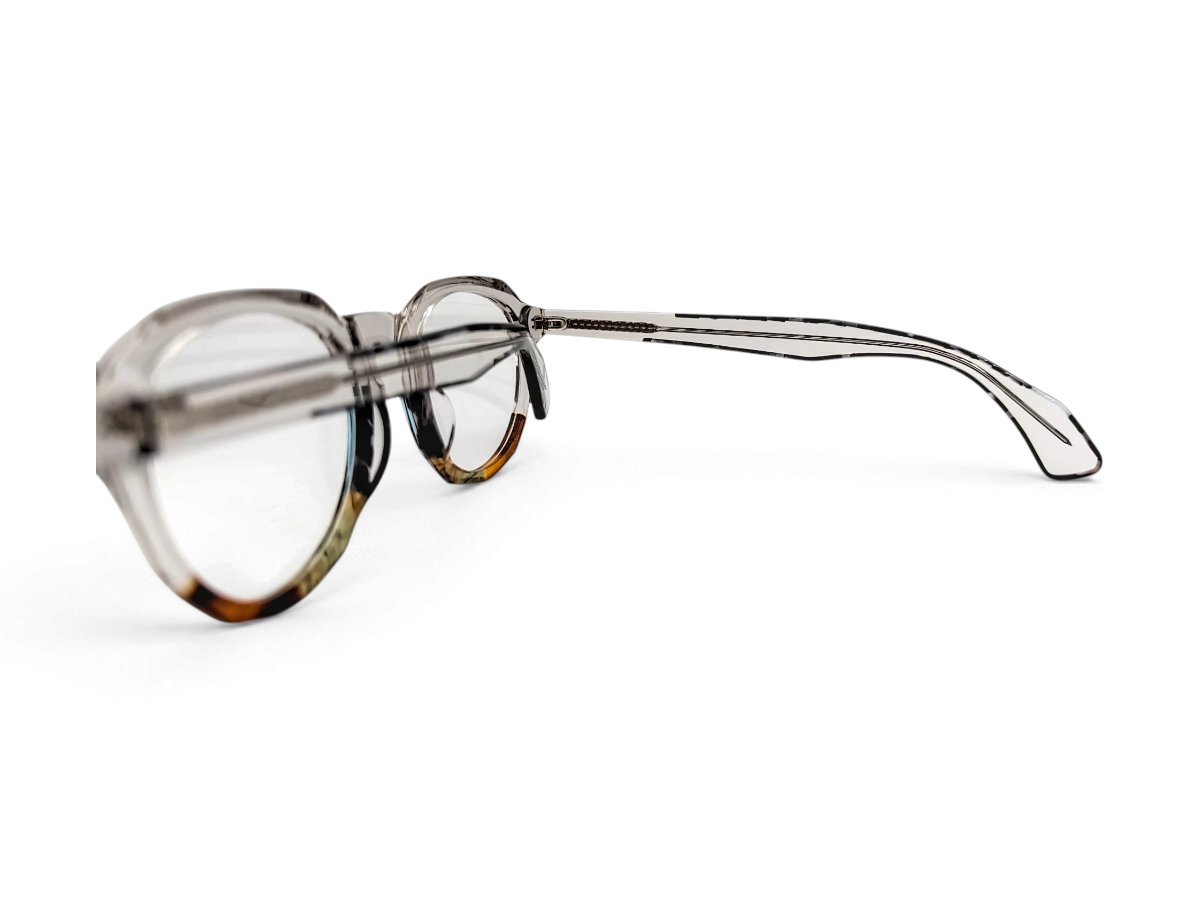
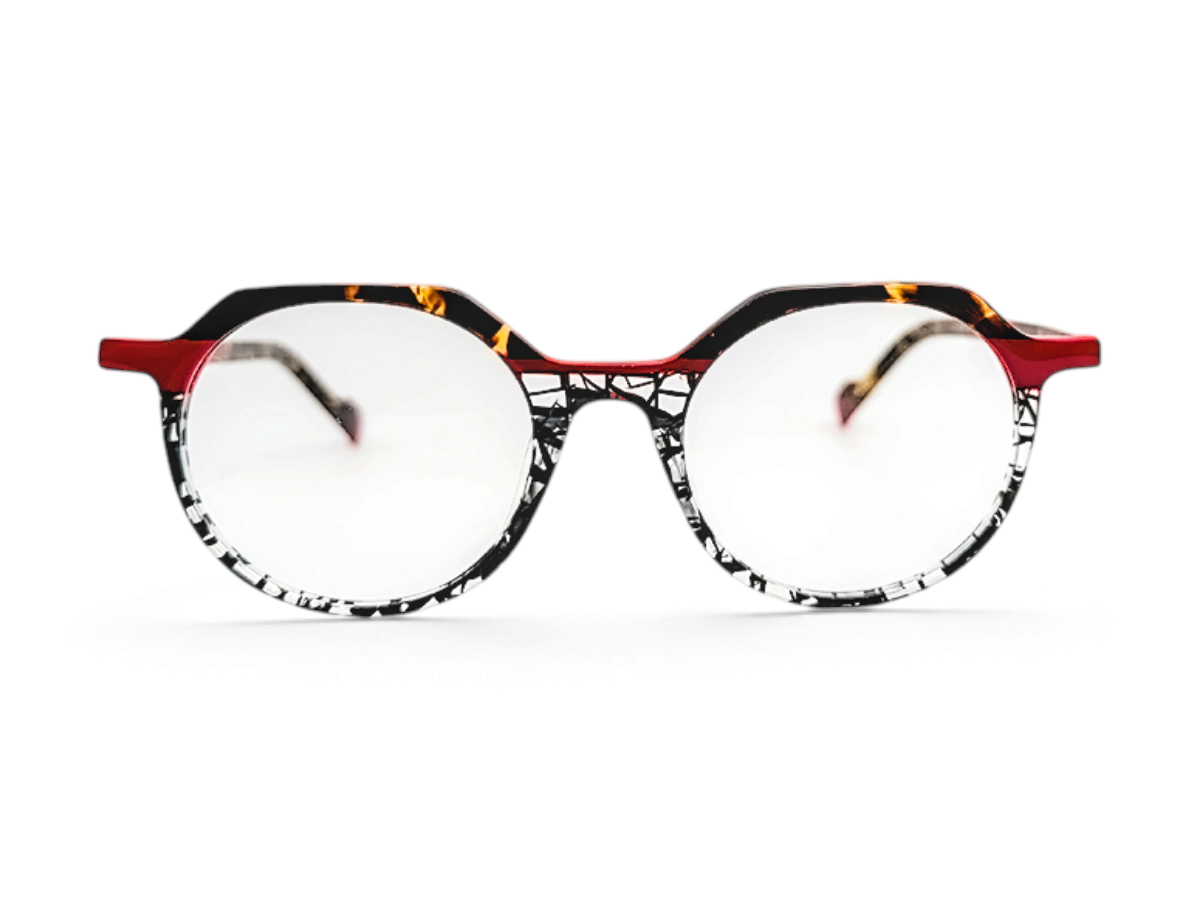
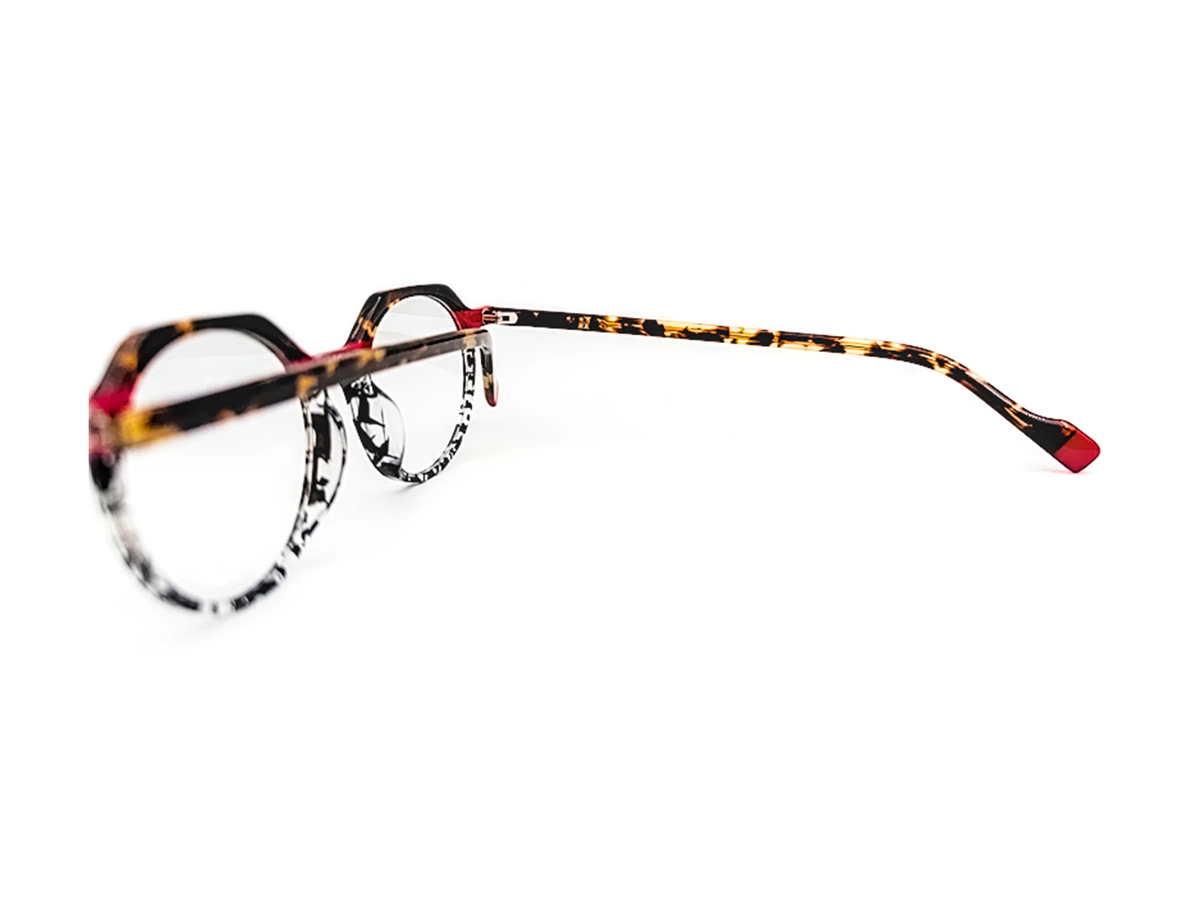
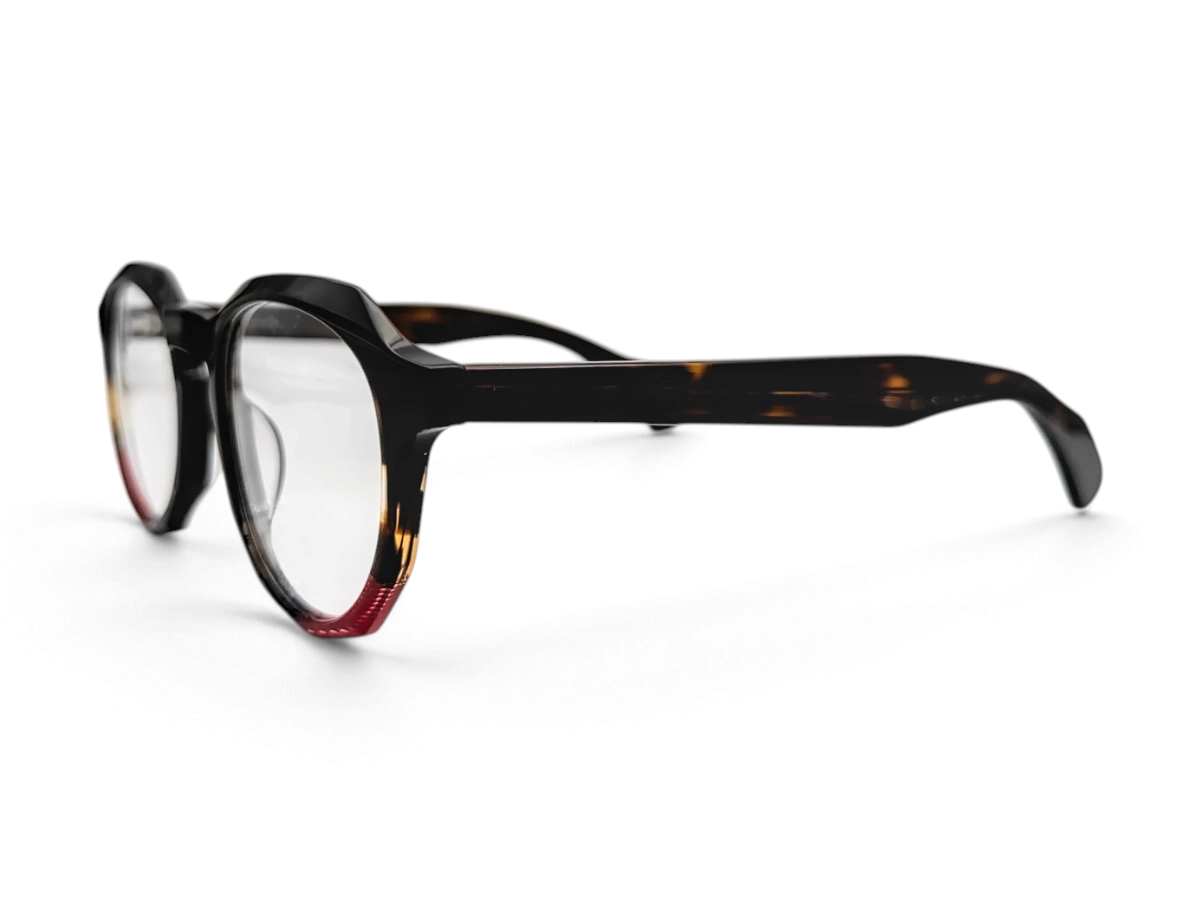
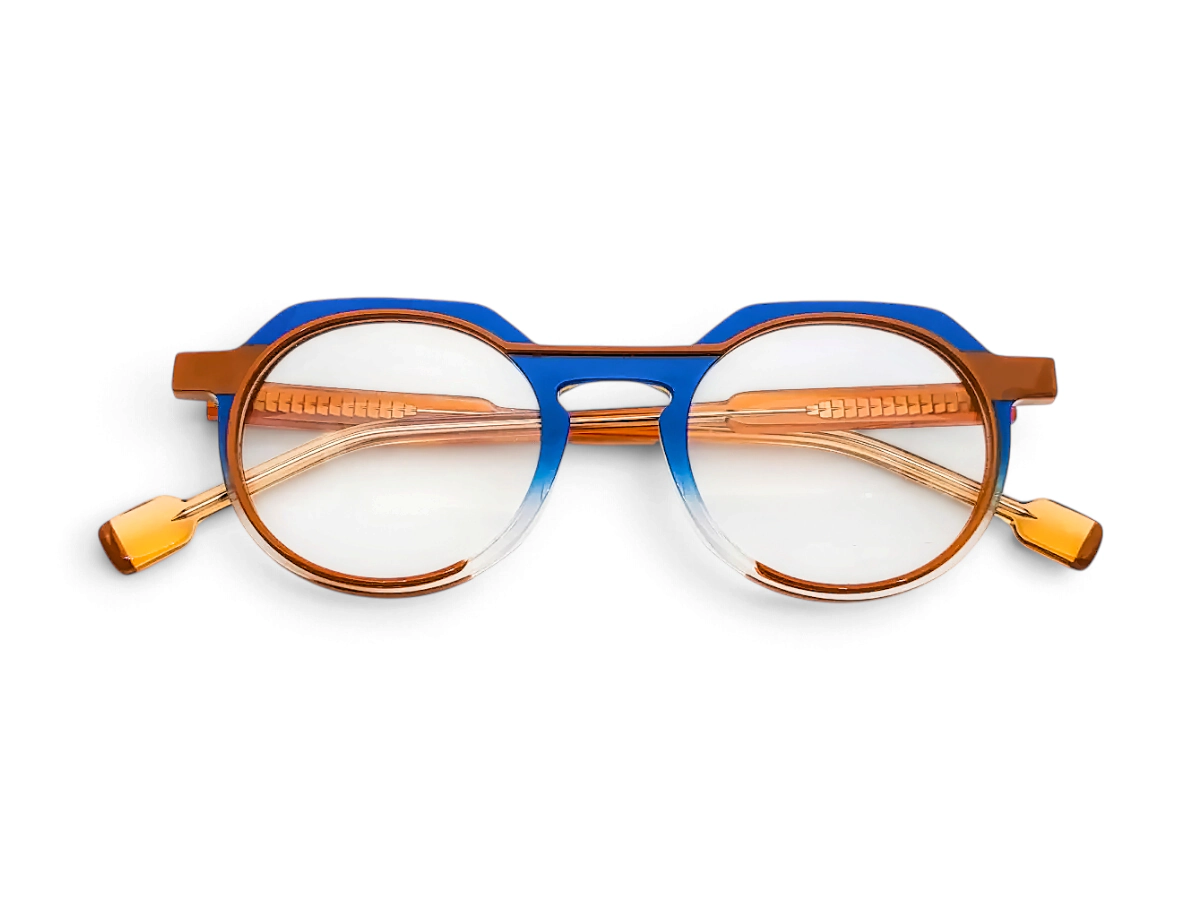
Laminated acetate combines different colors, patterns or transparent sections before the frame is machined. In custom glasses frames, the material layout needs to follow the brow, rims, bridge and endpieces because cutting and polishing determine how much of each section remains visible in the finished frame.
SA-B4526
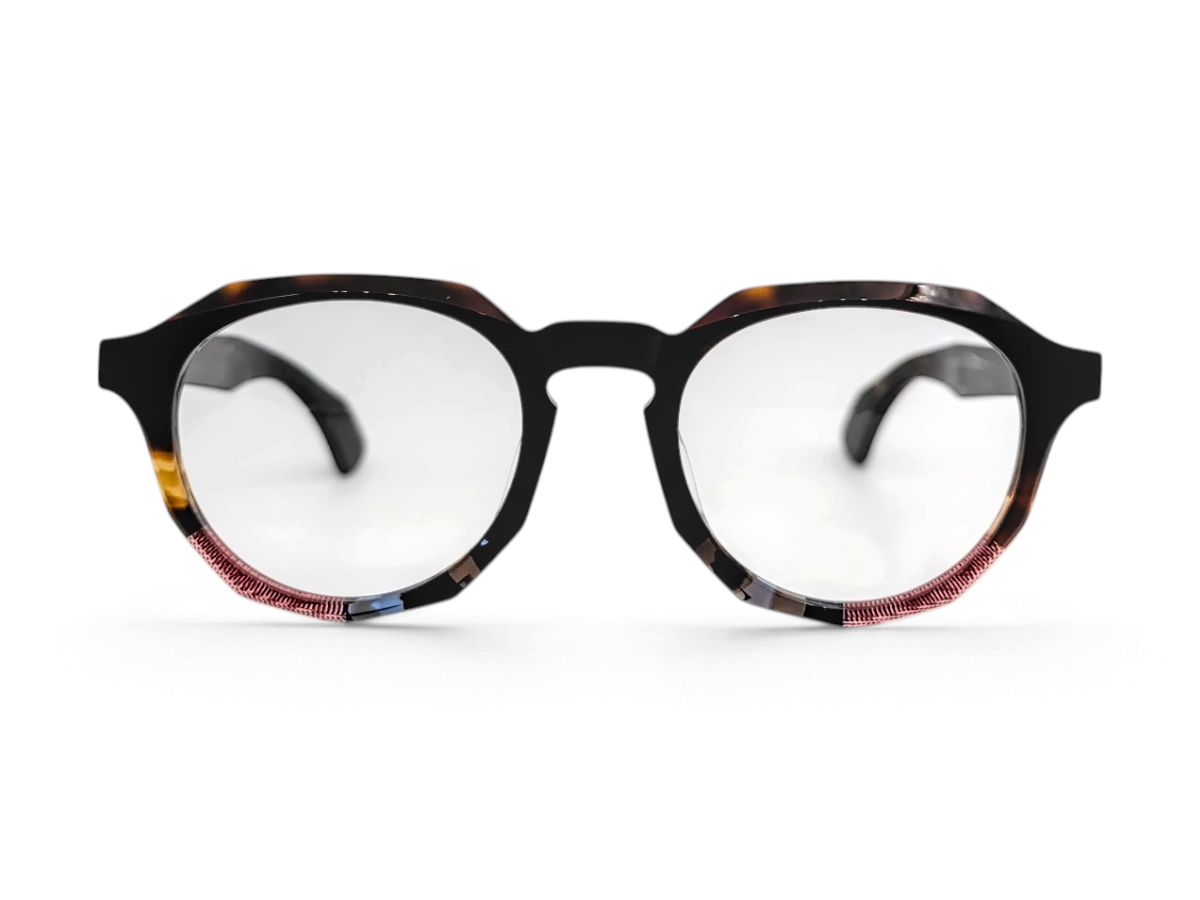
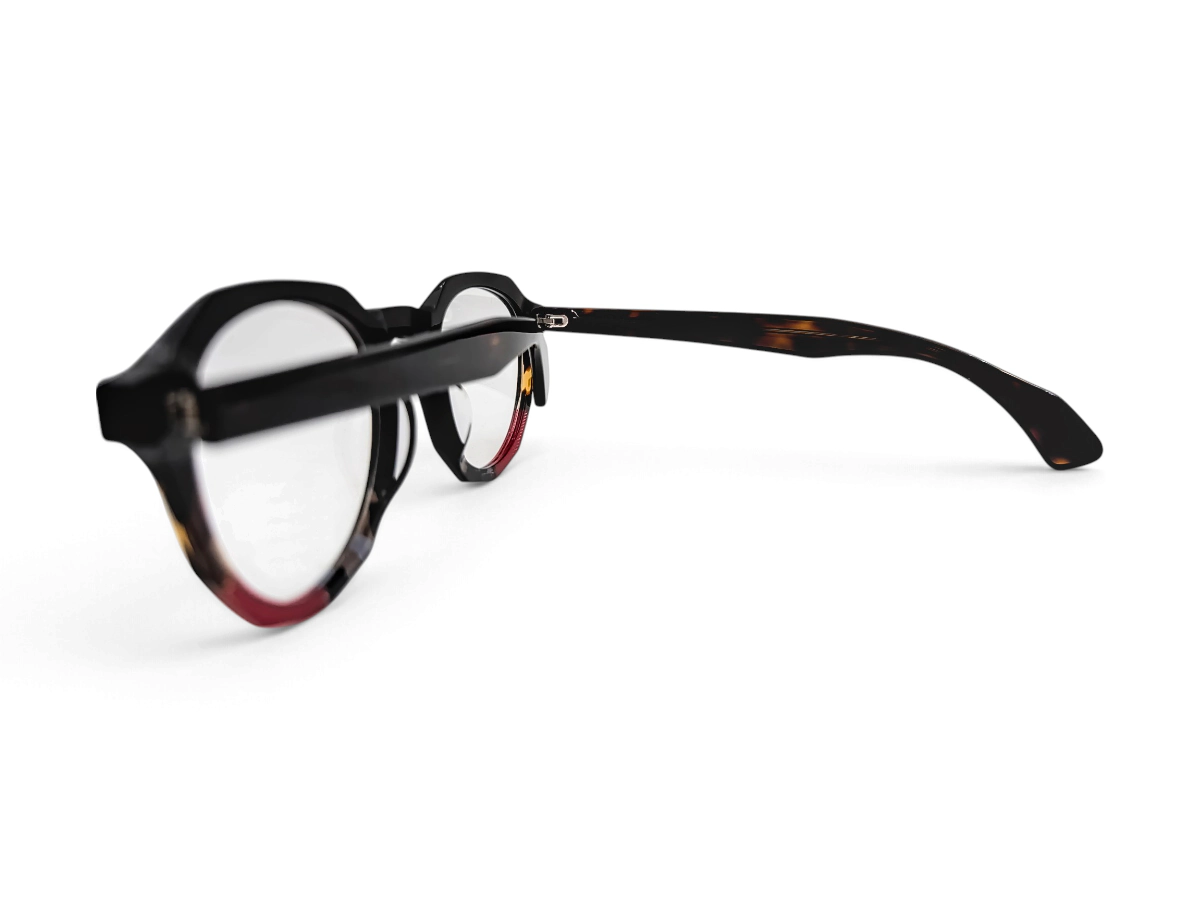
Teal and pink sections define the upper front, while darker marbled acetate continues around the lower rims and temples. The color boundaries follow the angular lens shape rather than sitting as separate surface decoration.
Laminated Acetate · Clear Lens
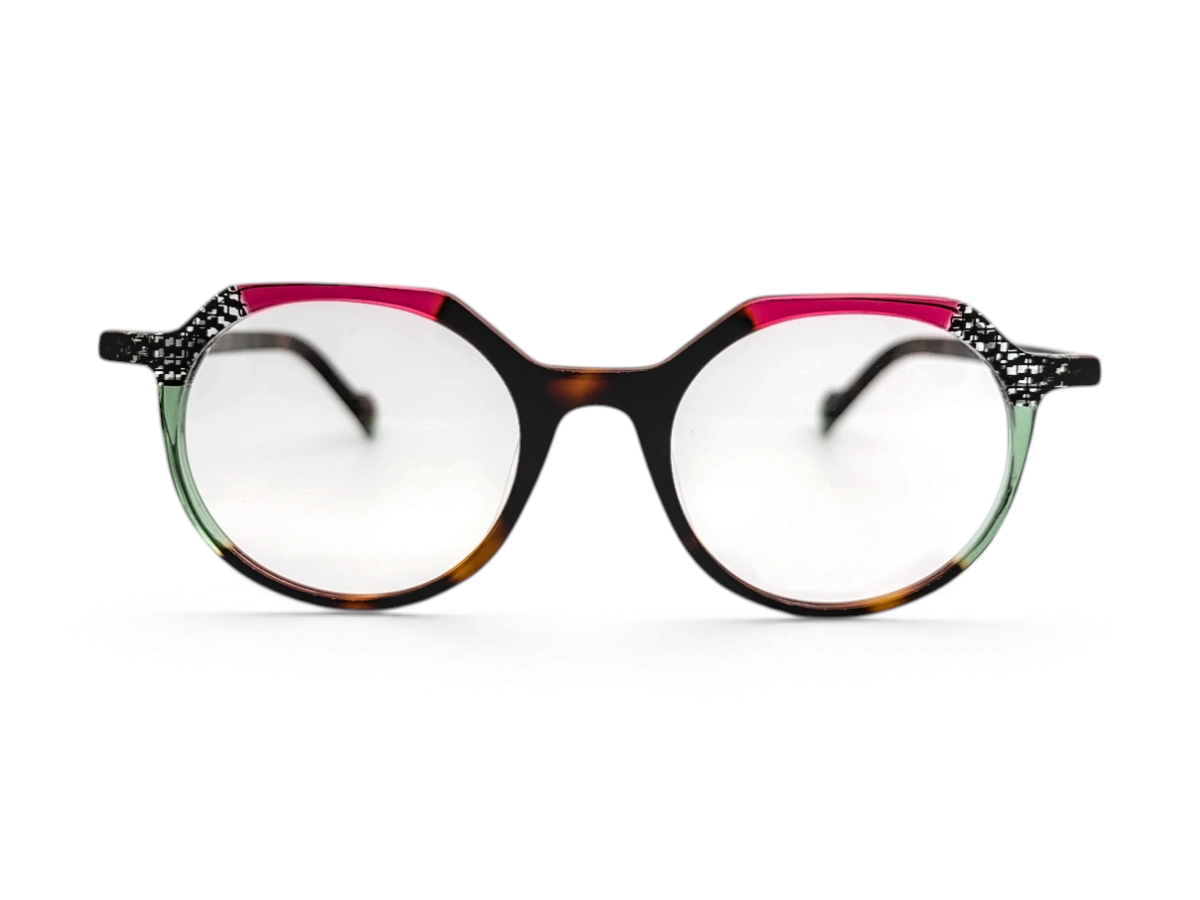
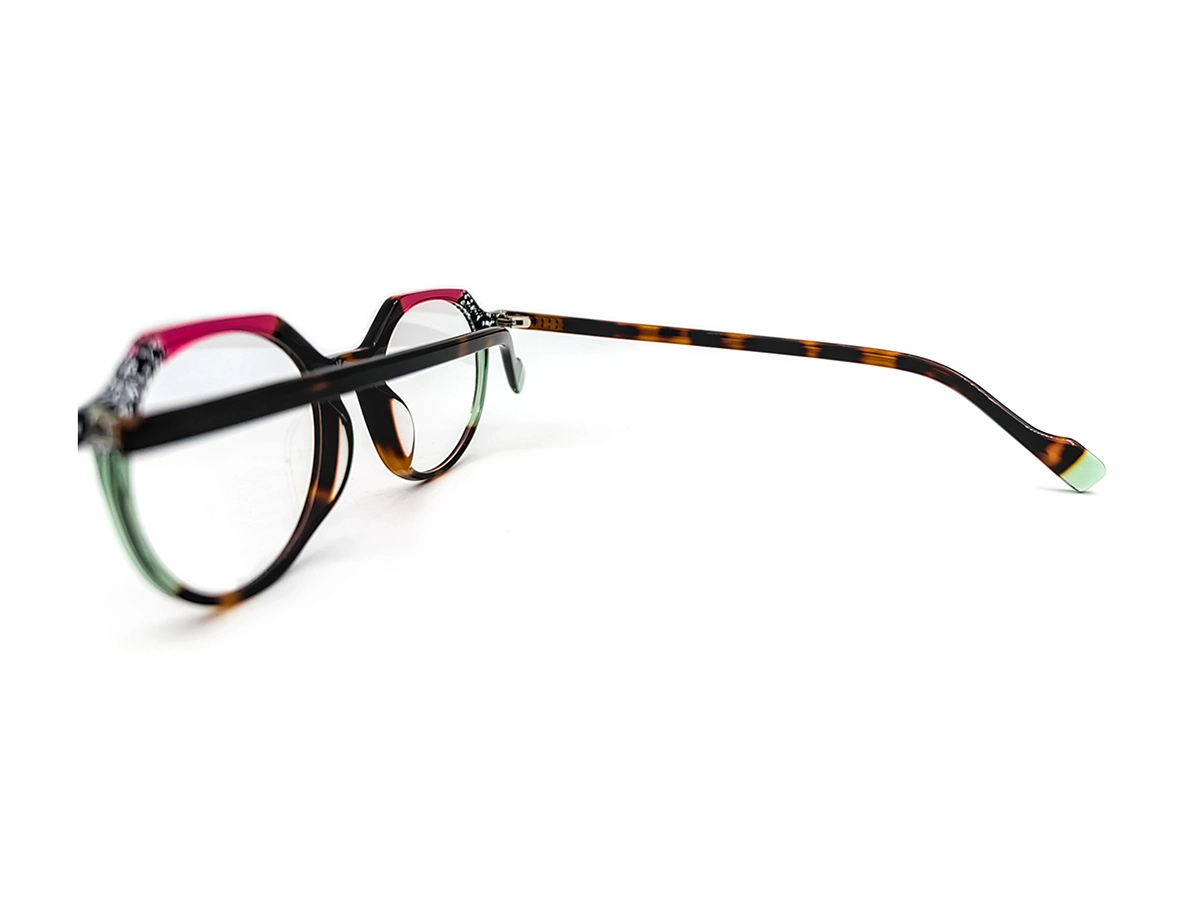
SA-B5737
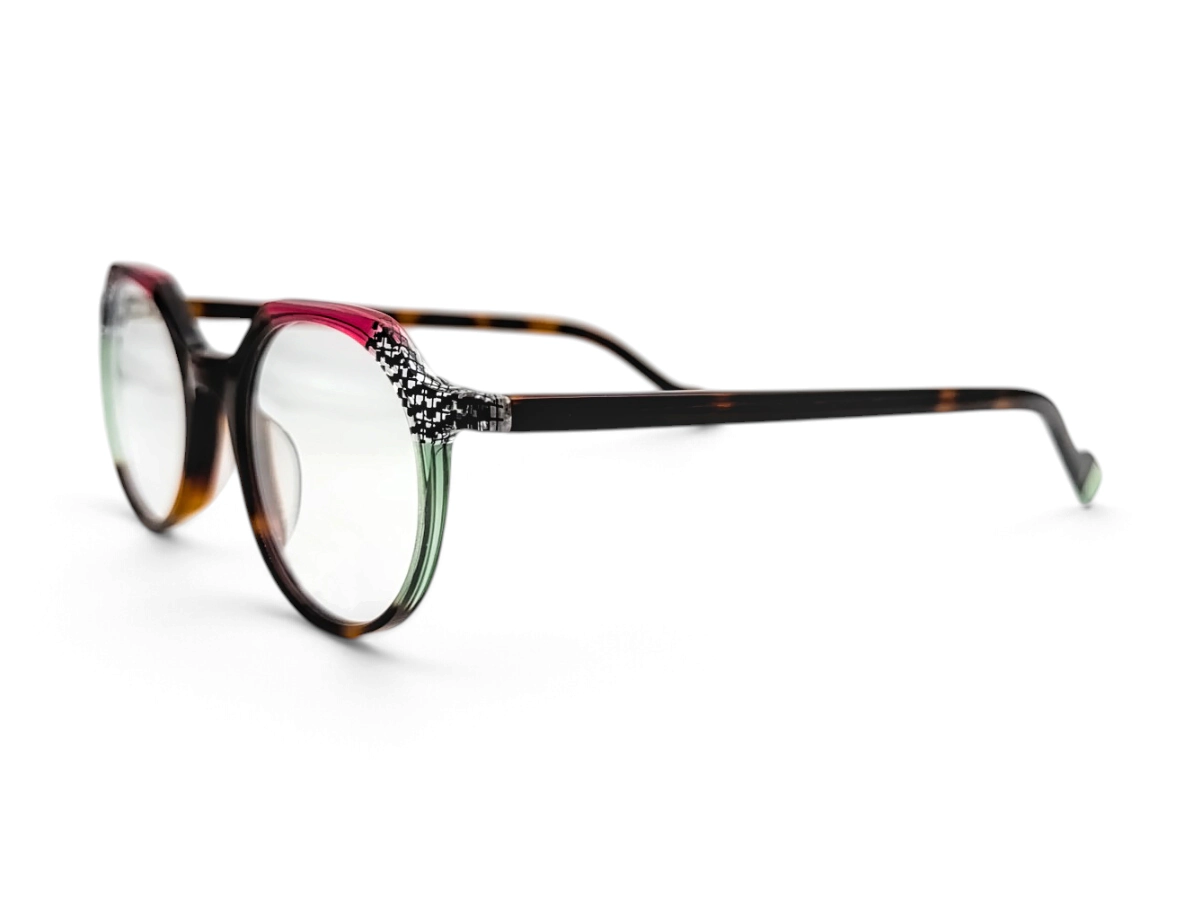
Tortoise, magenta and translucent green sections divide the round front into distinct color zones. Their placement keeps the material changes visible across the brow, endpieces and lower rims.
Laminated Acetate · Clear Lens
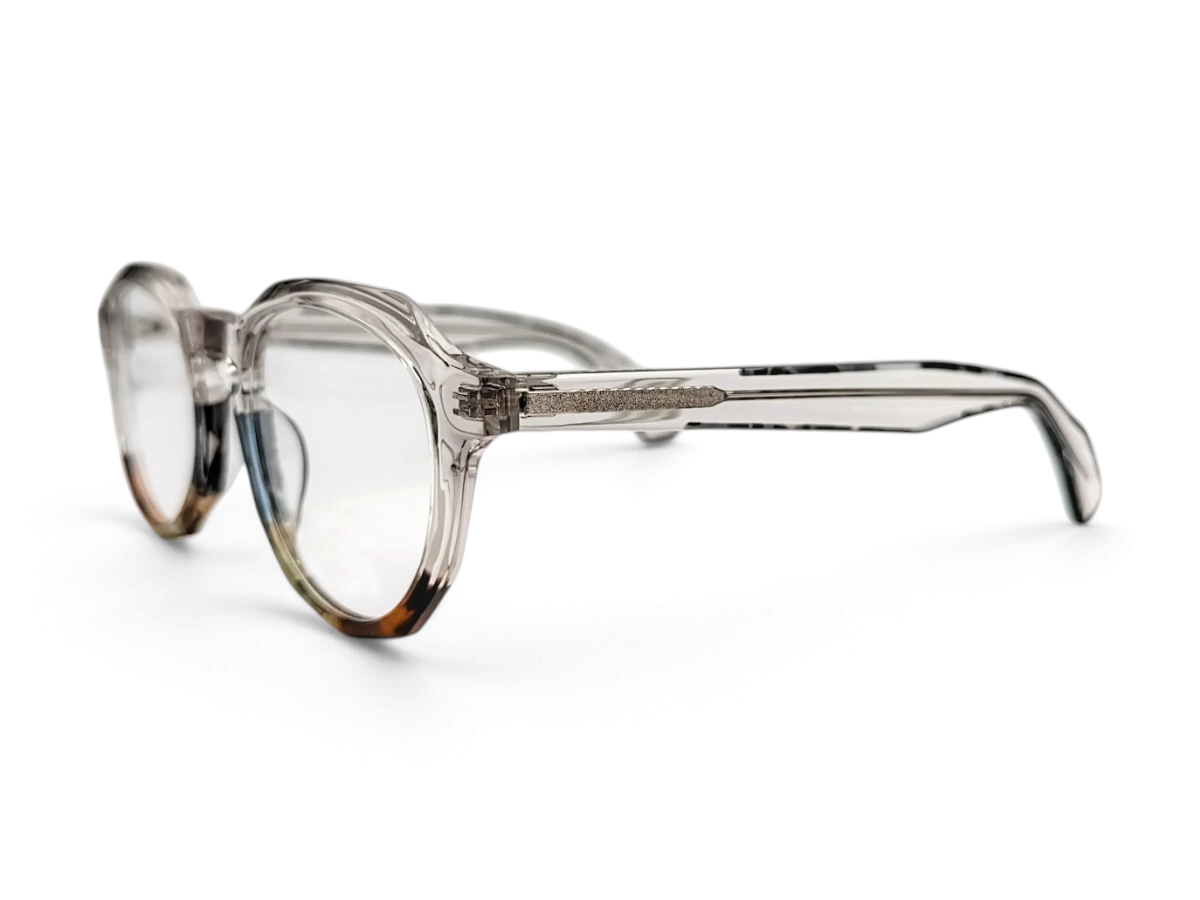
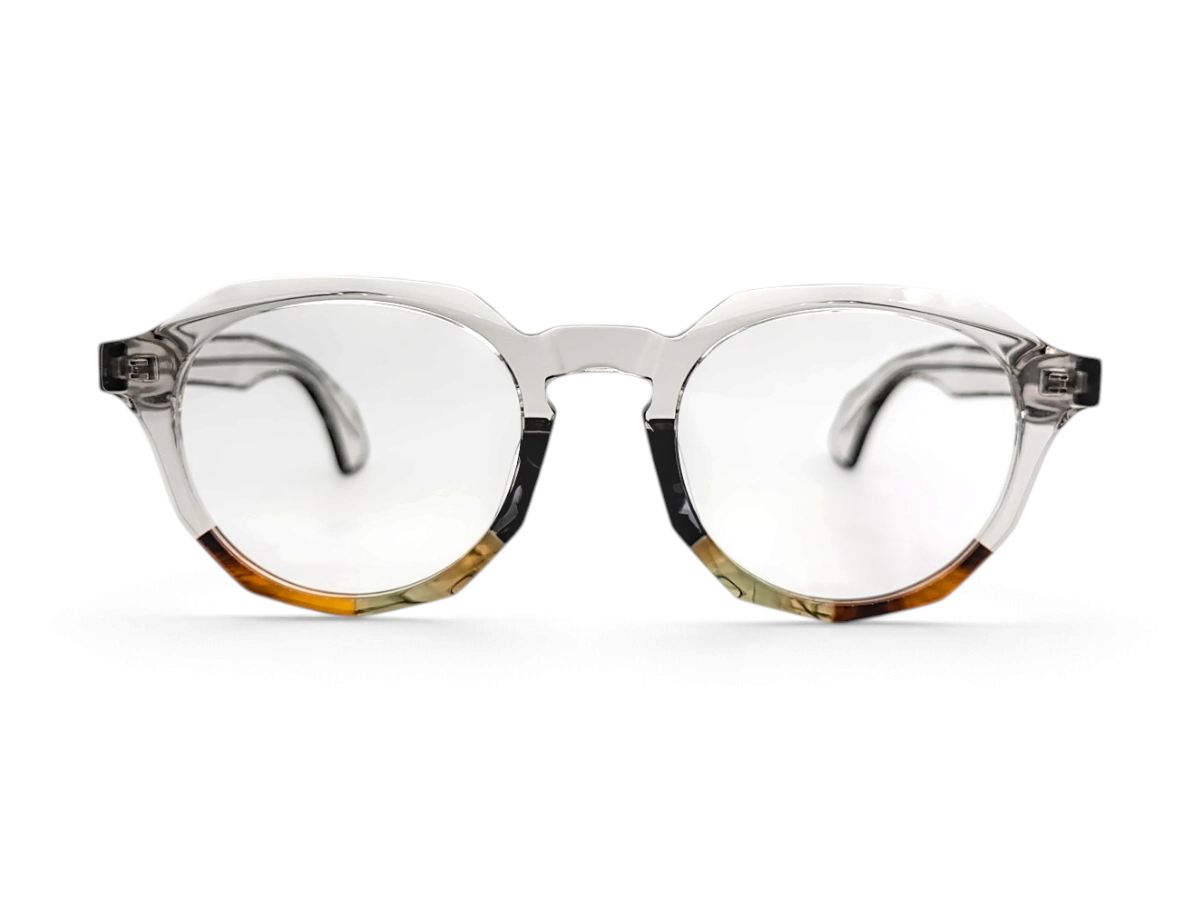
SA-B6122
A mostly transparent front keeps the colored laminate concentrated along the lower rims. Because the inserts occupy a smaller area, their position becomes especially noticeable across the finished frame.
Laminated Acetate · Clear Lens
SA-B4506
Red, tortoise and patterned clear acetate move through the brow and lower rims, creating visible transitions around the round front. The cut profile controls how much of each section remains exposed.
Laminated Acetate · Clear Lens
SA-B3545
The dark acetate carries most of the front, while red and blue laminated sections appear along the lower rims. Their contrast stays concentrated near the lens openings rather than across the whole frame.
Laminated Acetate · Clear Lens
SA-B4628
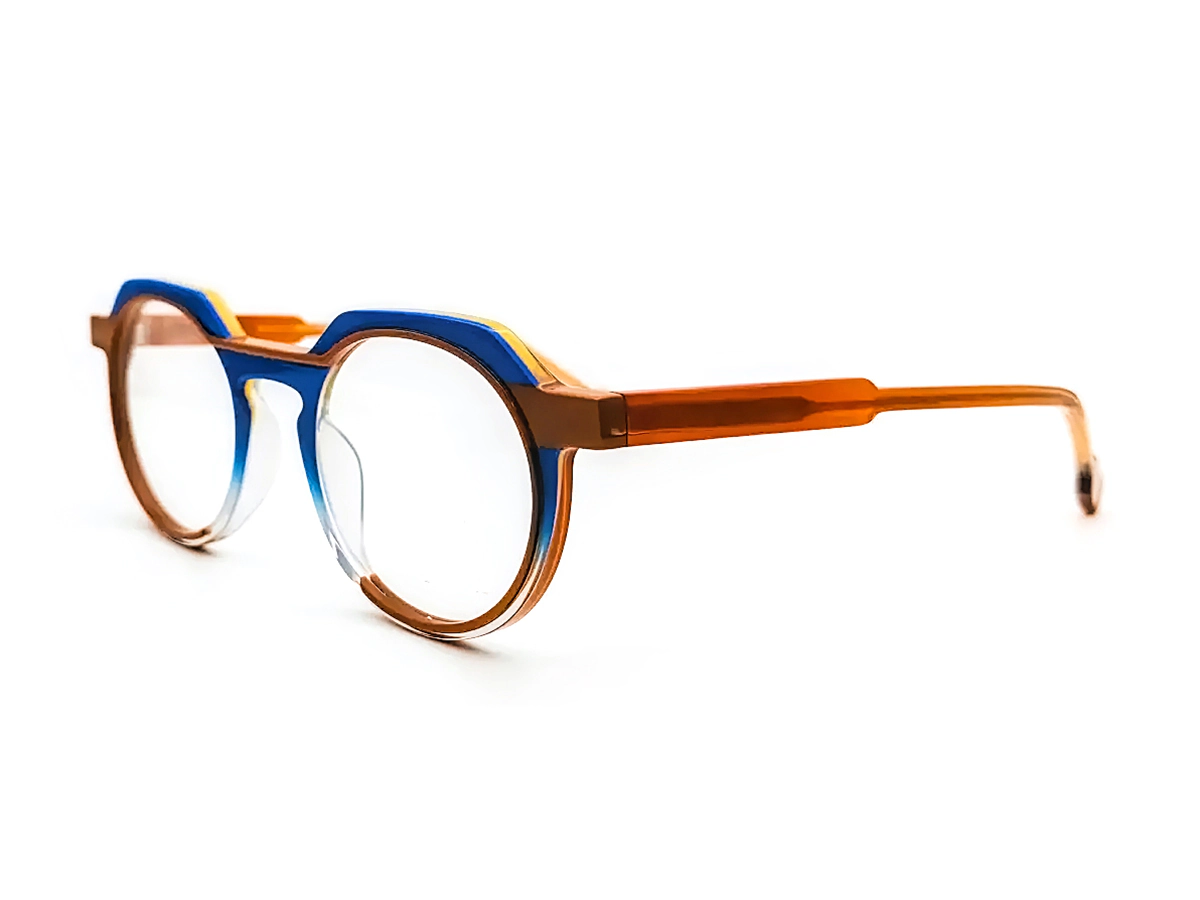
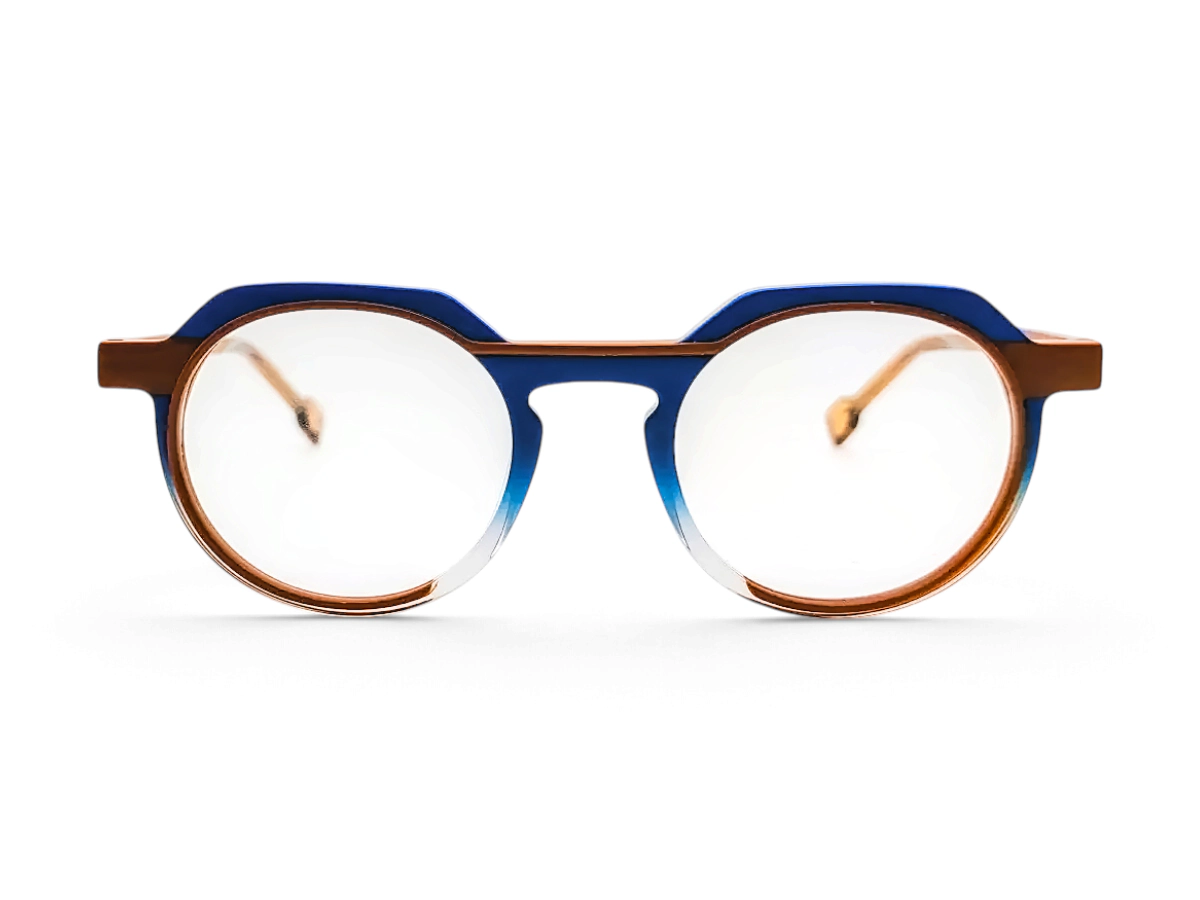
Blue and amber sections move across the brow, bridge and rims while lighter areas remain visible below. The color layout follows the round front to keep both sides visually balanced.
Laminated Acetate · Clear Lens
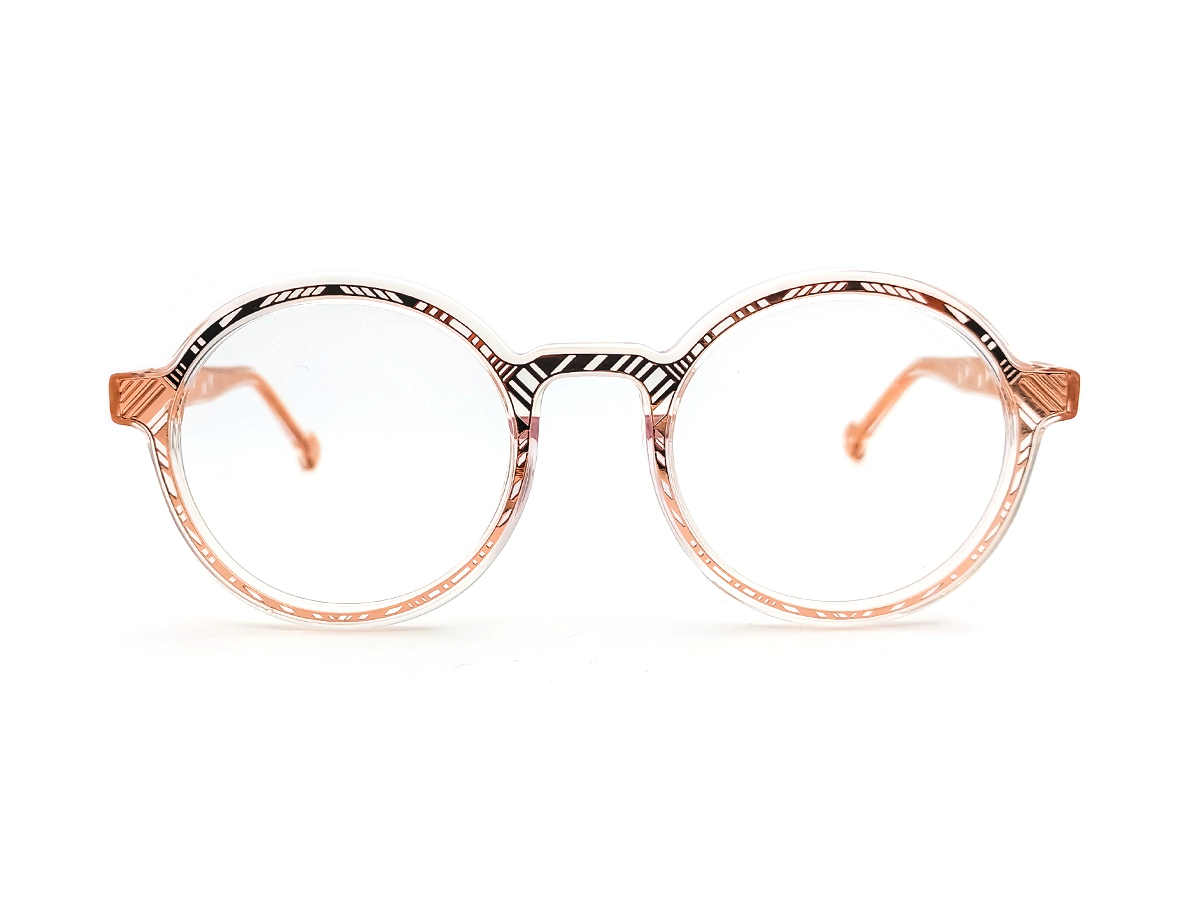
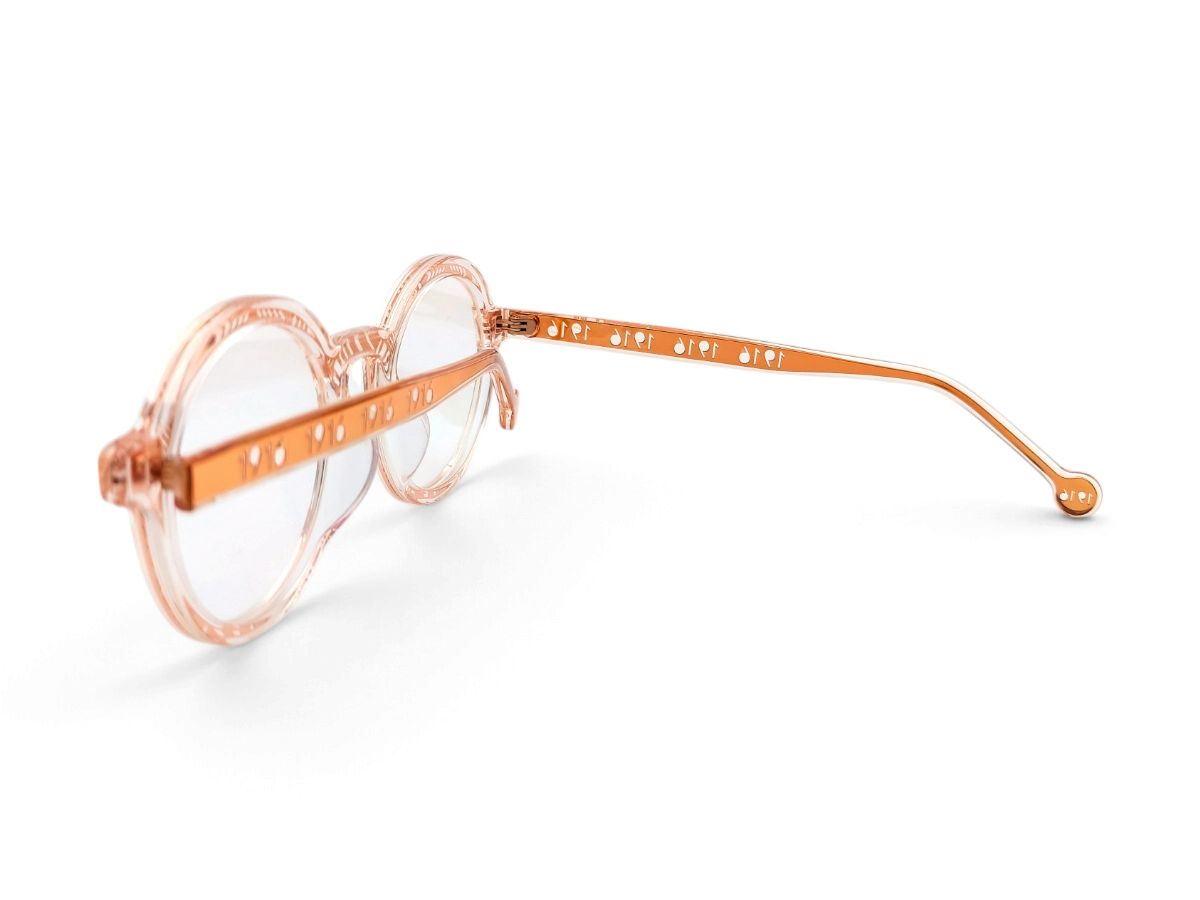
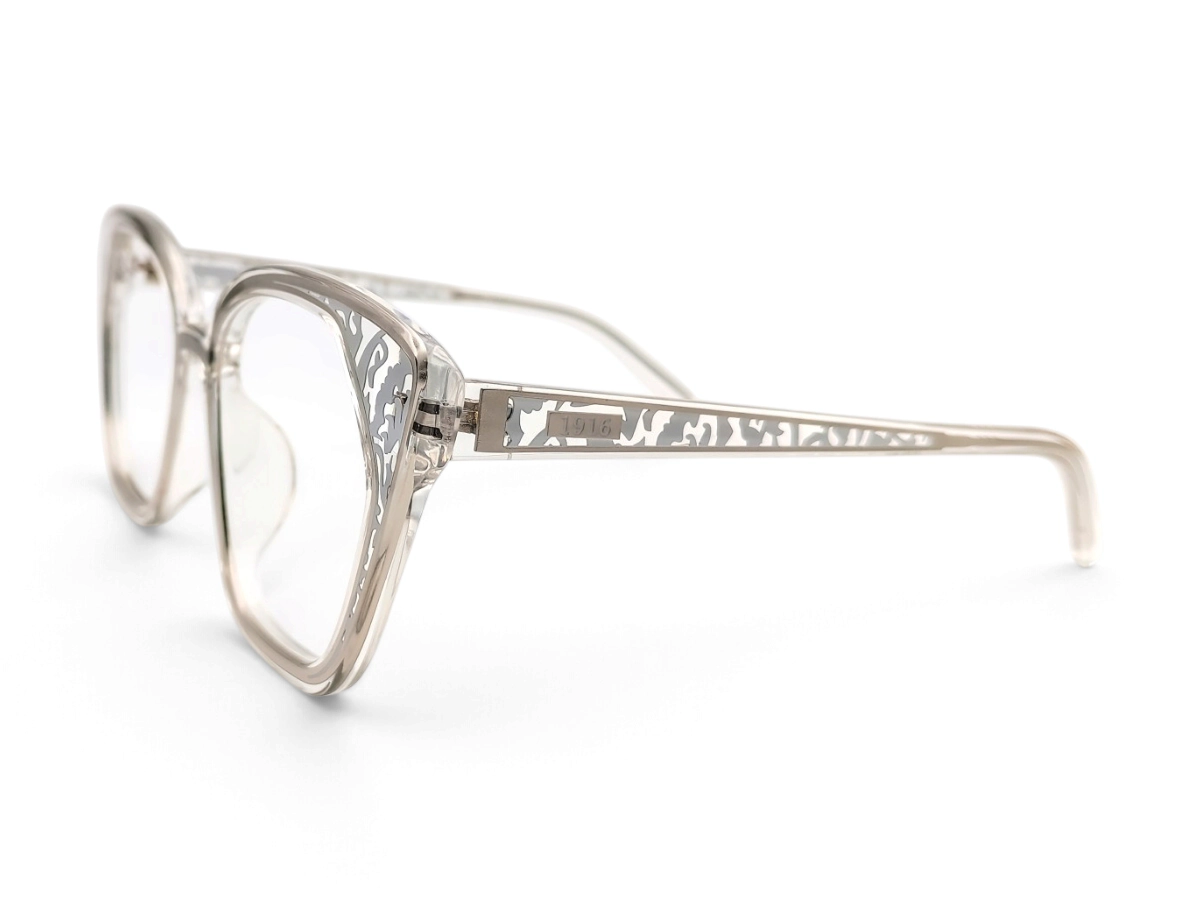
Metal infusion places decorative metal elements within the acetate so the detail becomes part of the visible frame structure. In custom glasses frames, metal placement, acetate thickness and endpiece geometry need to work together so the inserted detail stays aligned through machining and finishing.
SAM-B6684
Fine metal details run through the rose acetate rim and continue into the temple. Their position adds structure to the transparent frame without interrupting the rounded profile.
Acetate · Metal Infusion
SAM-B5630
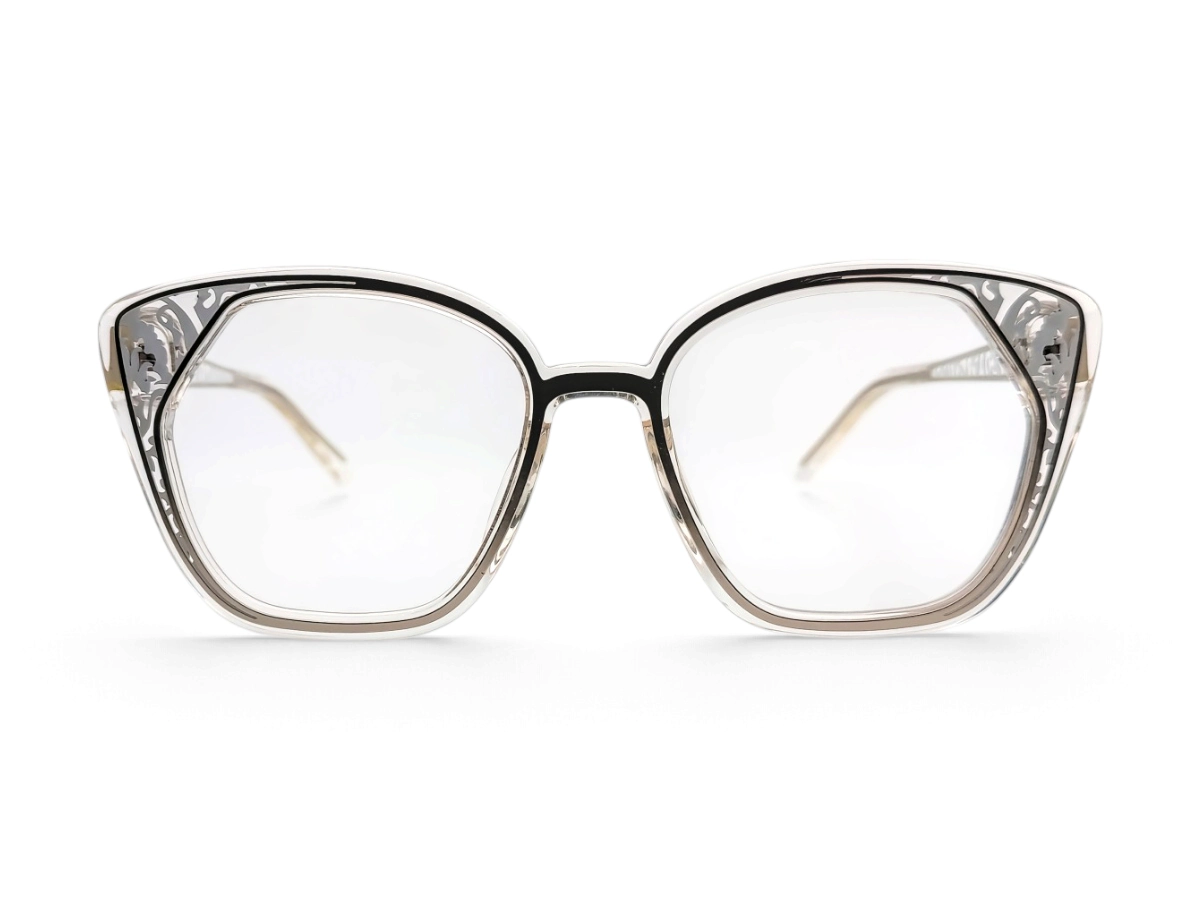
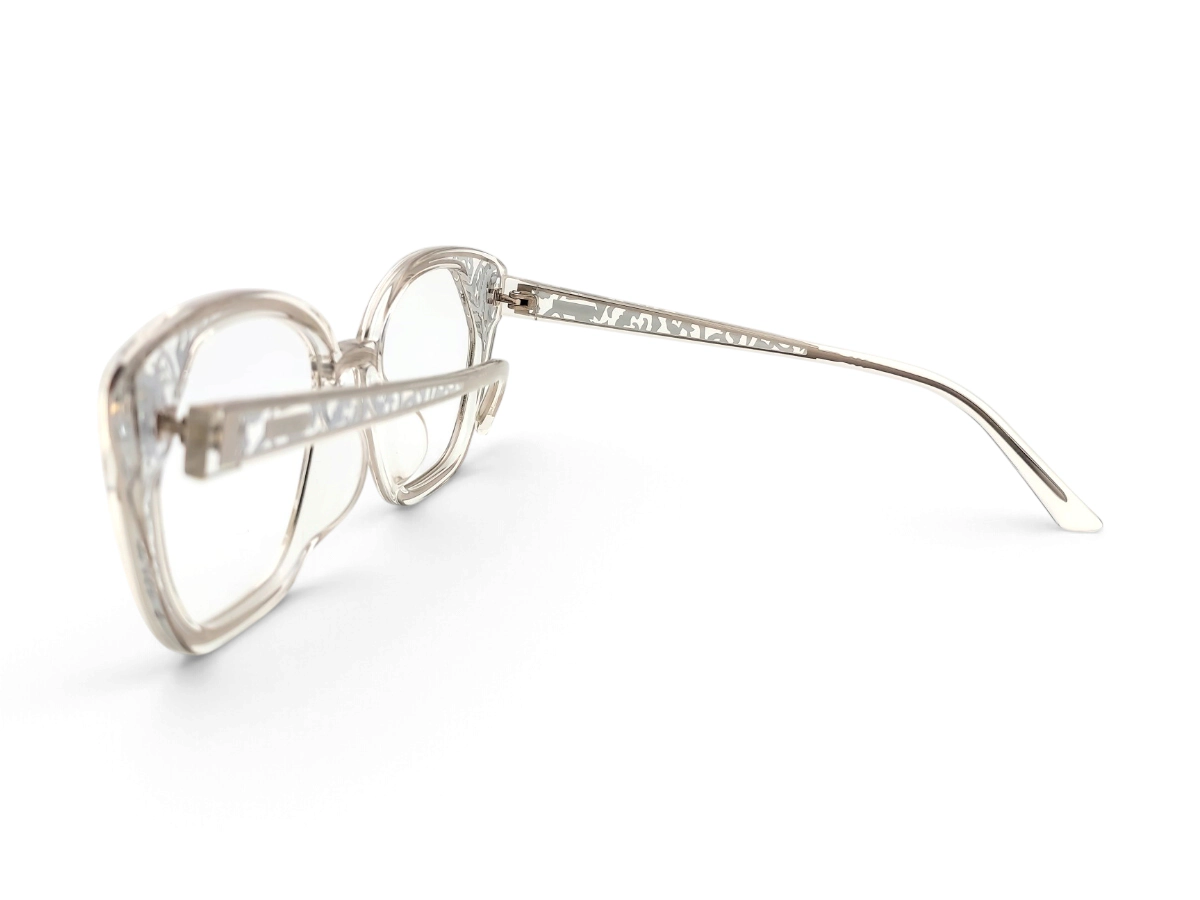
The clear acetate exposes an open-pattern metal structure around the rim and temple. Because the surrounding material stays transparent, spacing and placement remain clearly visible across the frame.
Acetate · Metal Infusion
SAM-B5844
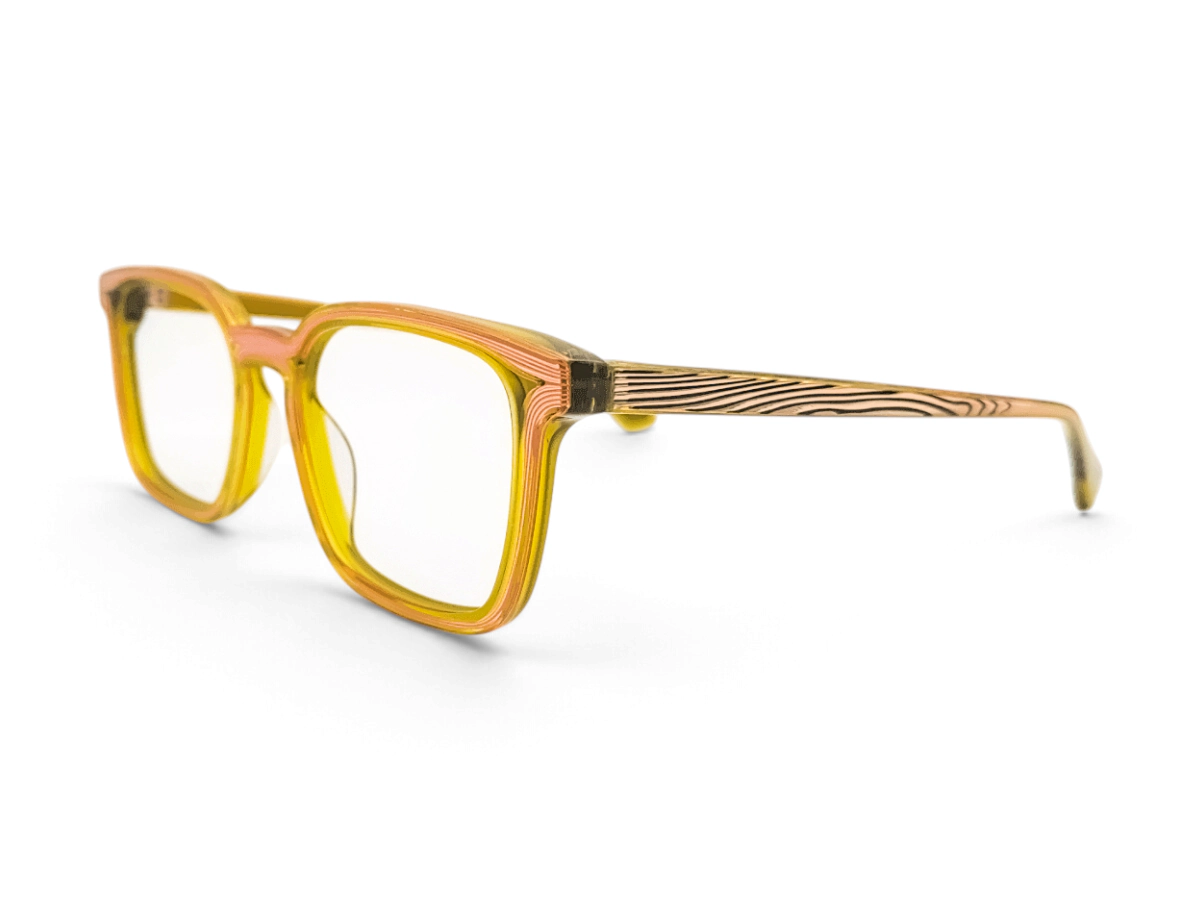
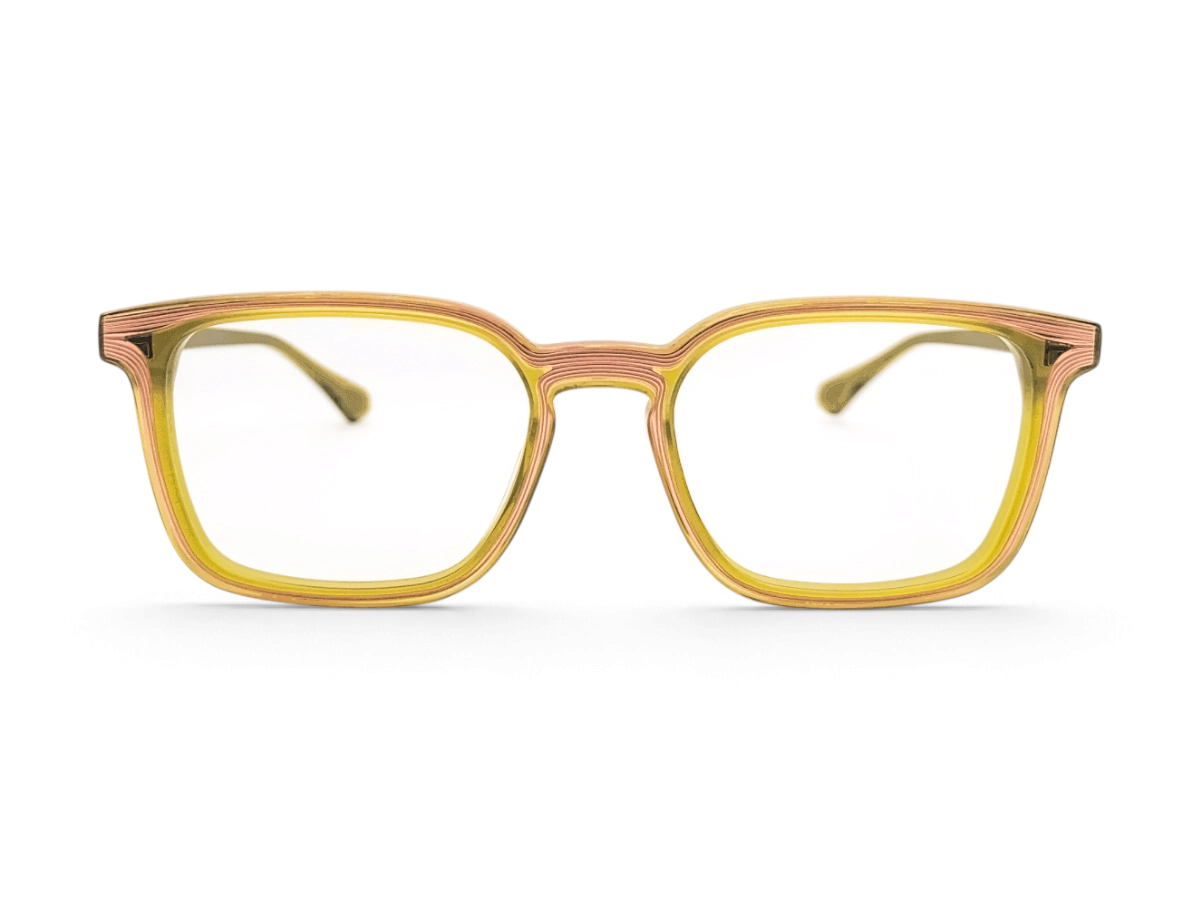
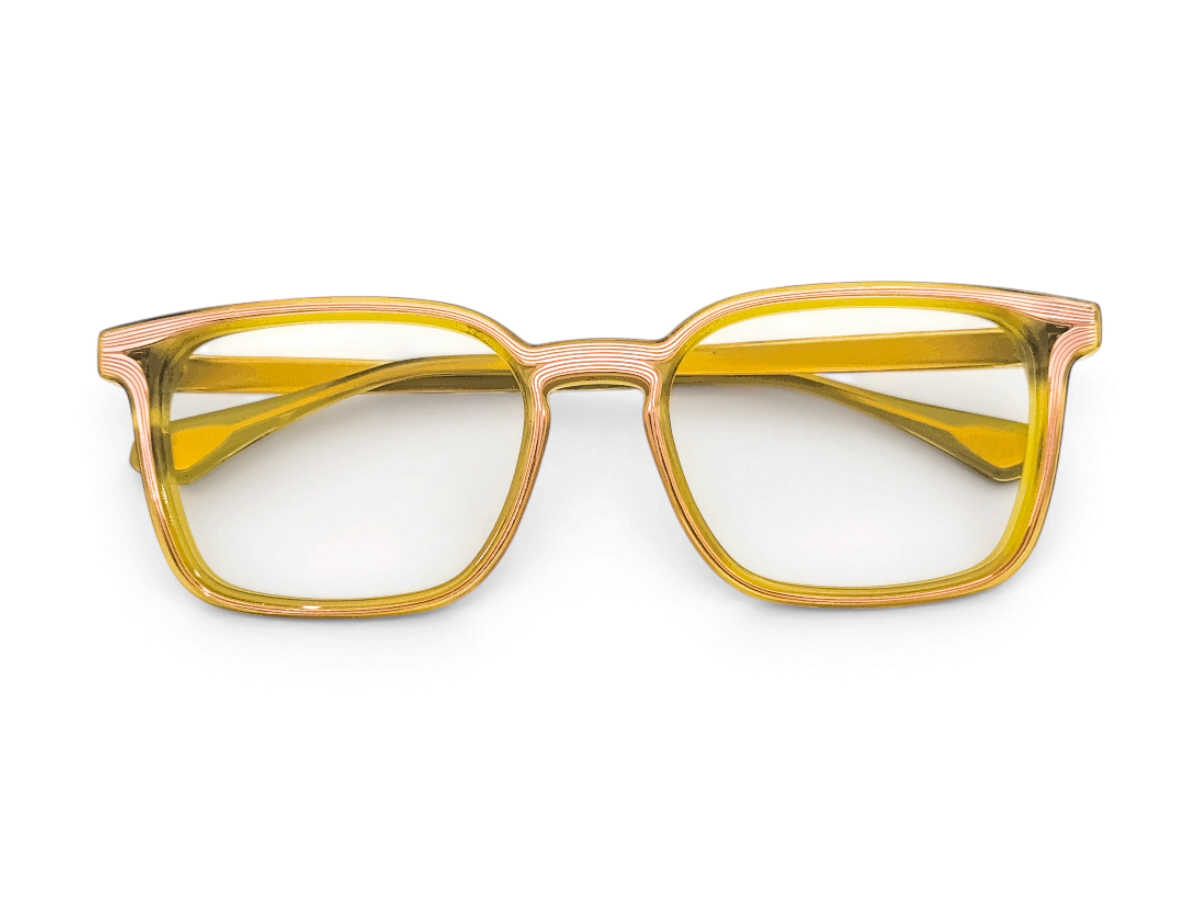
Fine metal lines follow the yellow acetate front and continue into the temple. The layered detail works with the rim profile so the metal reads as part of the frame rather than a separate surface decoration.
Acetate · Metal Infusion
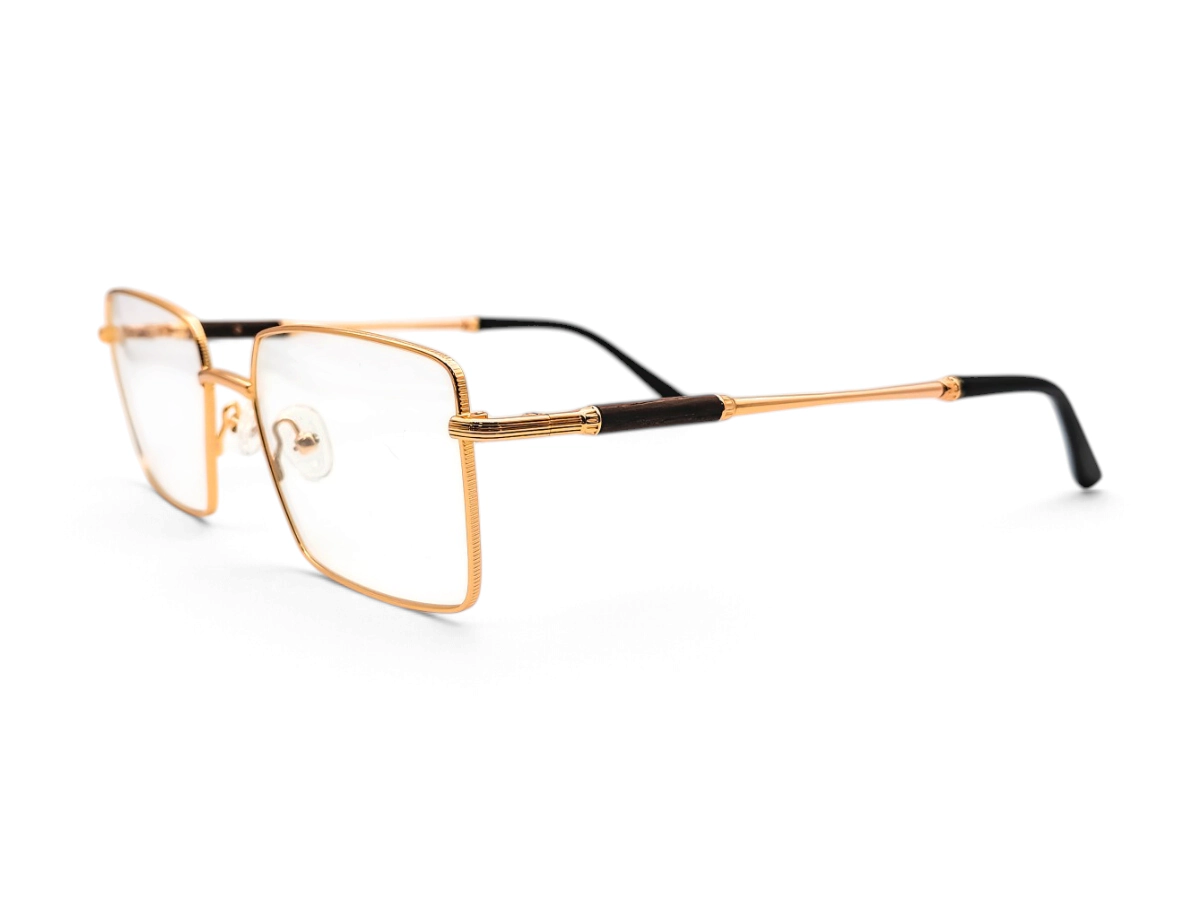
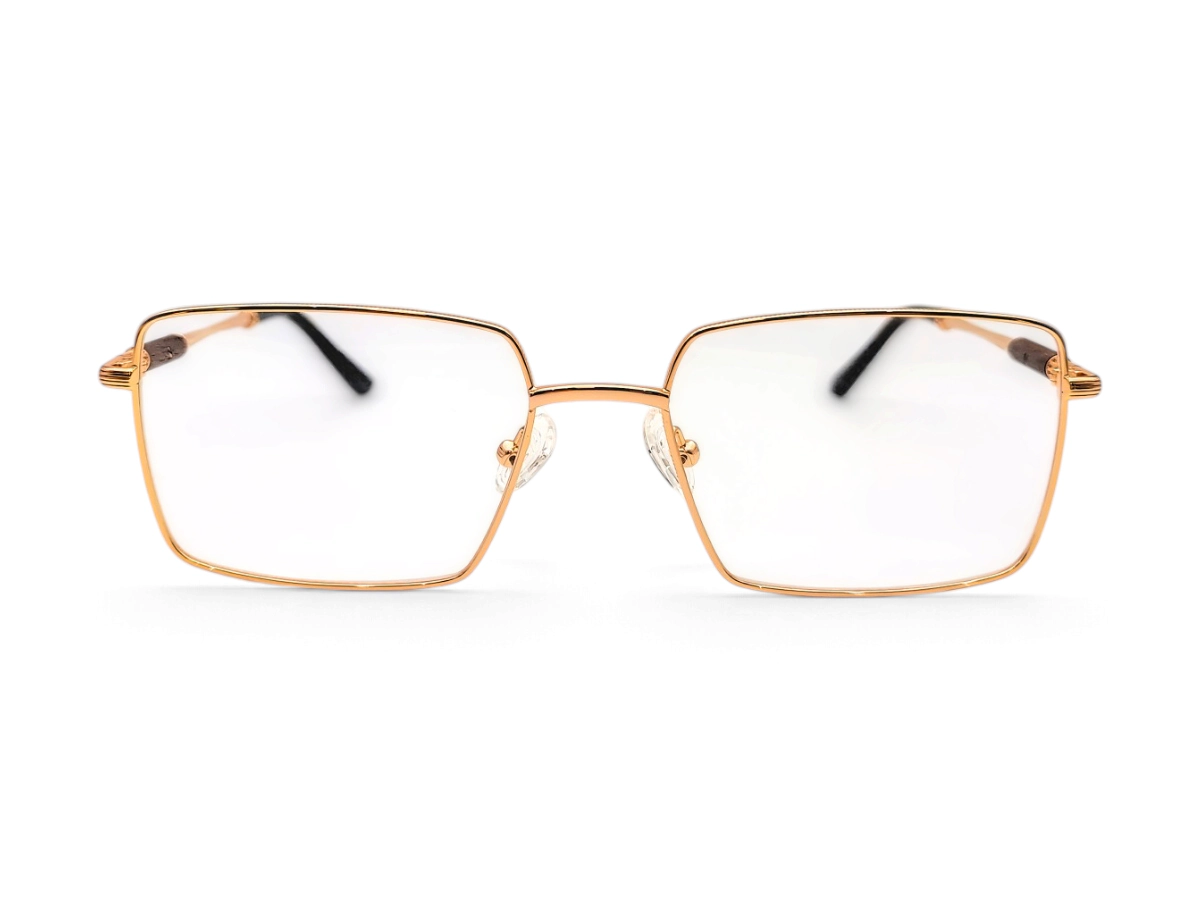
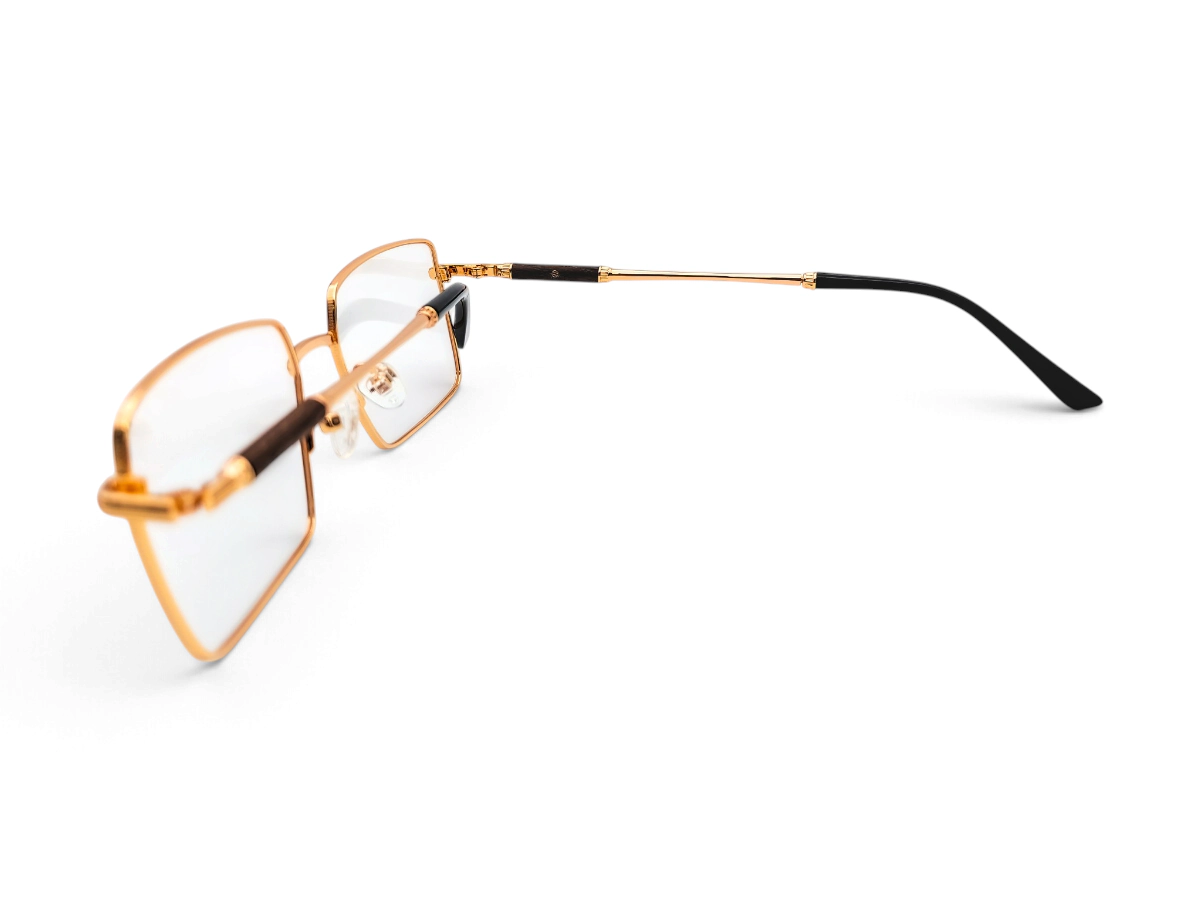
Fine metal rims make bridge geometry, endpiece shape and temple details more visible across the frame. In custom glasses frames, these components need to stay proportionate to the lens shape so the front and side profile read as one continuous structure.
SM-B6733
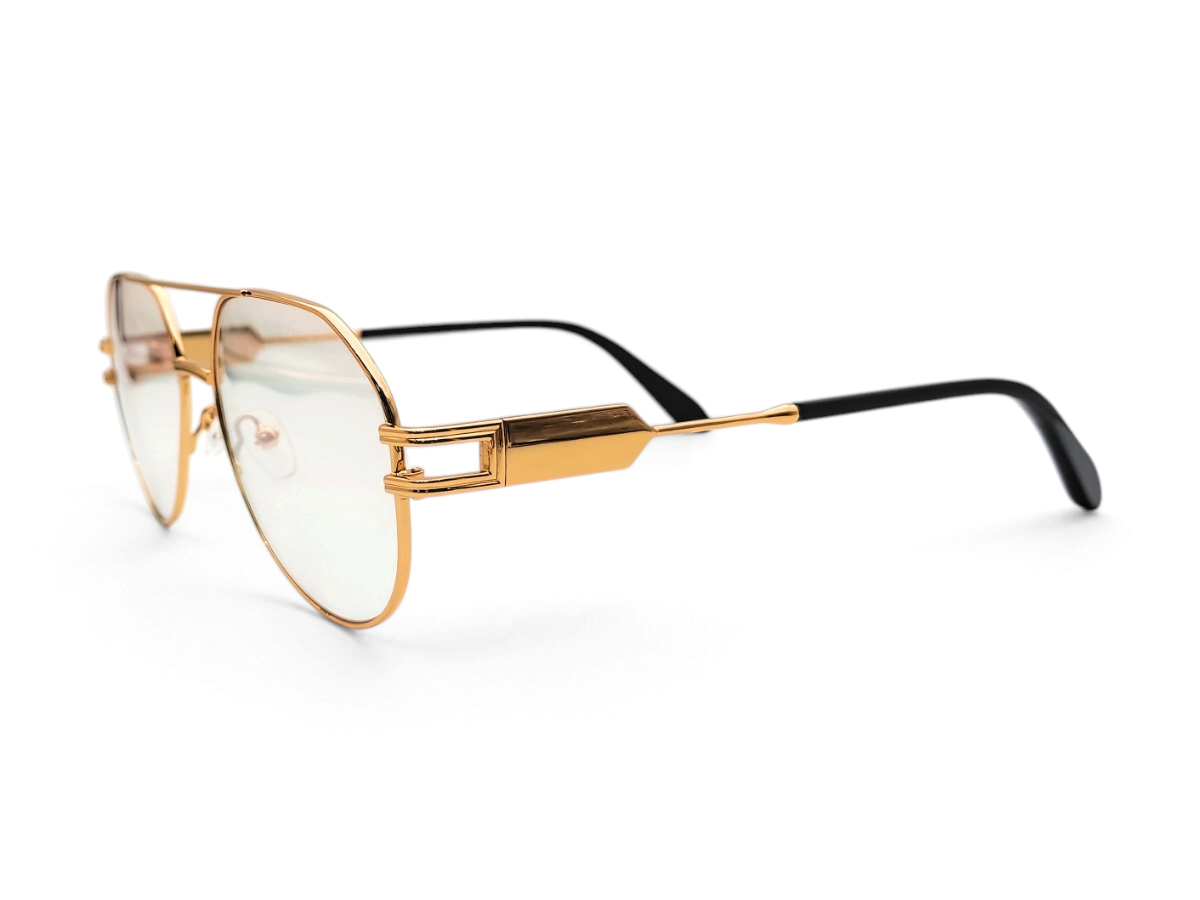
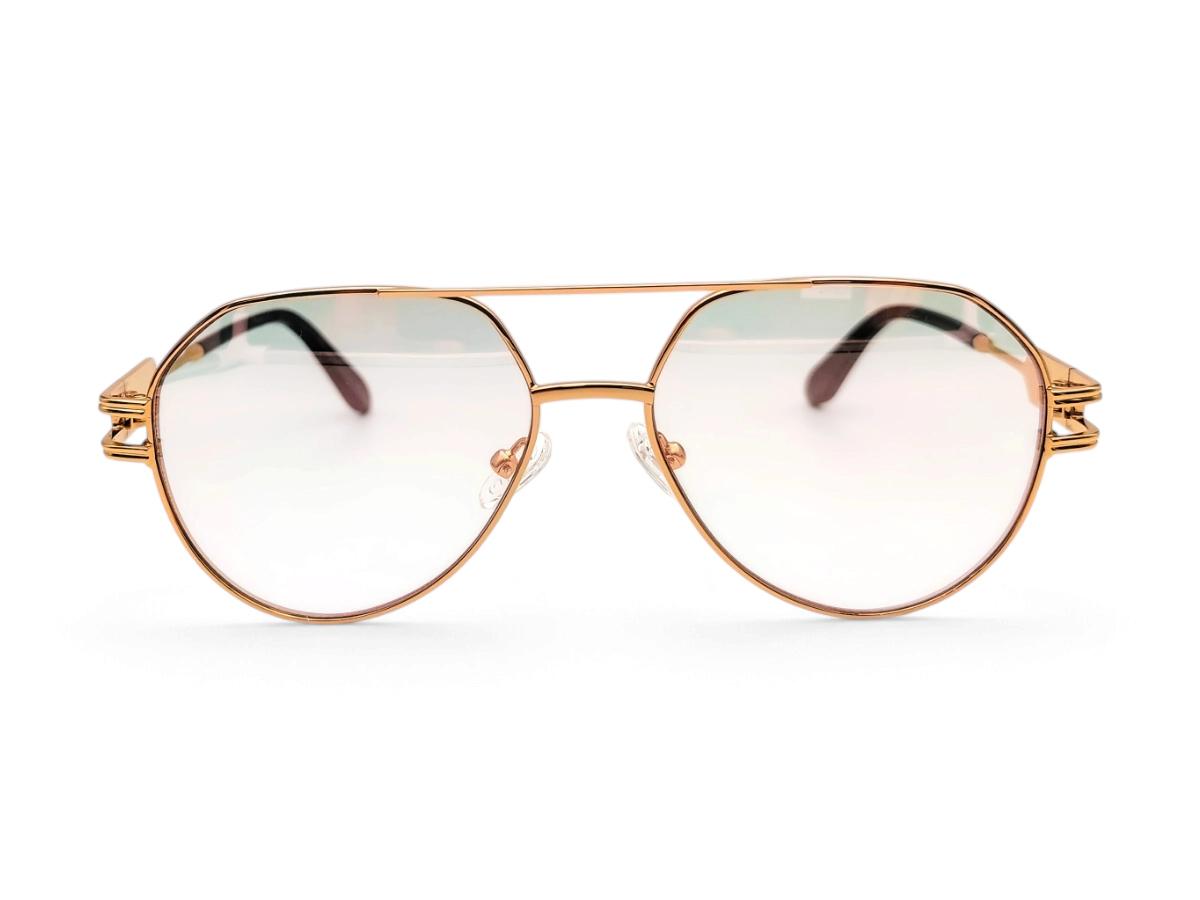
A broad geometric front is defined by fine gold-tone rims and a double-bridge structure. The angular endpiece adds more visual weight at the sides while the slim temples keep the profile controlled.
Metal · Clear Lens
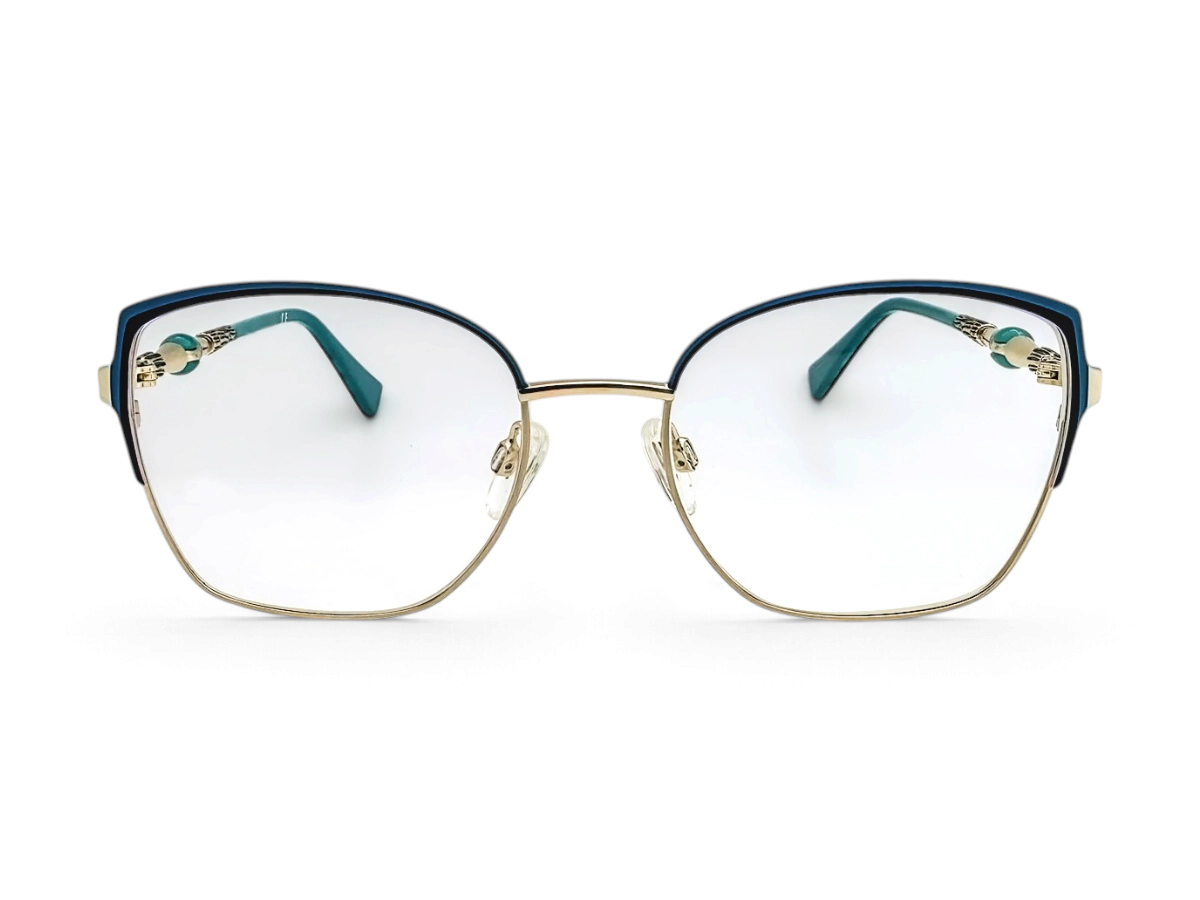
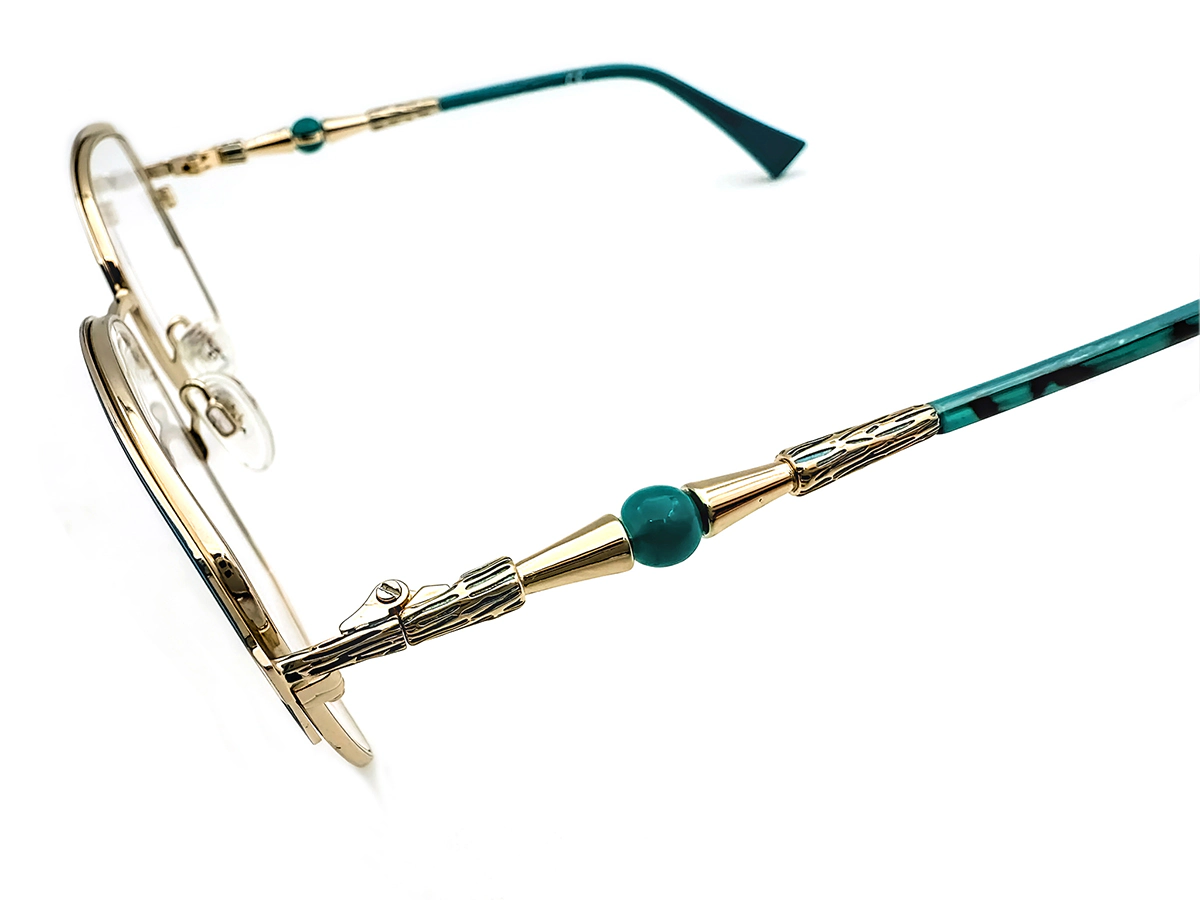
SM-B6819
Fine gold-tone rims are paired with teal accents and patterned temple details. The decorative side components add contrast without taking attention away from the lens shape.
Metal · Clear Lens
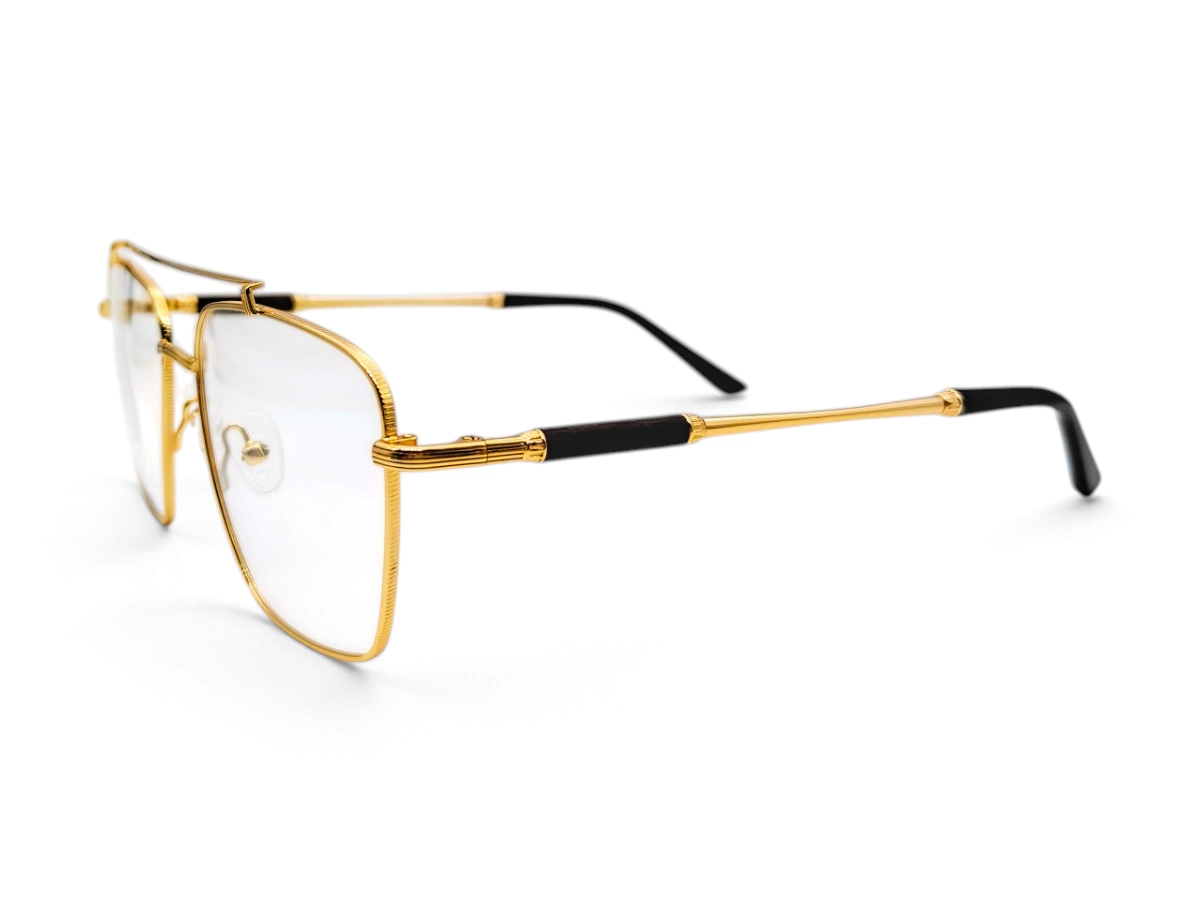
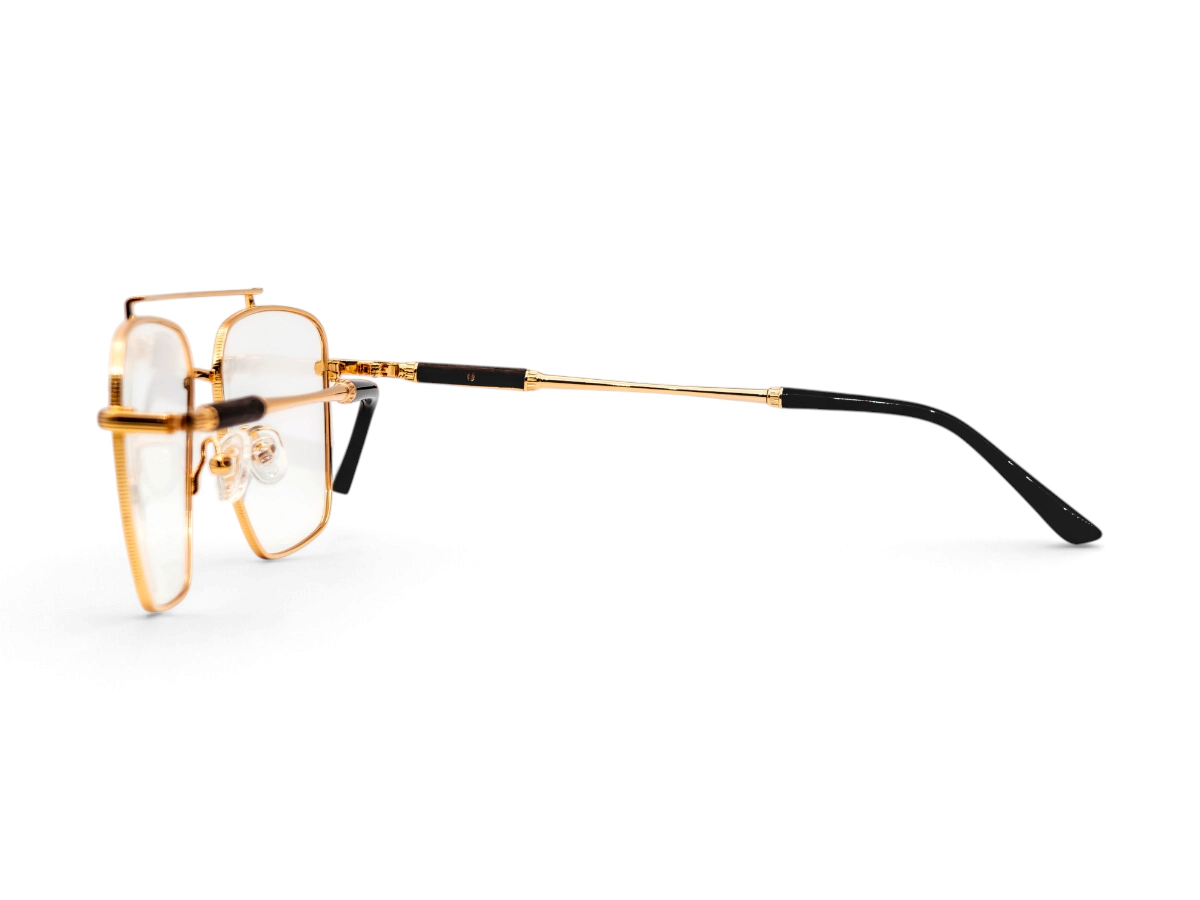
SM-B5262
Angular rims sit beneath a raised brow bar, creating two clear horizontal lines across the front. Their spacing gives the frame a more structured profile while the temples remain slim.
Metal · Clear Lens
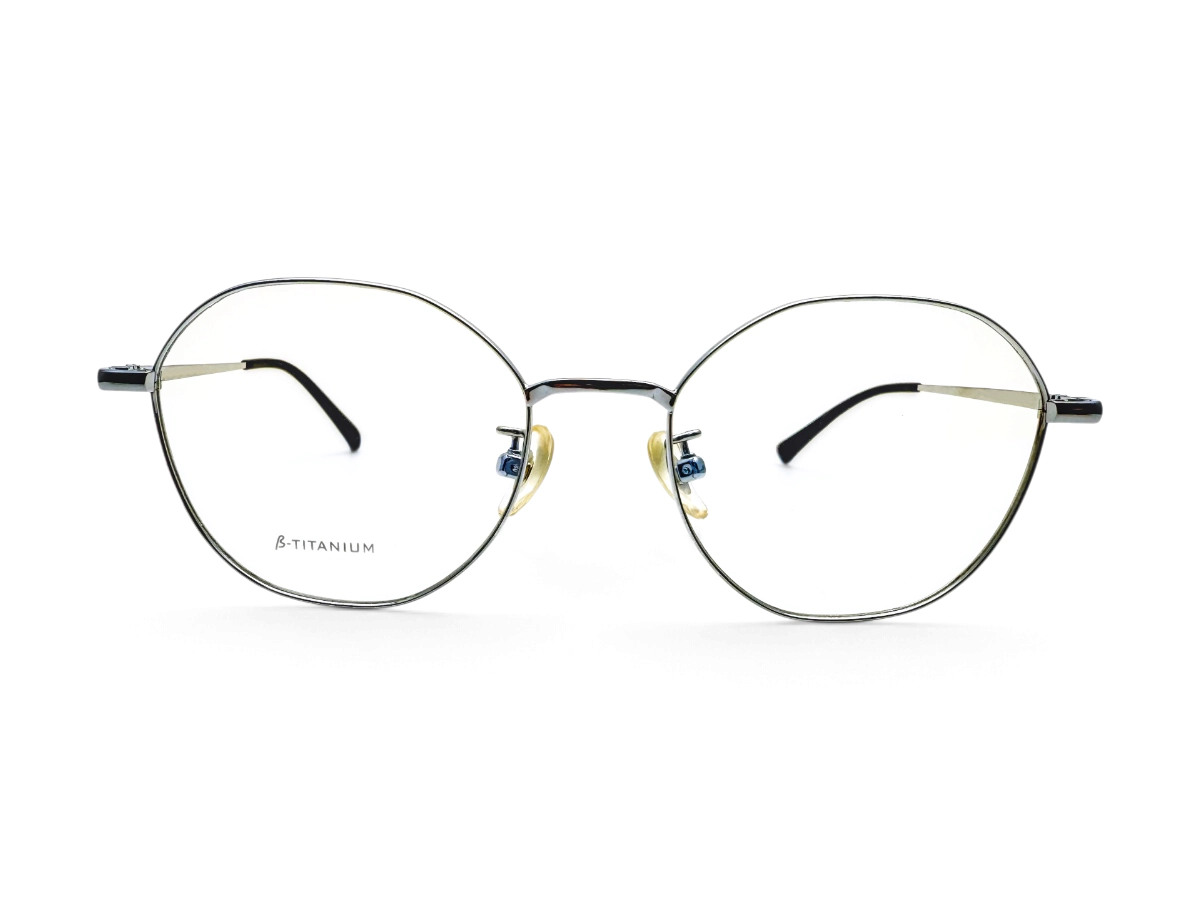
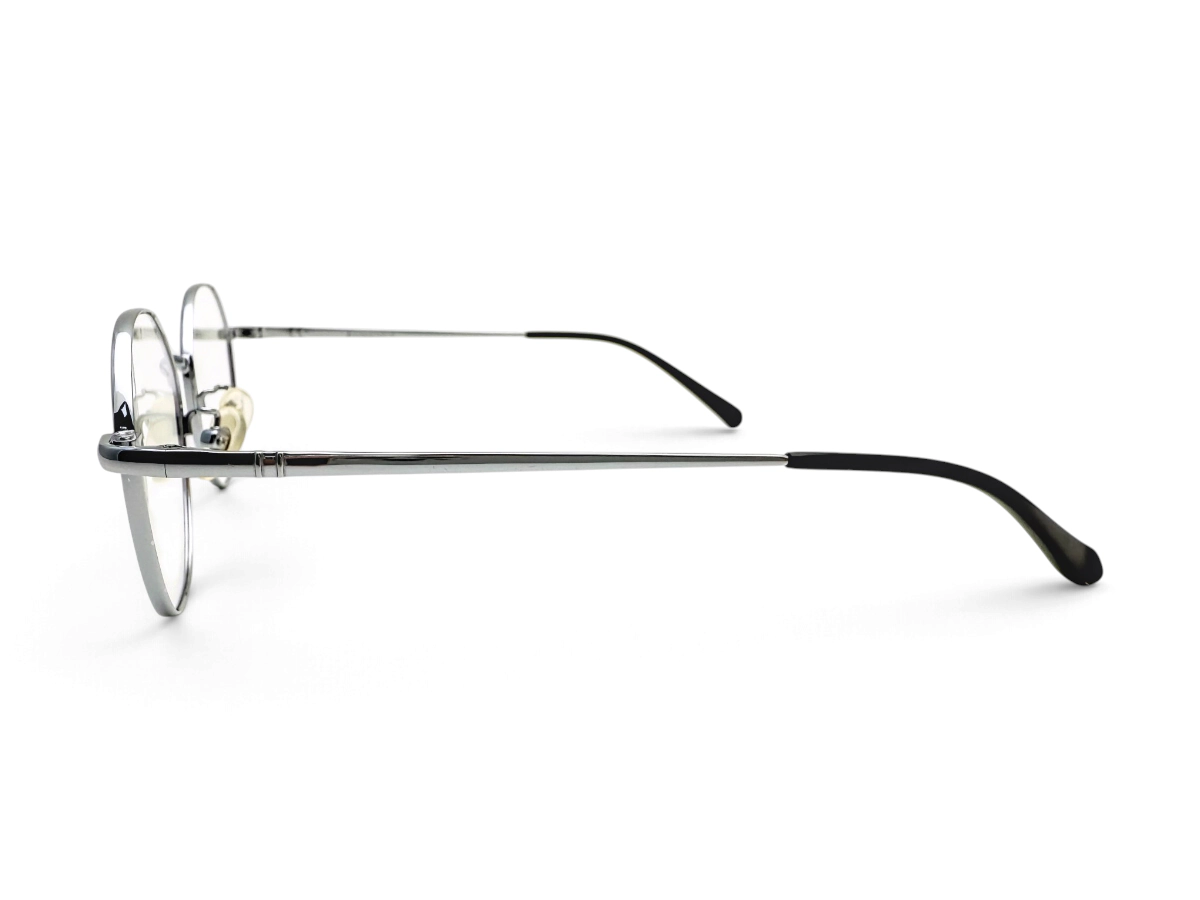
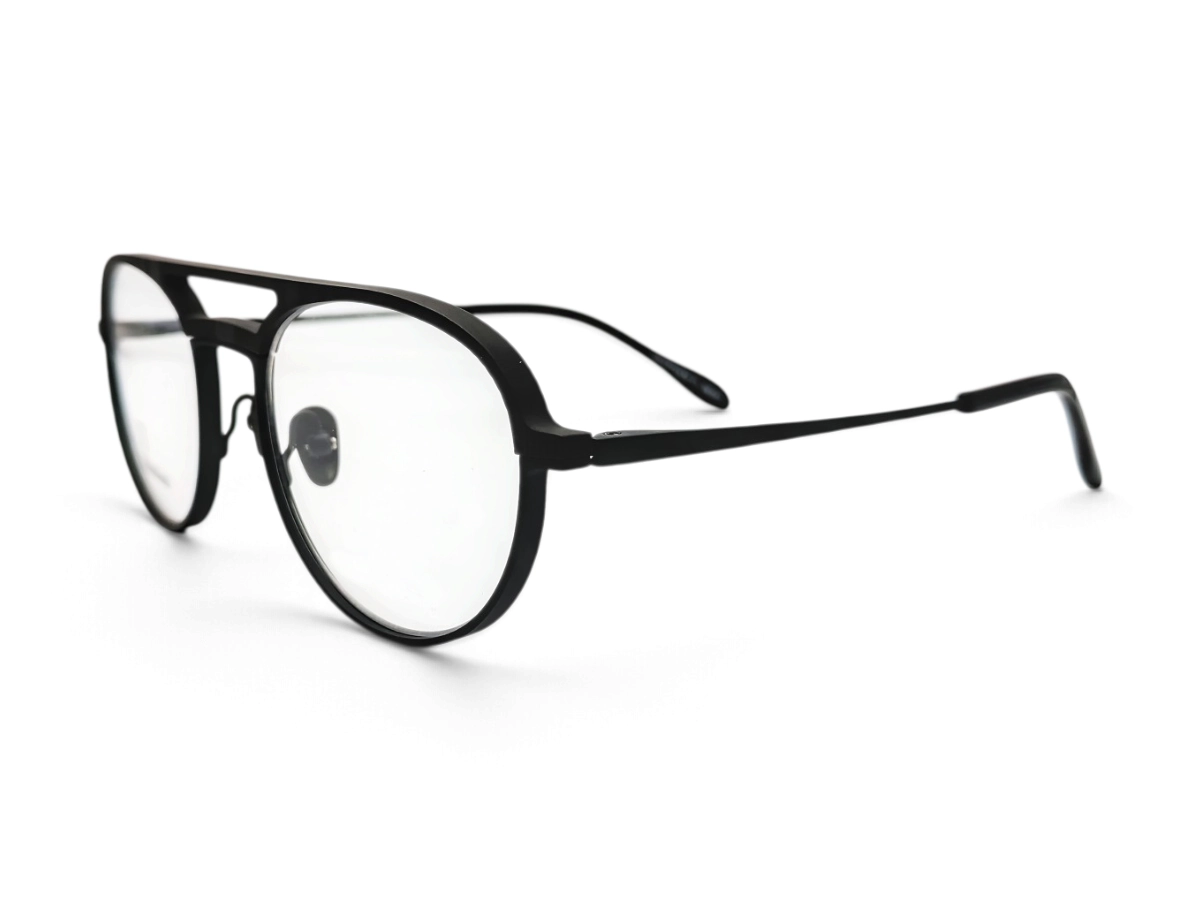
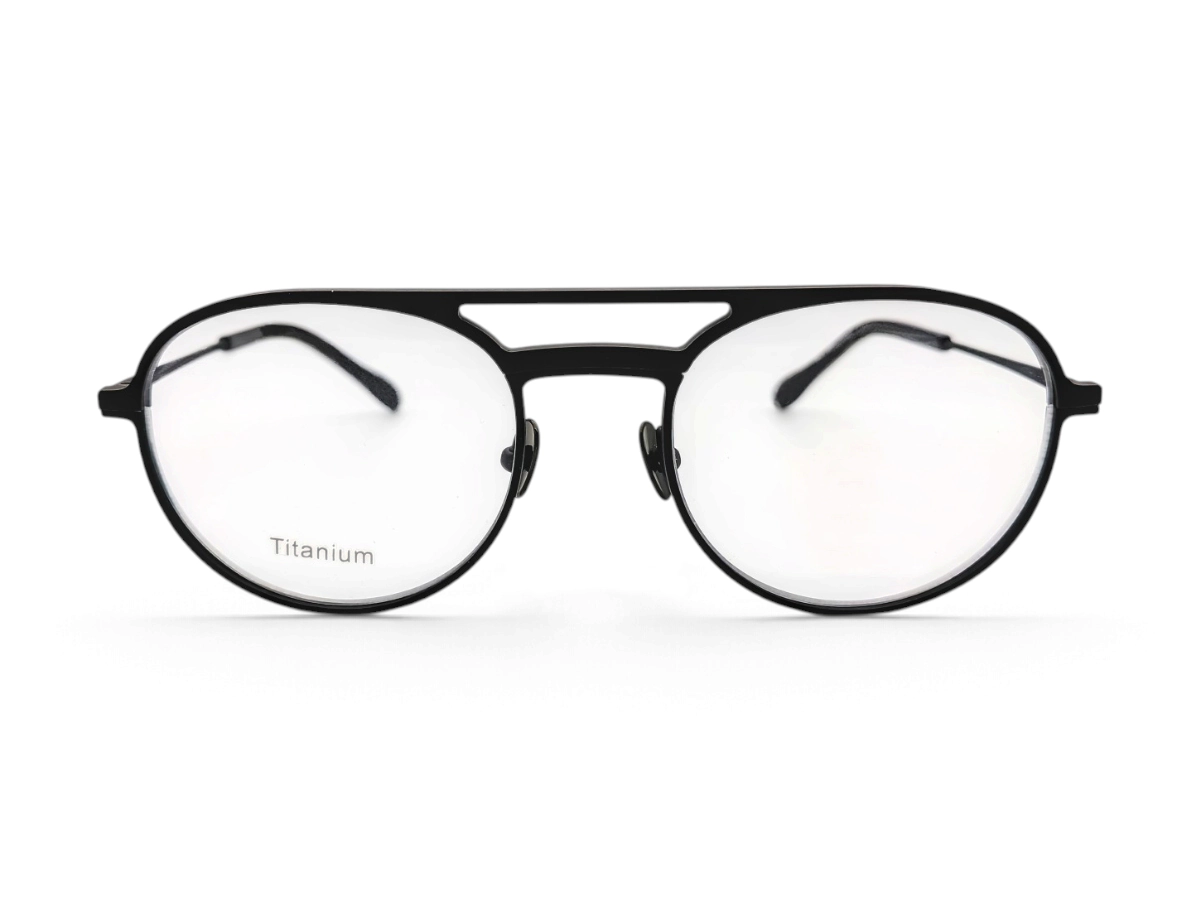
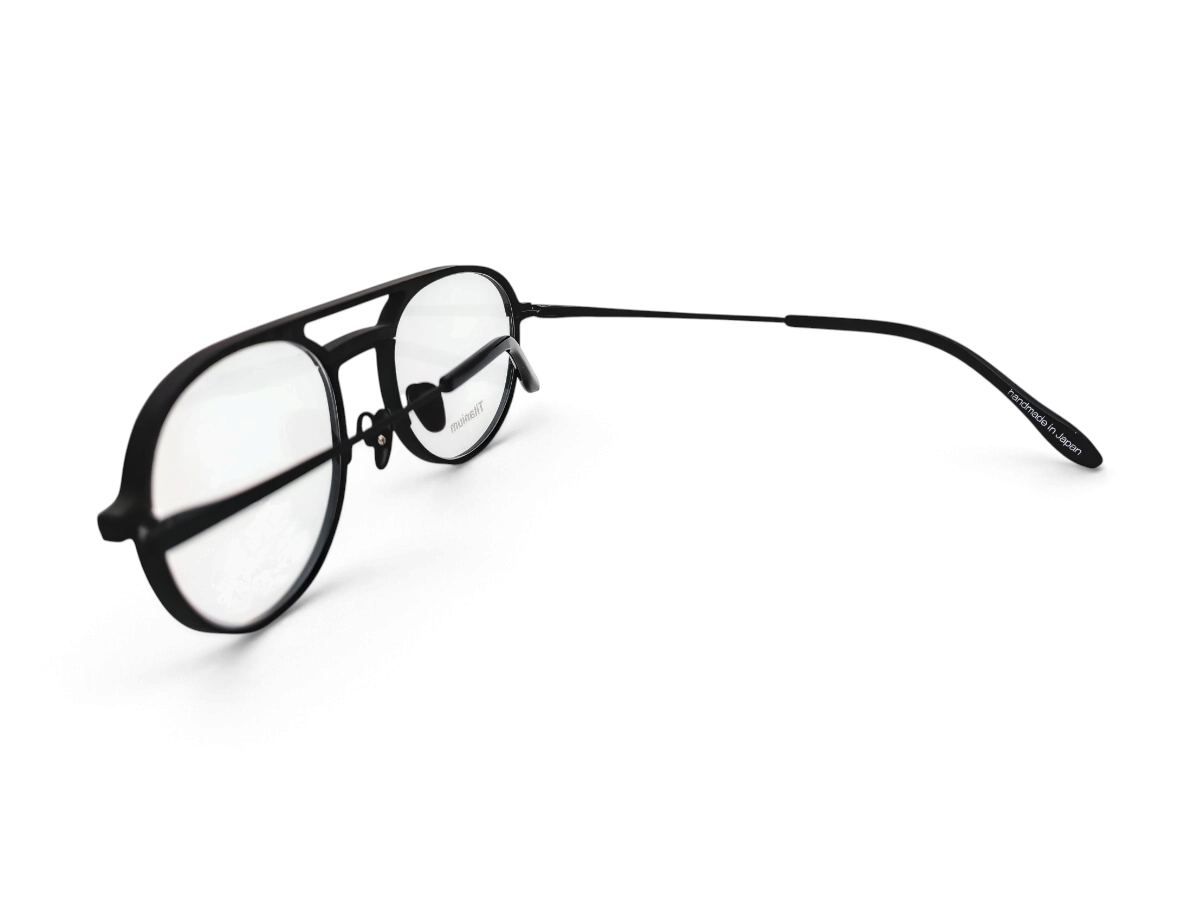
Titanium changes how an optical frame carries weight, tension and detail. In custom glasses frames, thinner titanium rims and temples allow a lighter profile while still keeping the bridge, endpiece and side construction visually precise. For an optical frames manufacturer, those differences affect how the frame is balanced, sampled and refined for production.
ST-B5711
A thin round titanium front keeps the visual weight low while the fine bridge and temples make the structure read cleanly from front to side. The result is a light profile with a precise, understated finish.
Titanium · Clear Lens
ST-B5620
Angular titanium rims give the front a more defined outline, while the slim temples keep the side profile light. The contrast between the broader lens shape and the fine wire construction makes the frame look structured without becoming heavy.
Titanium · Clear Lens
ST-B4519
A stronger upper line gives this titanium frame more presence across the front, while the fine rims and temples keep the overall structure visually controlled. The balance between a bold front and slim side construction creates a sharper profile.
Titanium · Clear Lens
AFTER LENS FITTING
Once lenses are fitted, custom glasses frames can behave differently from the empty sample. Lens seating, bridge position and temple direction should therefore be checked against the completed frame, especially when lens thickness or front geometry changes.
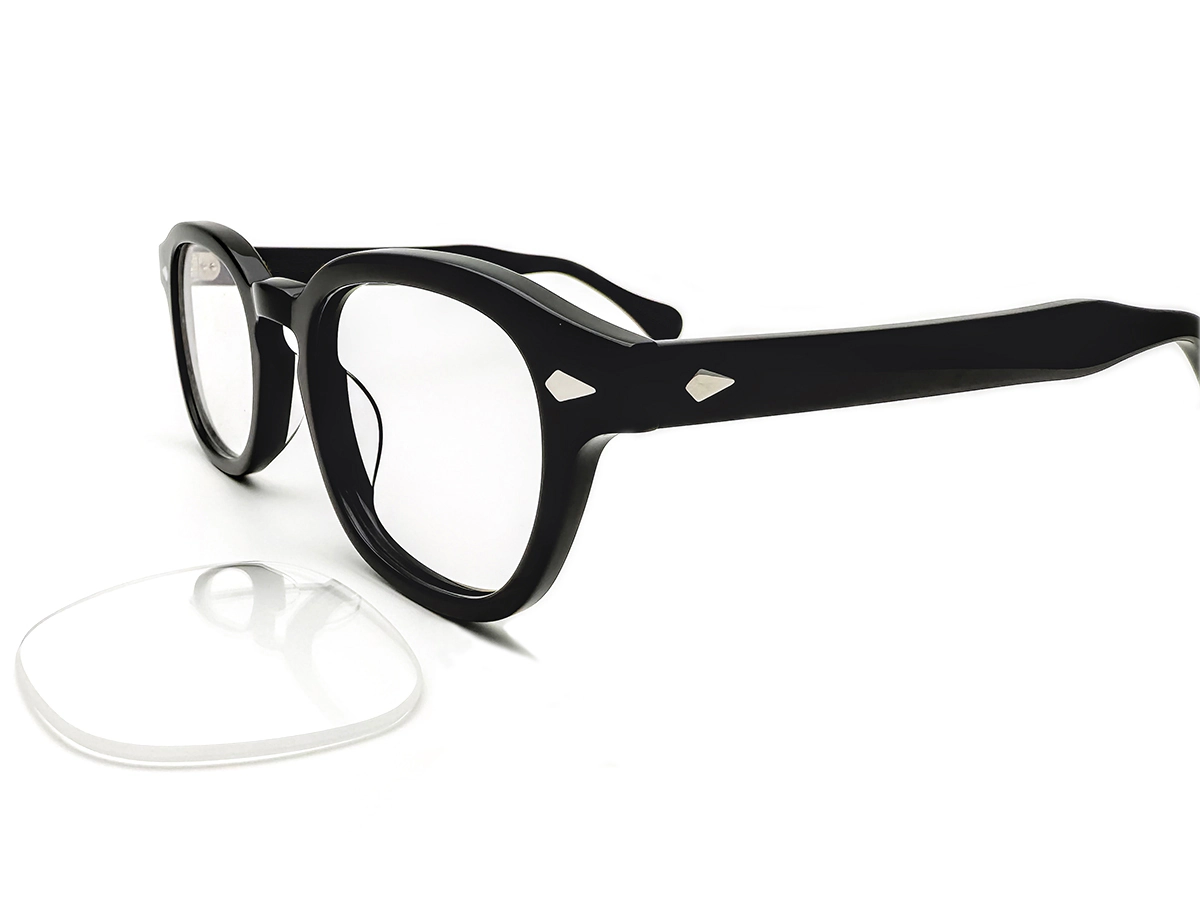
The lens opening and groove must match the intended lens while keeping the approved front proportion. Lens edge thickness also needs enough clearance to seat cleanly within the frame.
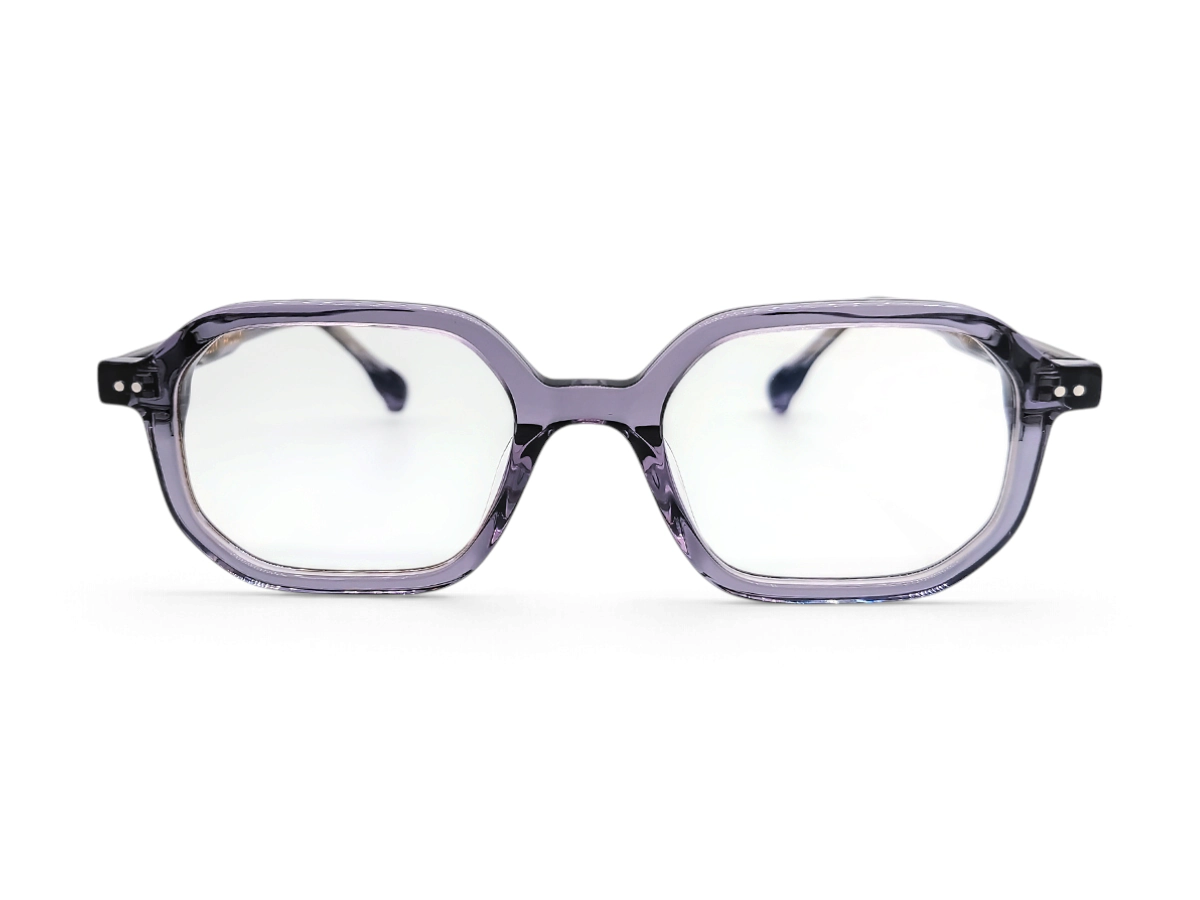
Lens weight changes how the finished front is carried. Bridge position and left-right alignment are checked together so the completed frame remains balanced across the front.
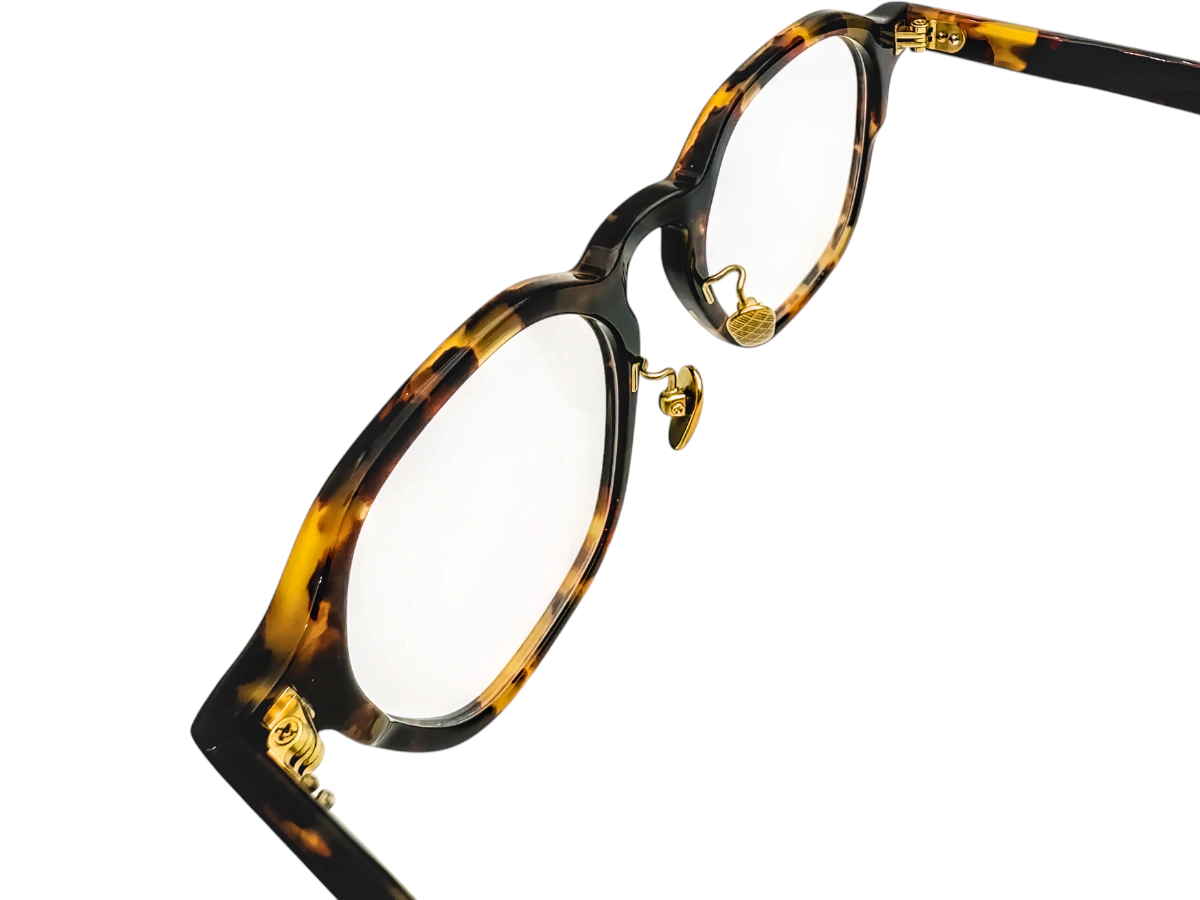
Lens weight can also change how the front sits relative to the temples. Hinge position and temple direction are therefore reviewed with the completed frame in mind, especially when lens thickness varies.
REPEAT PROGRAMS
Repeat orders are easier to control when the approved frame becomes the production reference for dimensions, fit, finish and branding. An optical frames manufacturer should carry those confirmed details into later batches so brands and importers can replenish without reopening the same frame decisions.
Share a drawing, approved sample or reference frame. The review focuses on lens fit, material direction and construction points an optical frames manufacturer needs resolved before sampling or production. If repeat orders are planned, the same approved specification can also guide wholesale optical eyewear production.
We use cookies to support essential website functions. You can find details about the cookies used on this site in our Cookie Policy.