Sunglasses Manufacturer | OEM & ODM Eyewear Factory | Seesun
Sunglasses Manufacturer | OEM & ODM Eyewear Factory | Seesun
Acetate, metal, titanium, carbon fiber and natural materials can change the weight, structure and visual balance of the same frame in different ways. In mixed material eyewear, those differences become most important where one material meets another, so the construction needs to be understood before sampling begins.
COLLECTION
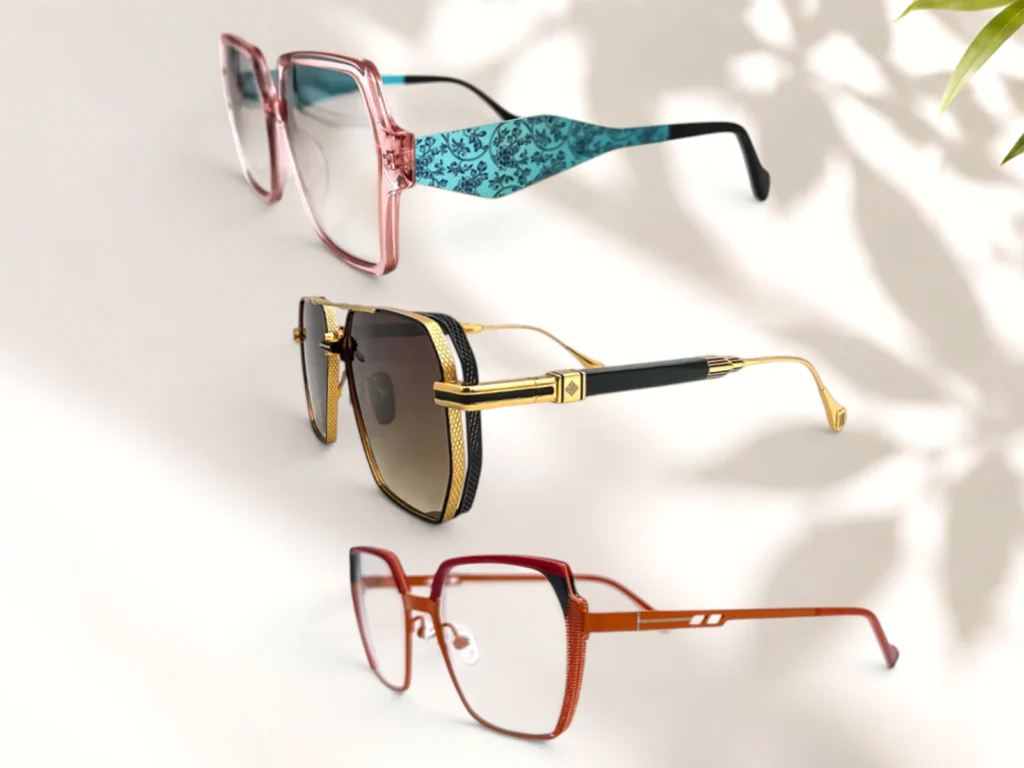
Different material pairings solve different structural, weight and visual problems. In custom mixed material eyewear, the front, bridge, temples and detail areas need to be judged by how the materials meet, not by the pairing alone.
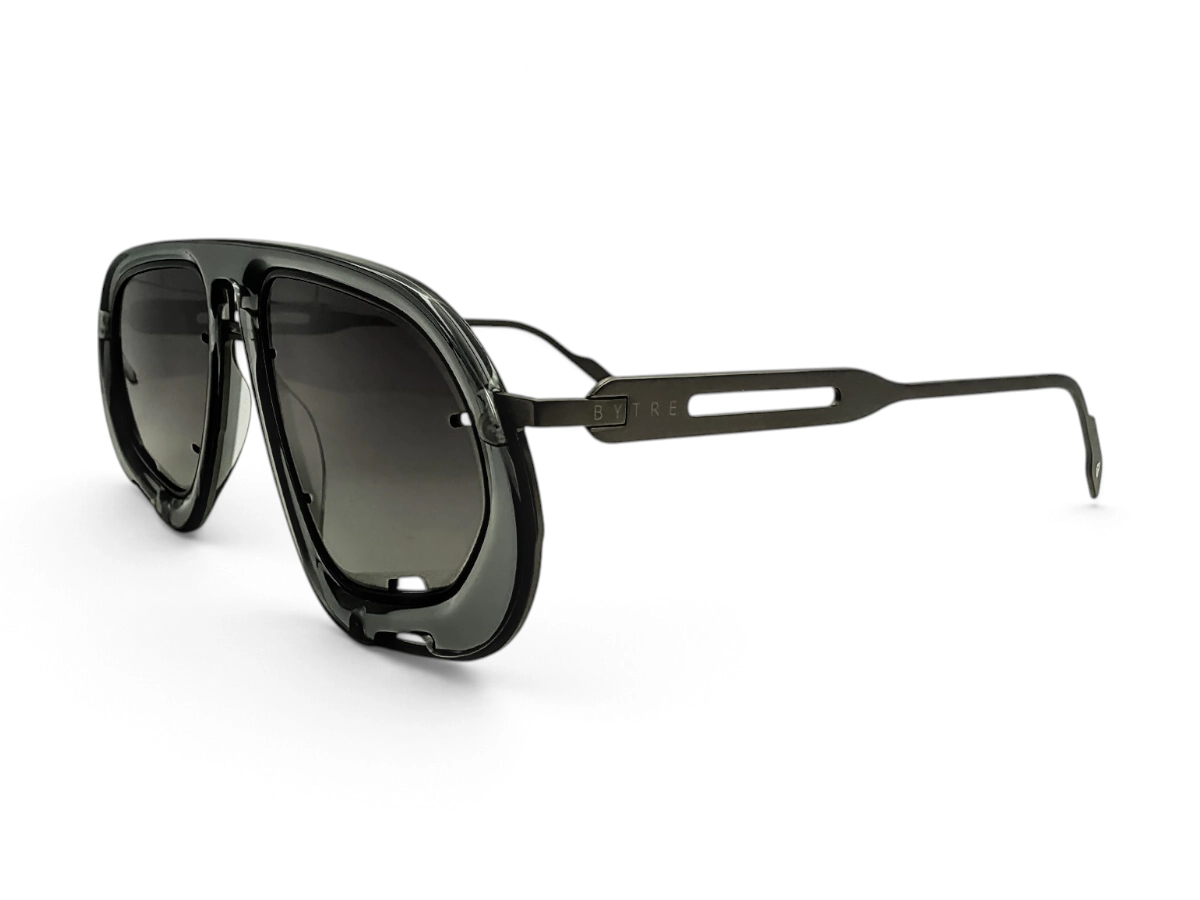
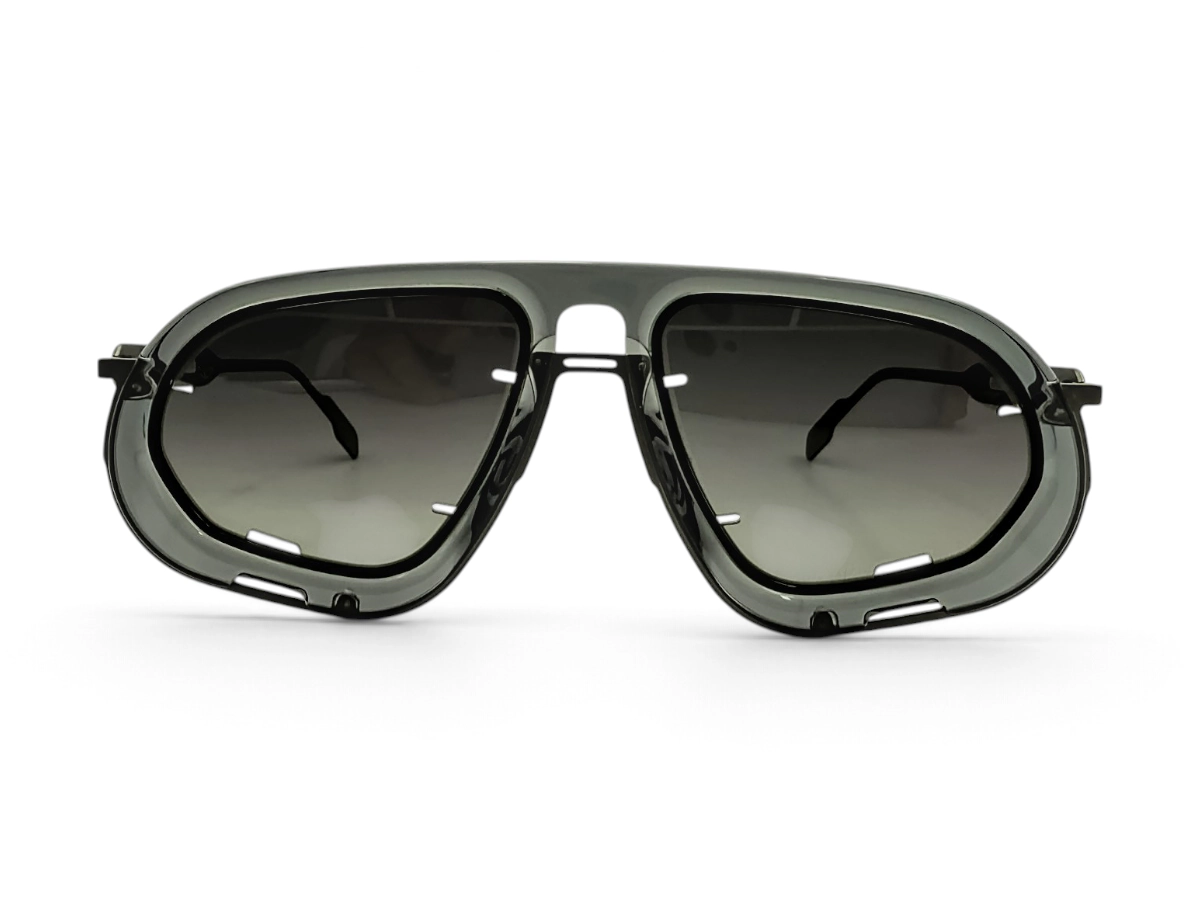
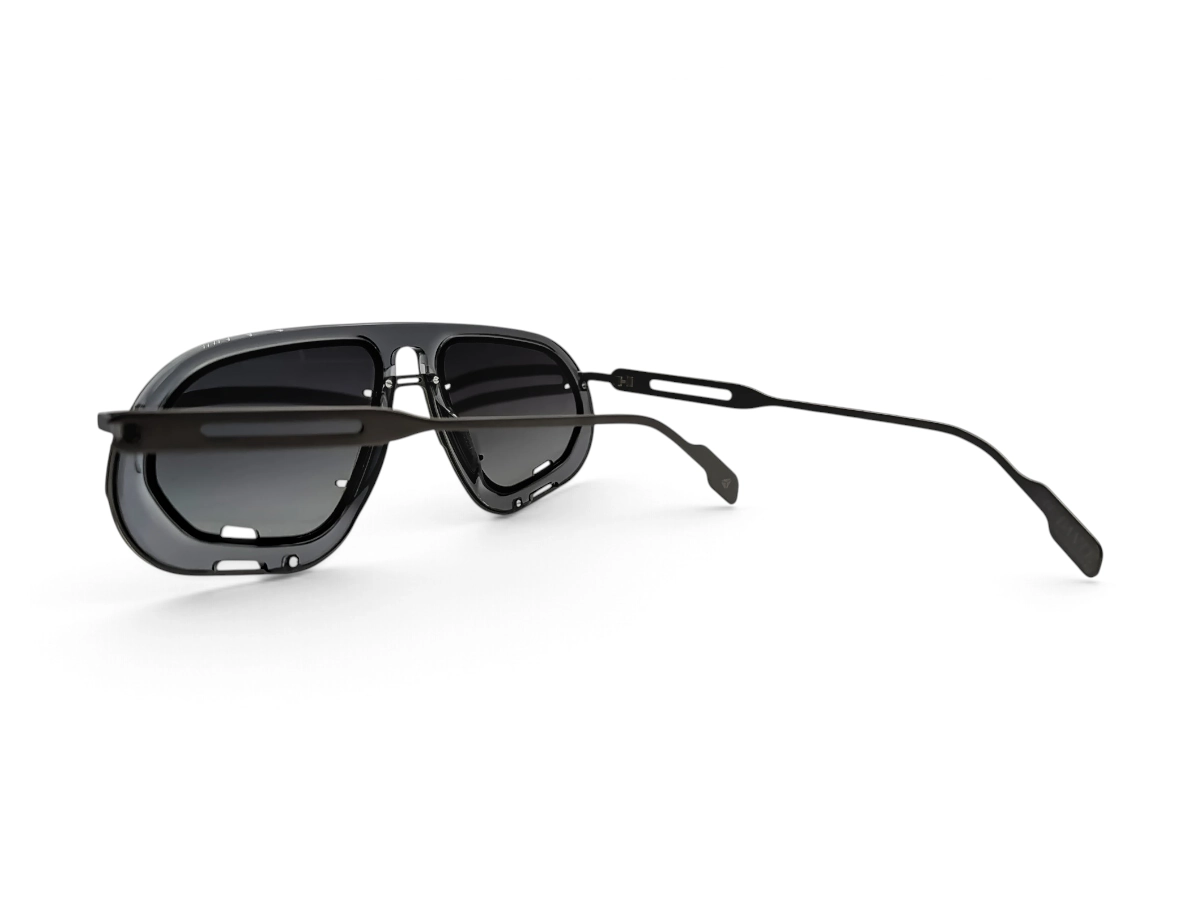
These custom mixed material sunglasses use acetate for the more substantial visible sections, with metal or titanium carrying finer structural details. The material pairing changes how the bridge, rim, endpiece and temple connections need to be resolved across the frame.
SAM-B3796
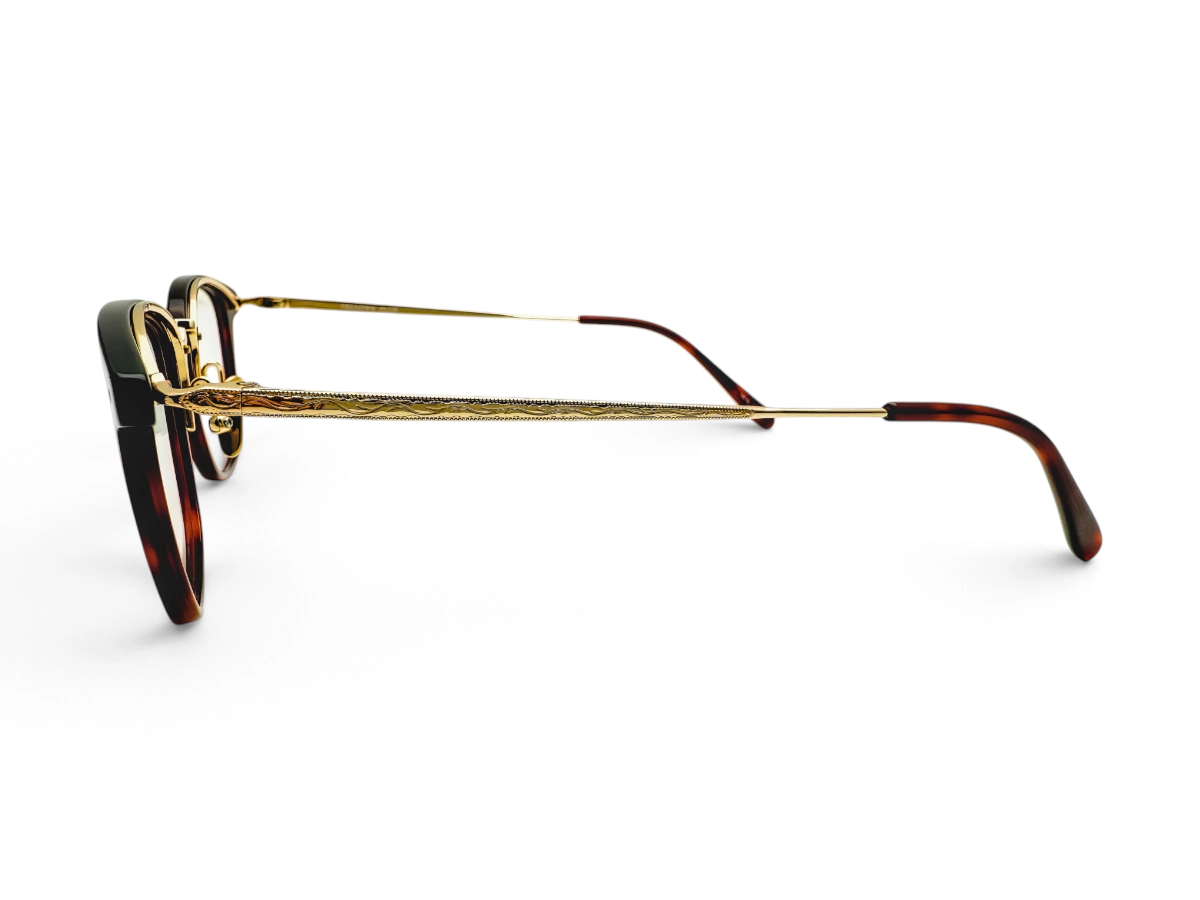
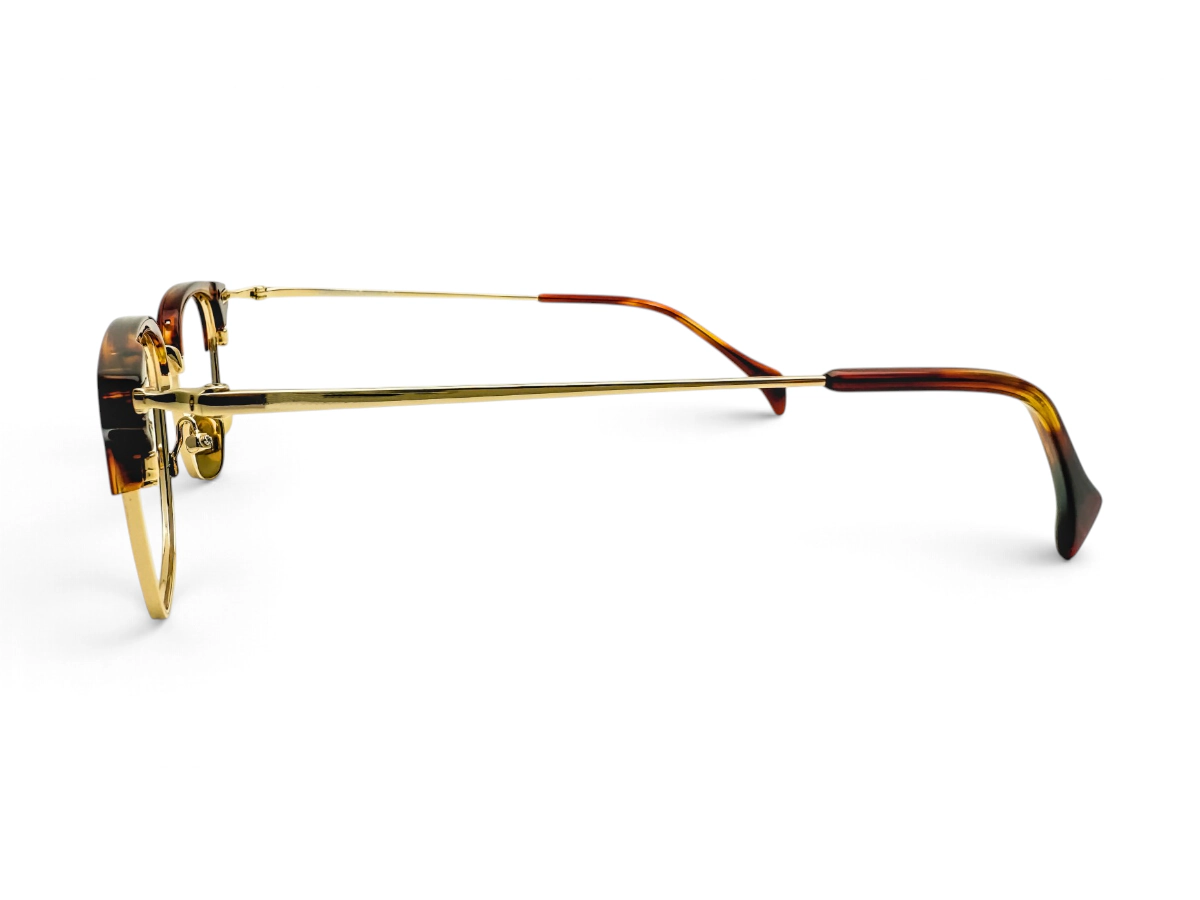
A substantial acetate front changes to a much finer metal structure at the endpiece. The exposed connection makes alignment and the change in thickness especially visible from the side.
Acetate · Metal
SAM-B4626
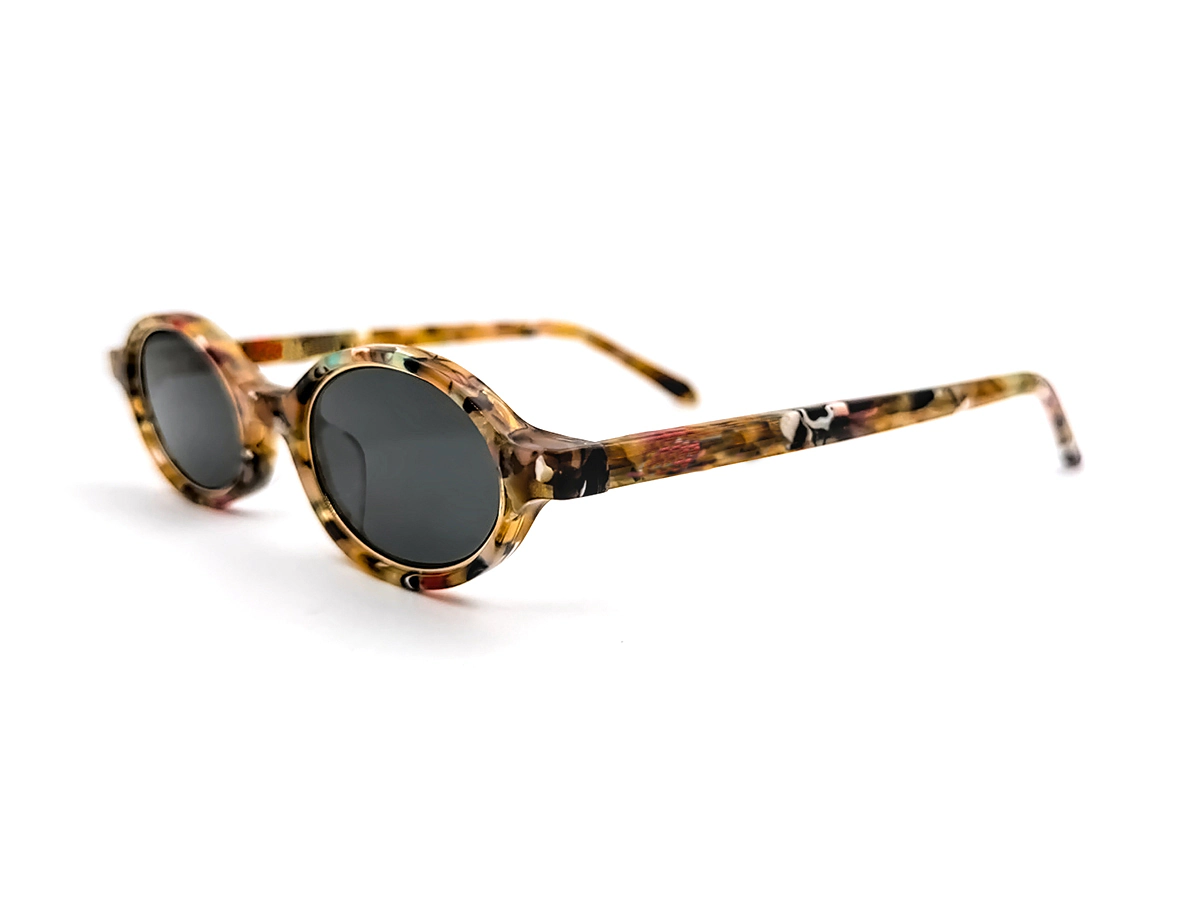
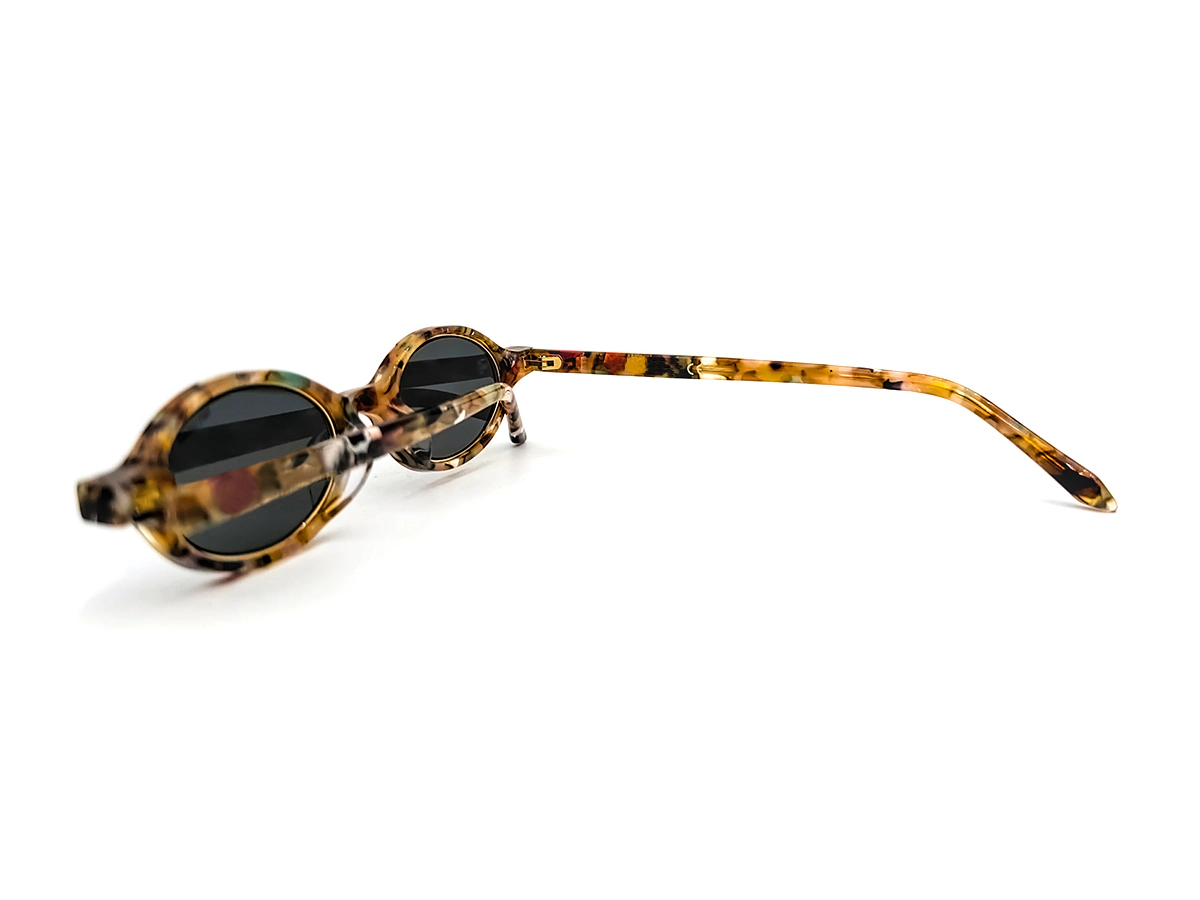
Patterned acetate defines the outer profile, while a fine metal rim follows the lens opening. Their visible spacing and alignment become part of the frame design.
Acetate · Metal
SAT-B6395
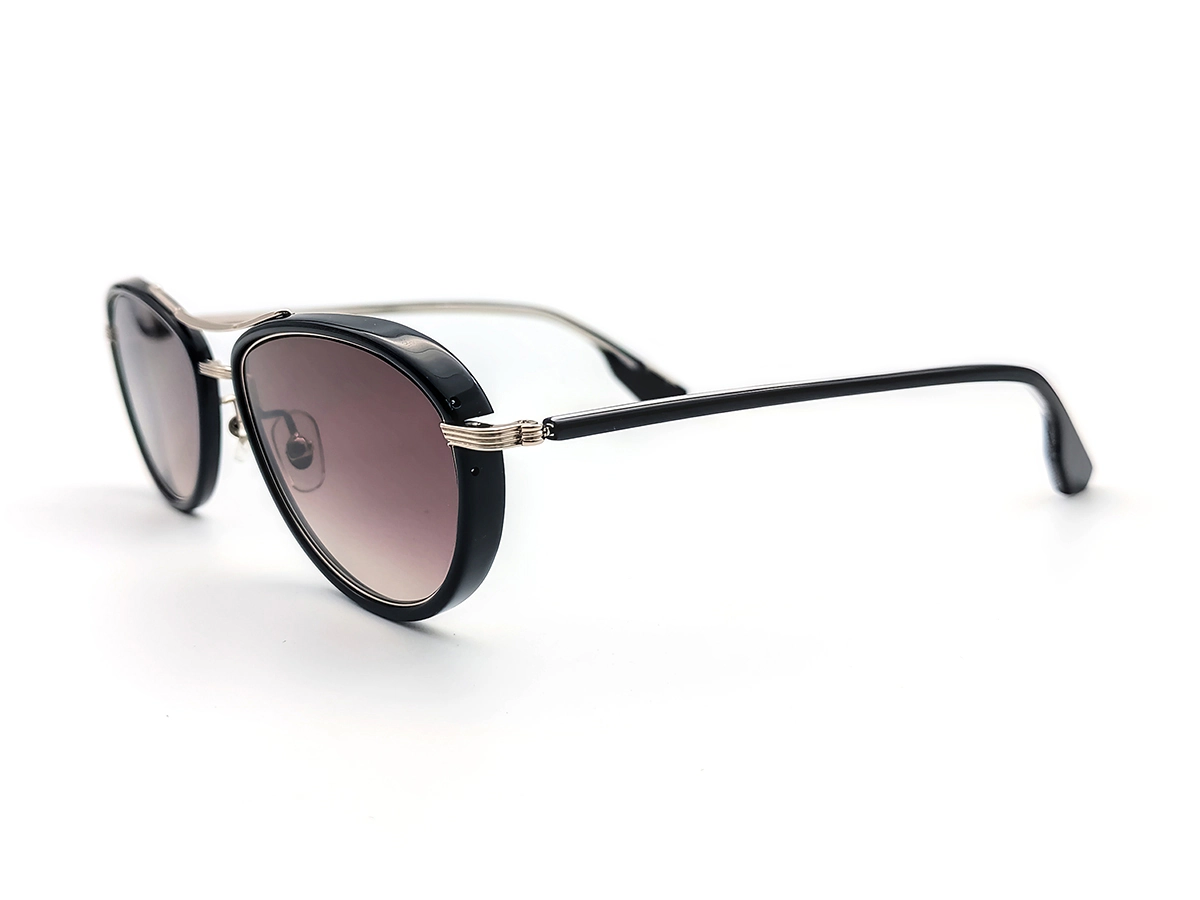
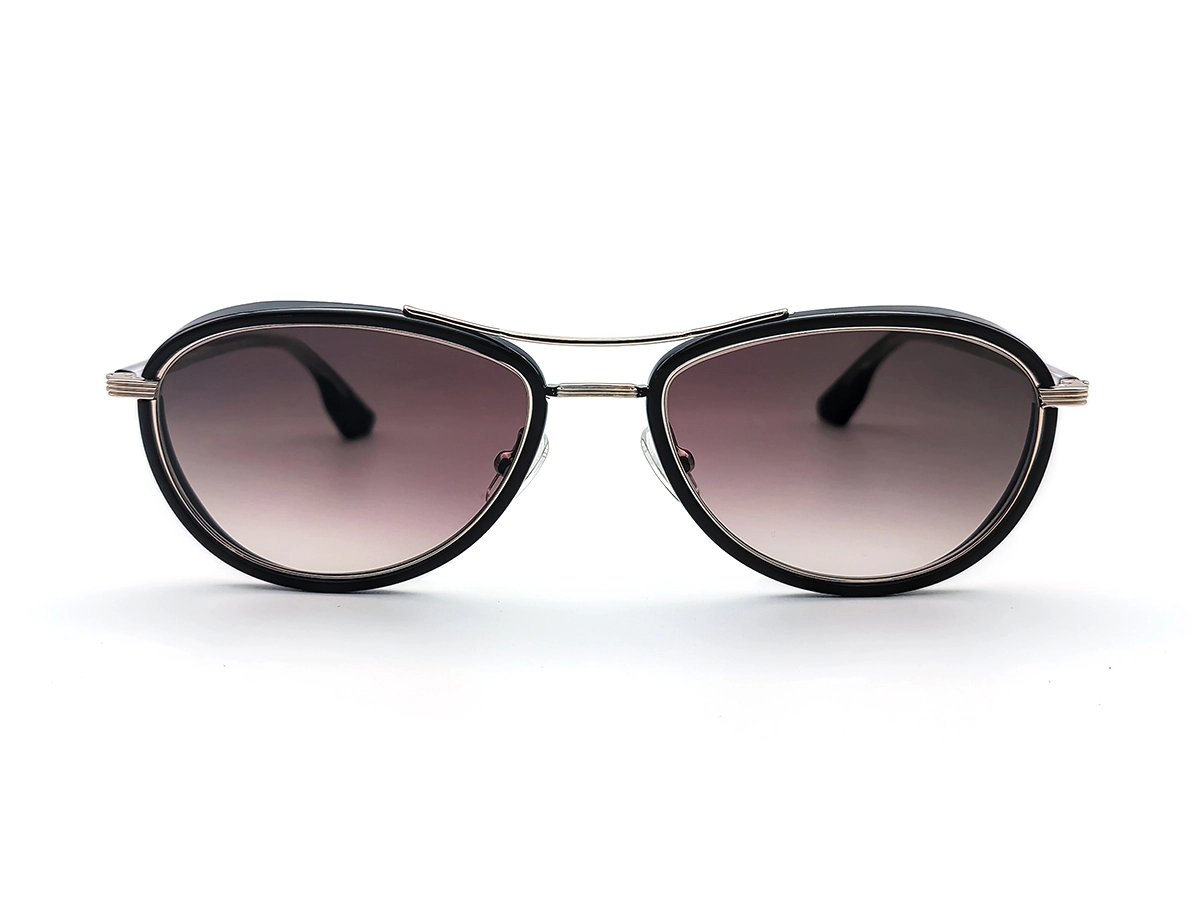
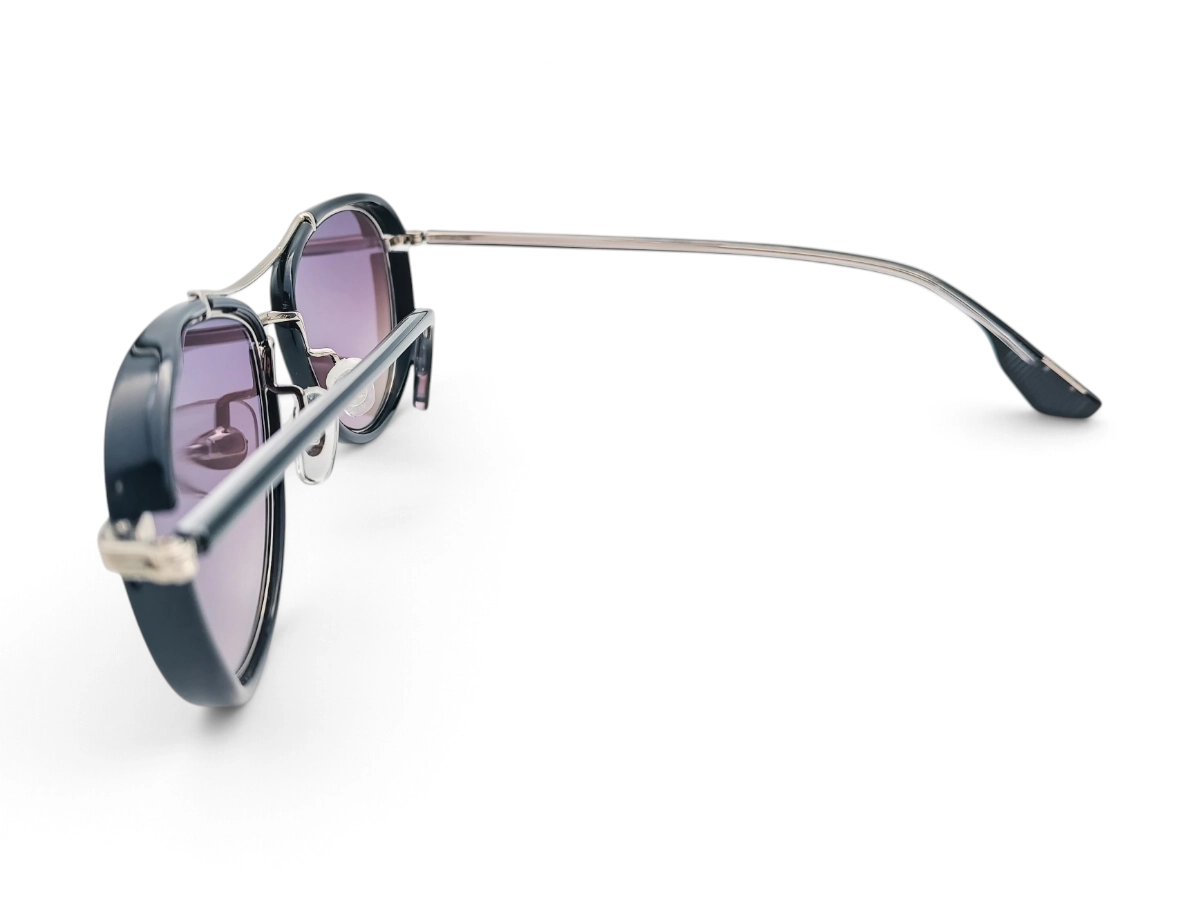
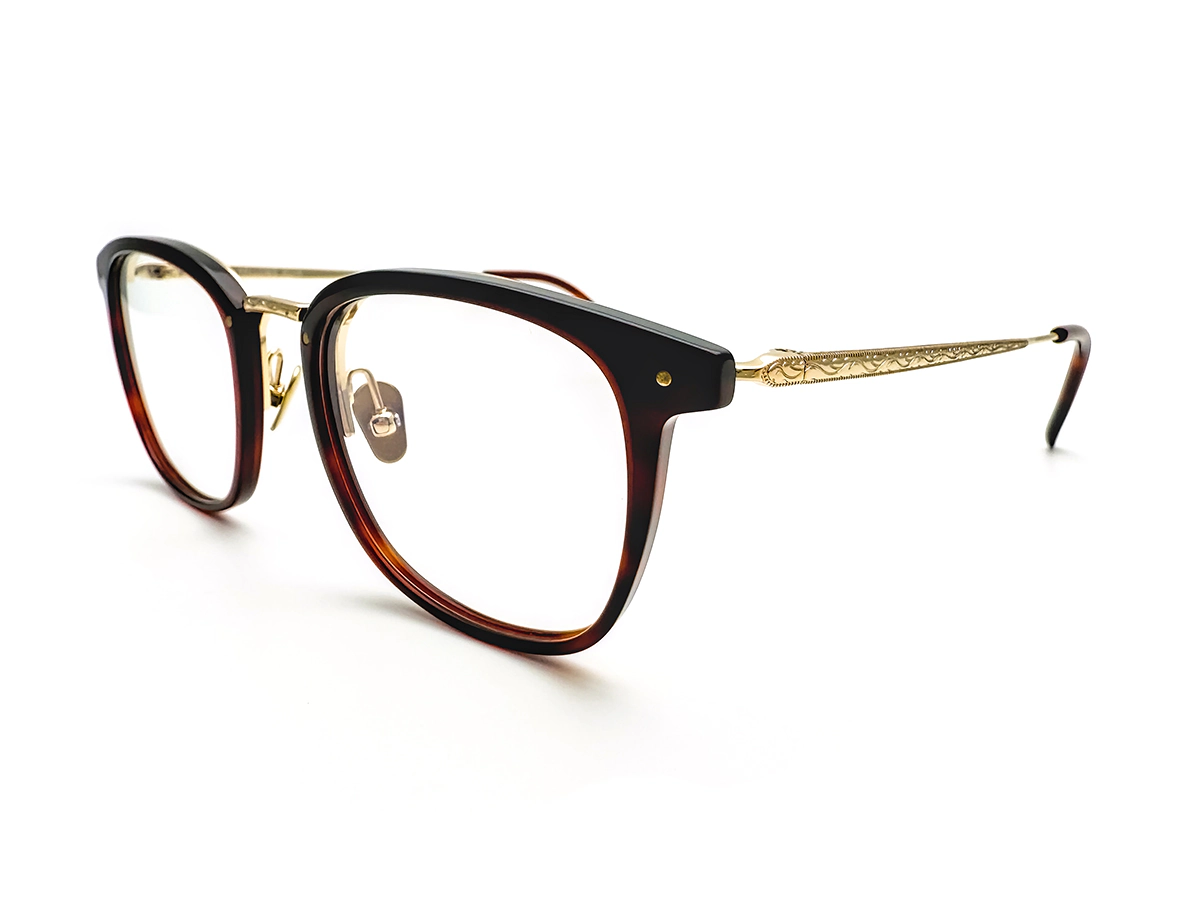
Dark acetate adds volume around the lenses, while fine titanium keeps the structure visually light. Their junction requires clean alignment despite different material thicknesses.
Acetate · Titanium
In these mixed material optical frames, acetate defines much of the visible front or browline while metal or titanium provides finer rim, bridge or temple structures. Because the lenses remain clear, spacing, profile changes and material junctions are especially easy to read.
SAM-B5716
The acetate front provides most of the visible volume, while the finer metal bridge and temples introduce a contrasting structural line. At the endpiece, the metal connection has to meet the thicker acetate cleanly without interrupting the front profile.
Acetate · Metal
SAM-B6197
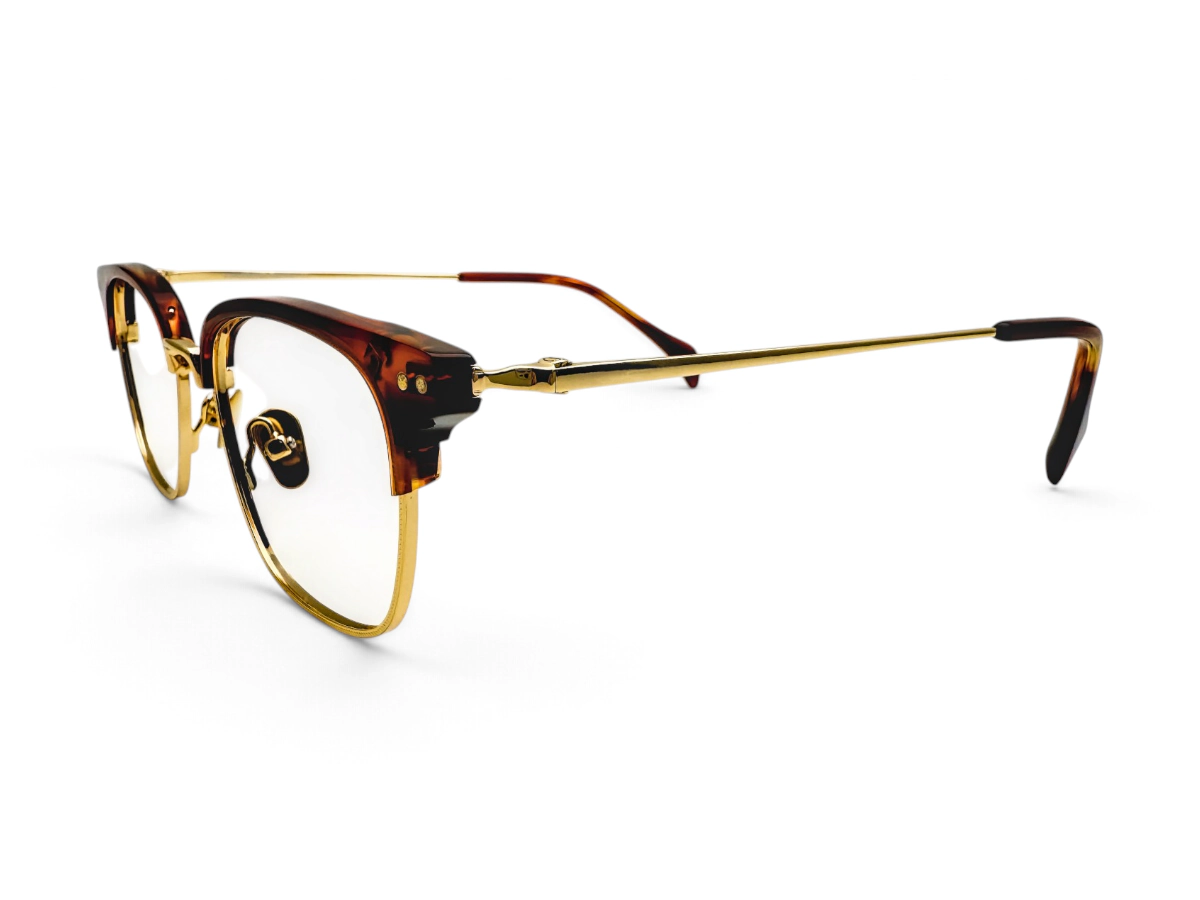
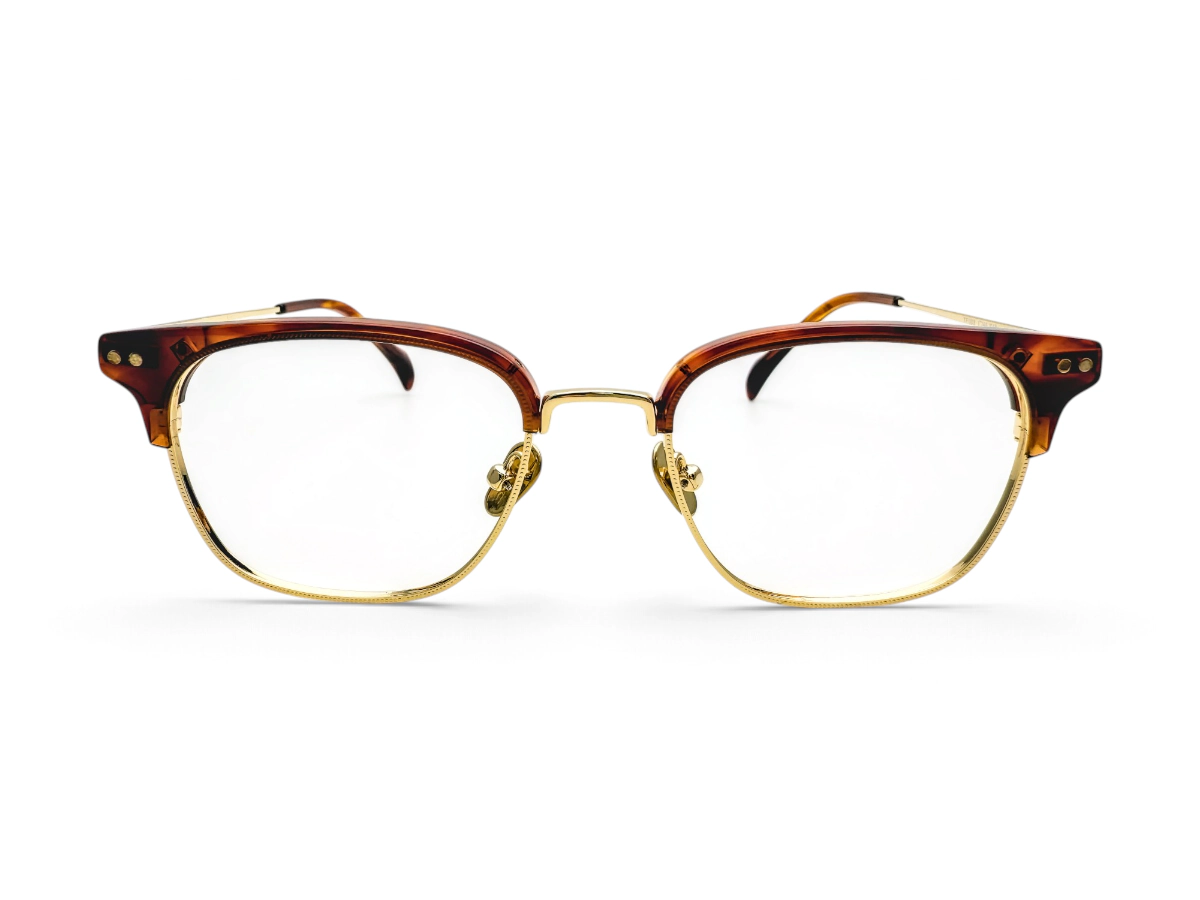
Acetate defines the upper front and endpieces, while a fine metal rim continues around the lower lens edge. The two outlines need consistent spacing so the browline reads as one controlled structure from the front and side.
Acetate · Metal
SAT-B4399
The rectangular acetate front gives the lens opening a clean, defined outline. Slim titanium temples reduce the visual weight at the sides, with the material transition clearly exposed at the endpiece.
Acetate · Titanium
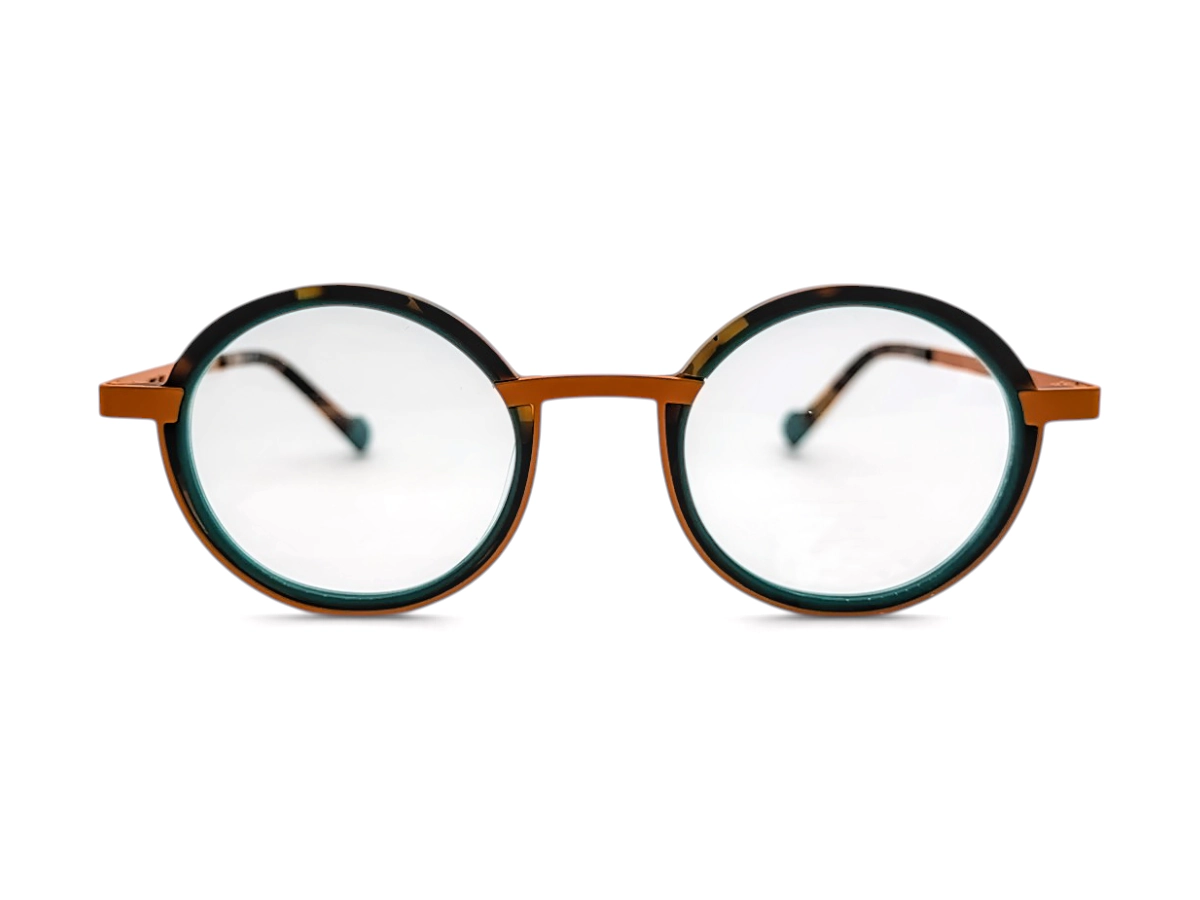
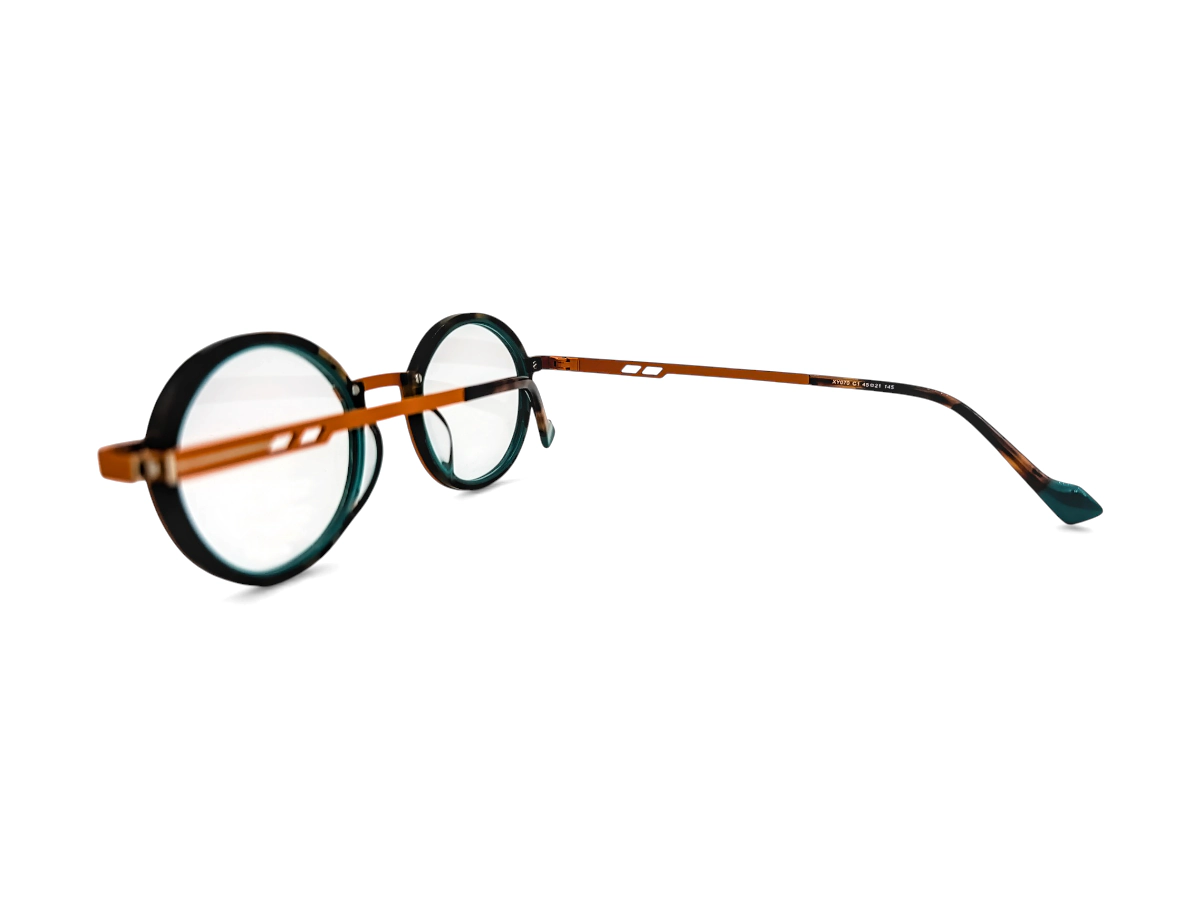
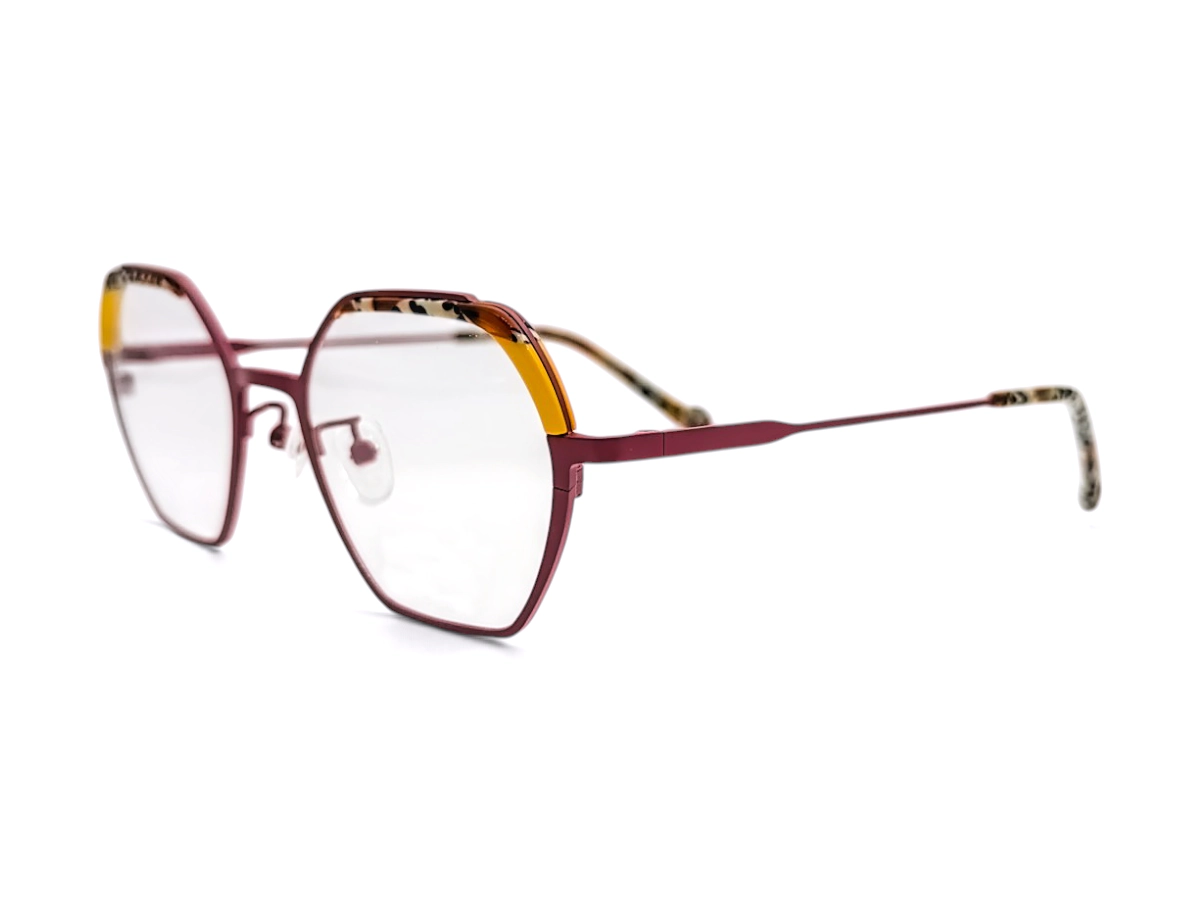
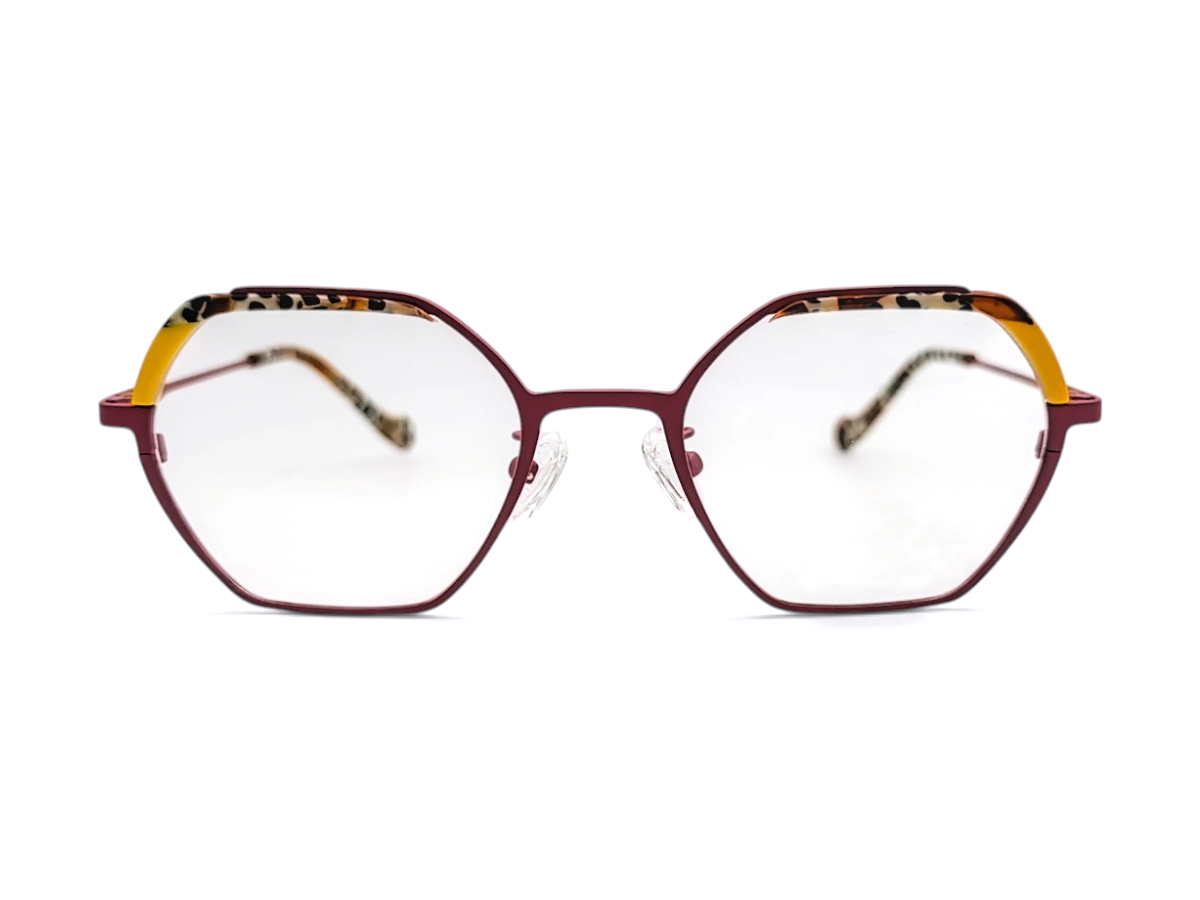
Metal defines the main structure in these mixed-material eyewear styles, while laminated acetate is introduced around selected rim, brow and temple areas. Each acetate section changes the local thickness, color and edge profile, so its junction with the metal has to be resolved as part of the frame geometry. These examples show three different ways that transition can be carried through an optical frame.
SAM-B6113
Laminated acetate follows the round lens openings while the metal bridge and temples remain exposed. The two materials meet around the outer rim, making alignment between the acetate profile and metal structure especially visible.
Metal · Laminated Acetate
SAM-B4238
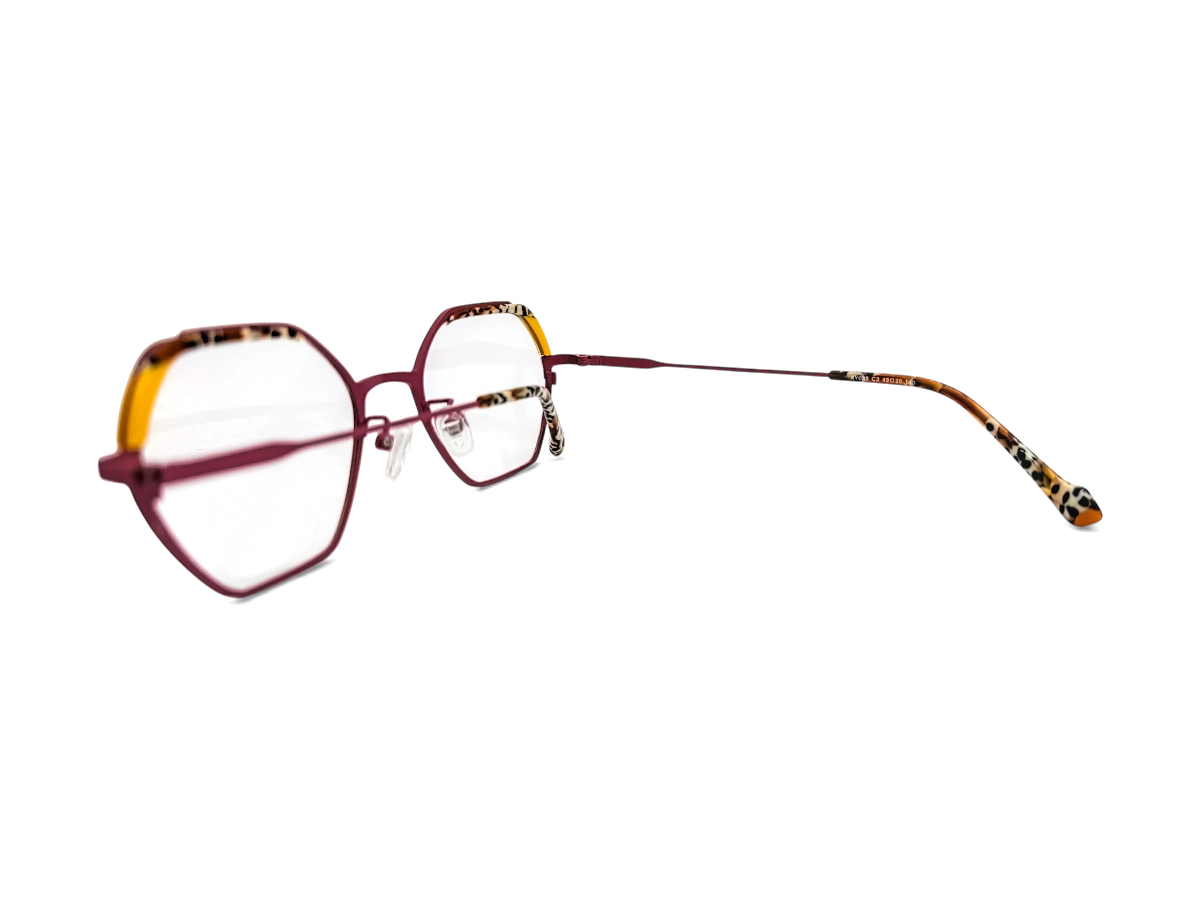
The metal front defines the main geometric outline, while patterned acetate is concentrated along the upper lens edges and temple ends. Because the acetate stops and starts within the same front, its edge placement becomes part of the frame proportion.
Metal · Laminated Acetate
SAM-B4489
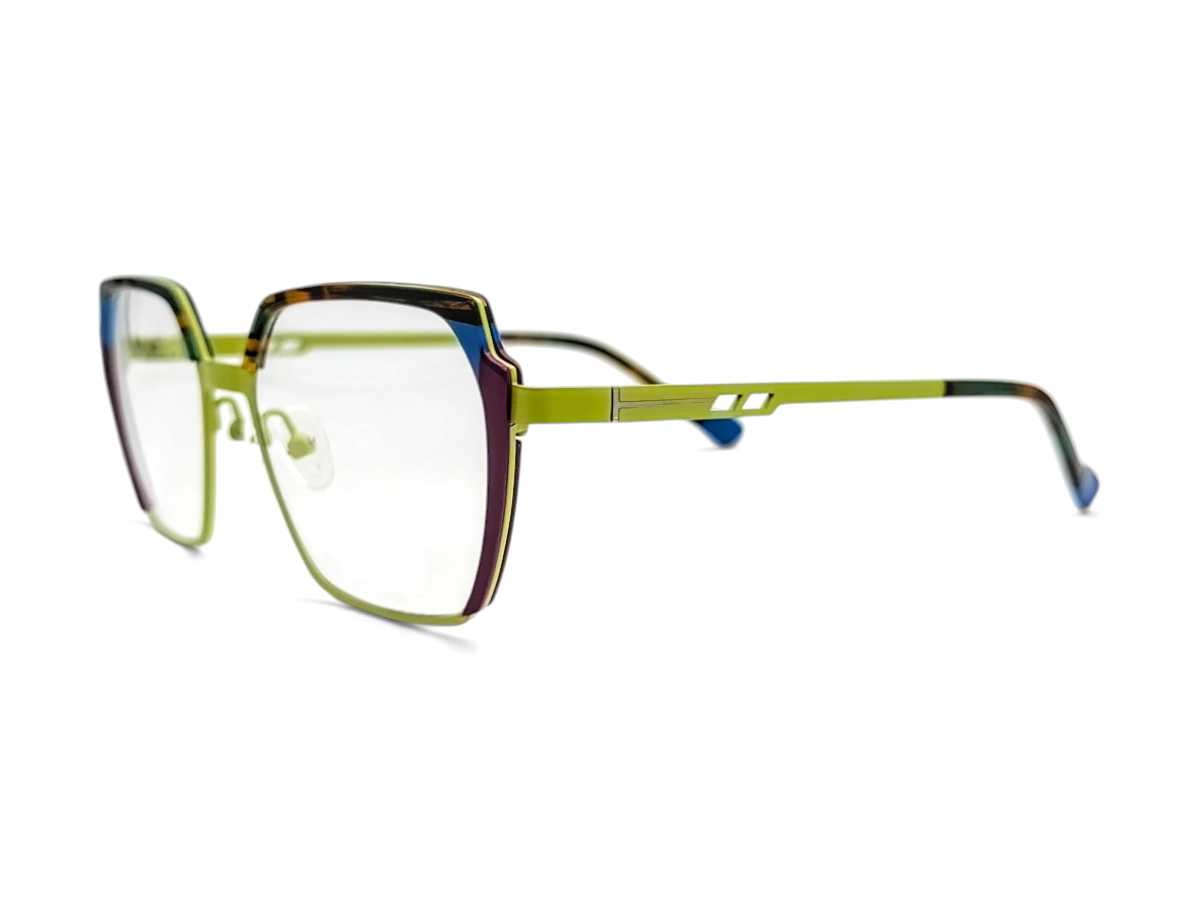
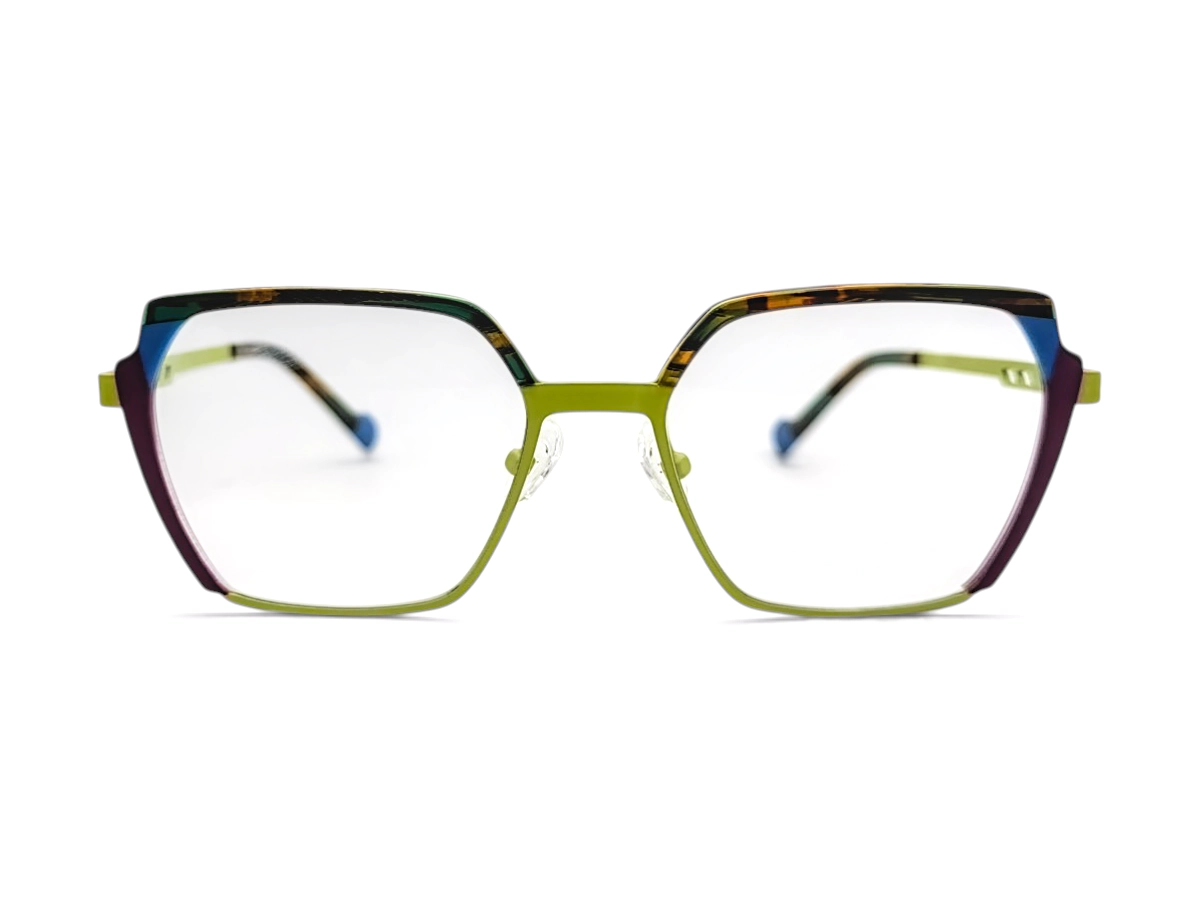
Laminated acetate is placed around selected upper and outer lens edges, creating several material transitions within one front. The metal outline still controls the overall geometry, so the acetate sections need to remain aligned with that structure.
Metal · Laminated Acetate
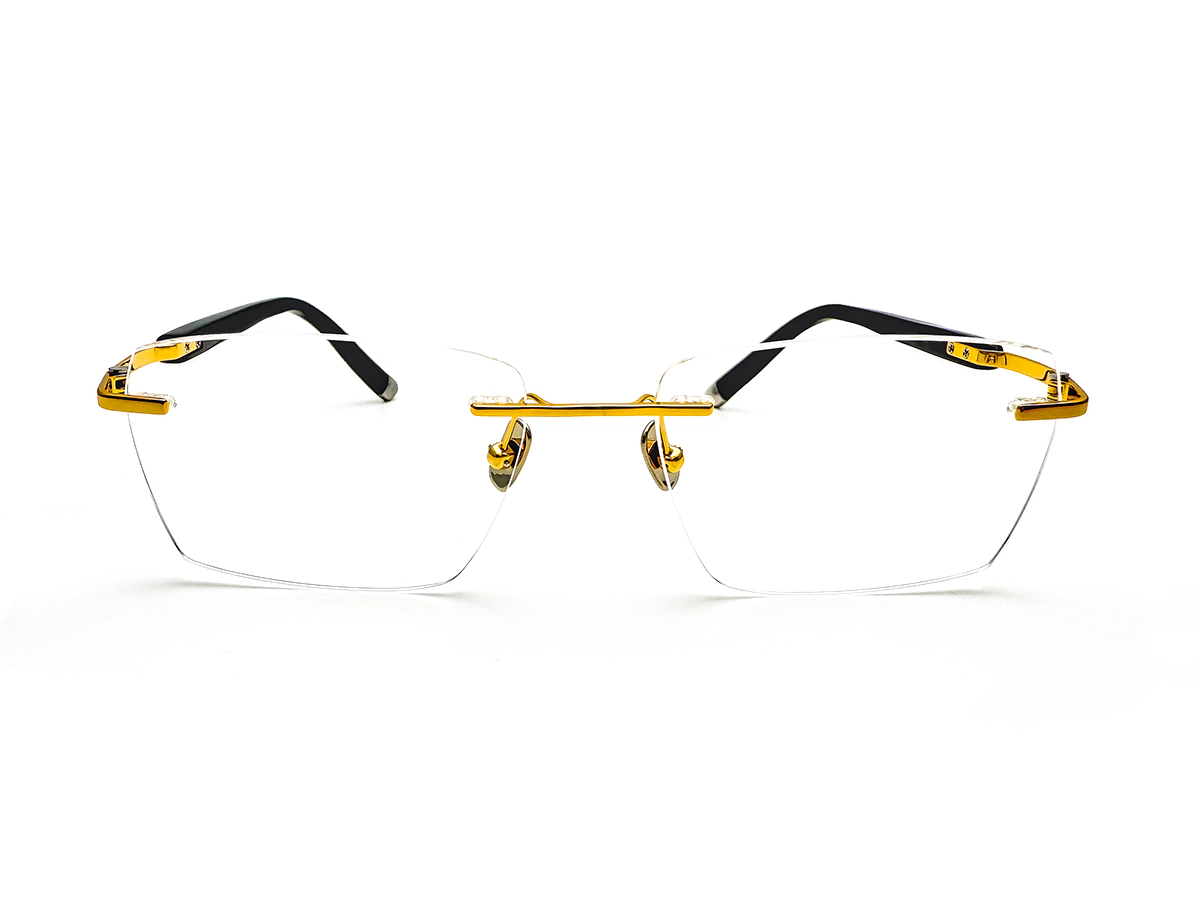
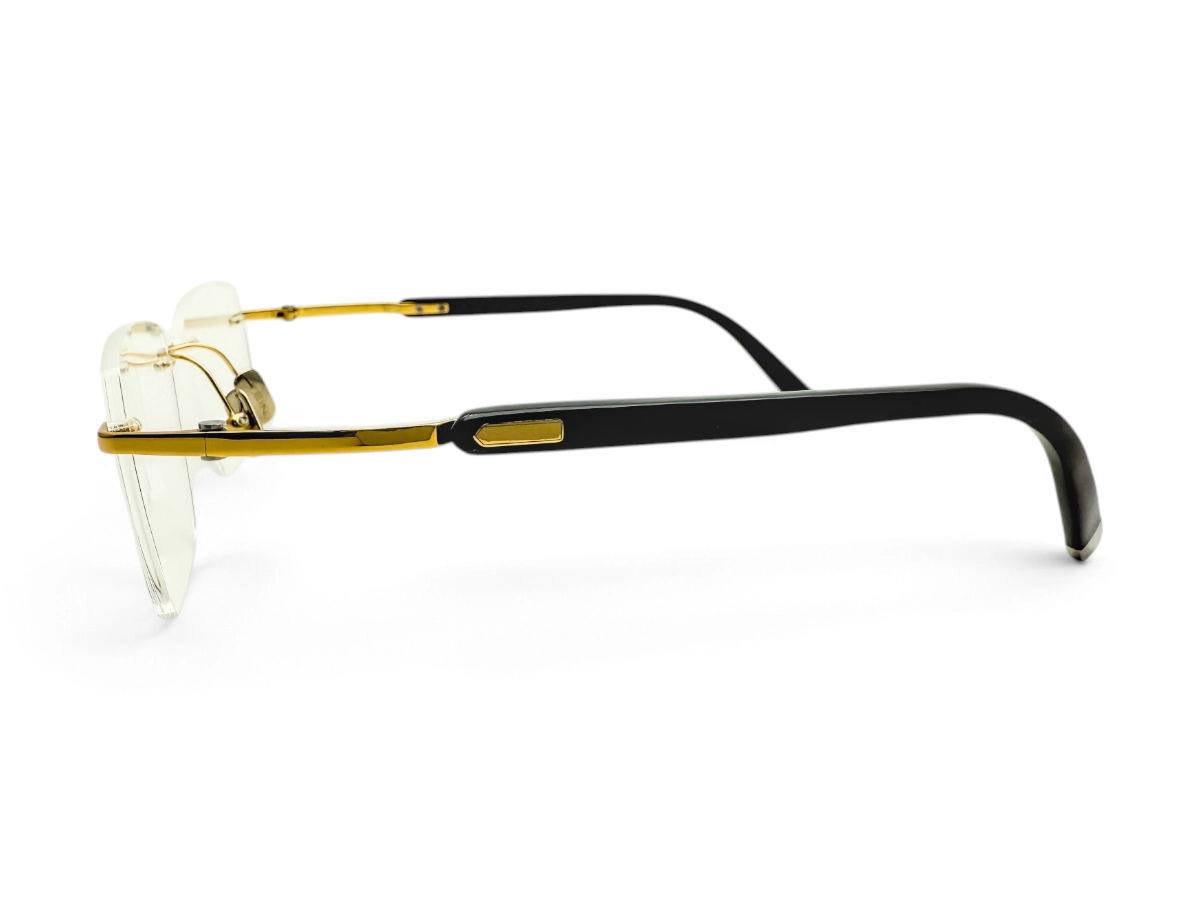
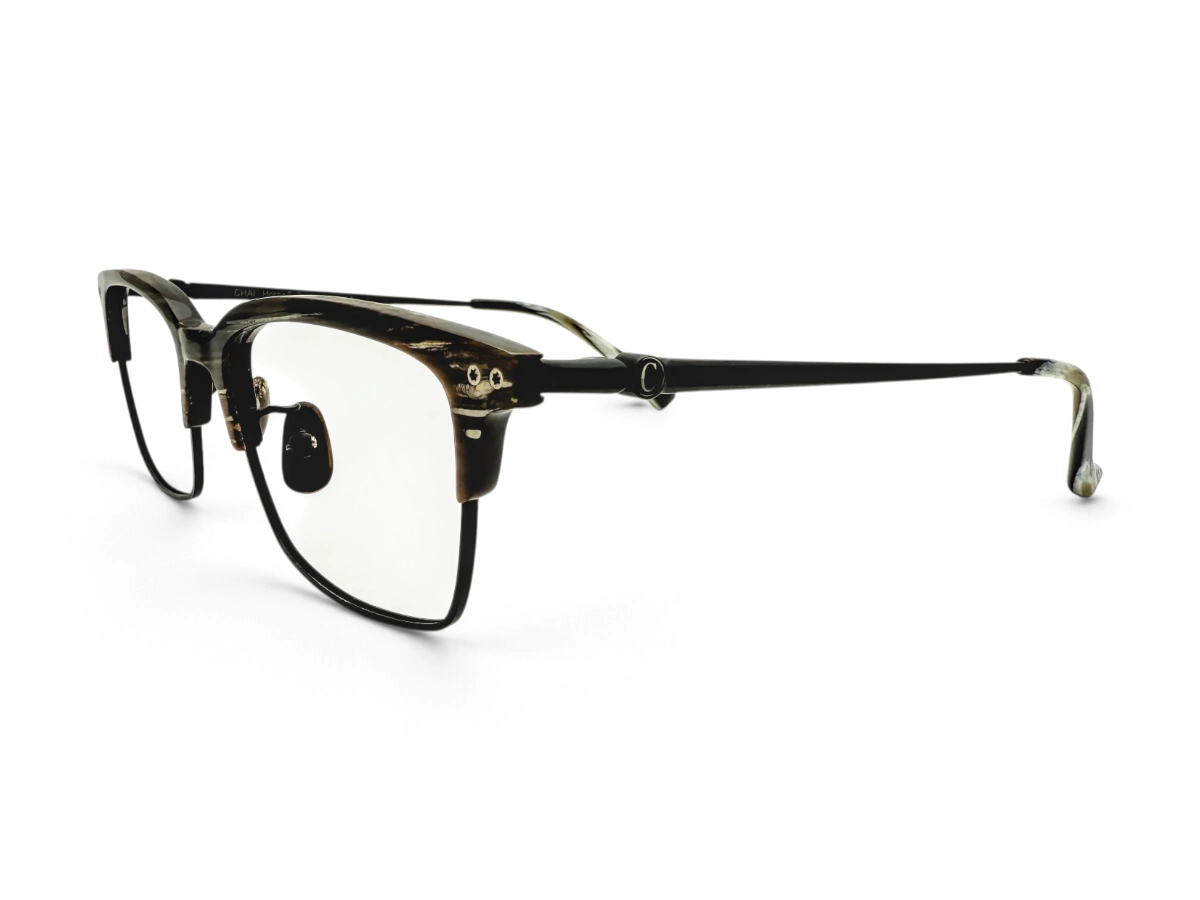
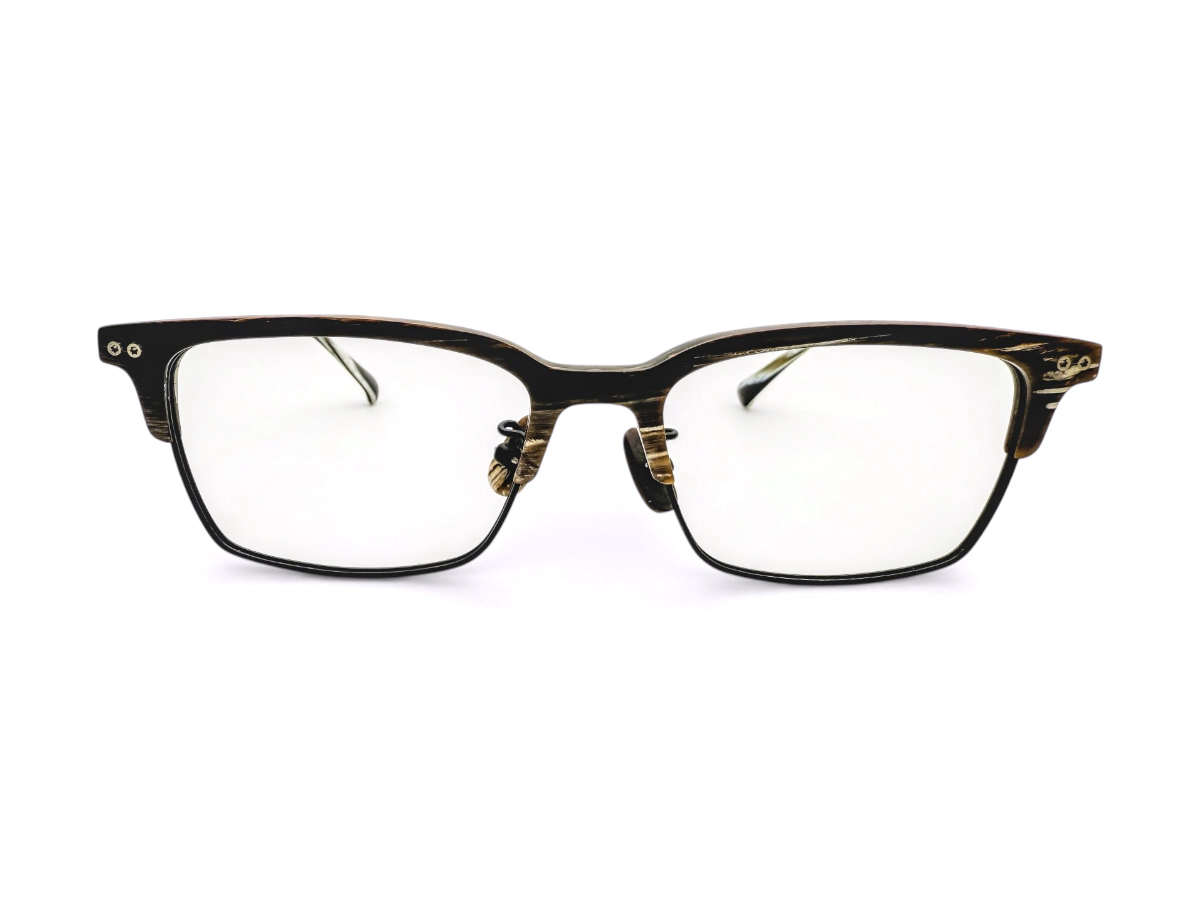
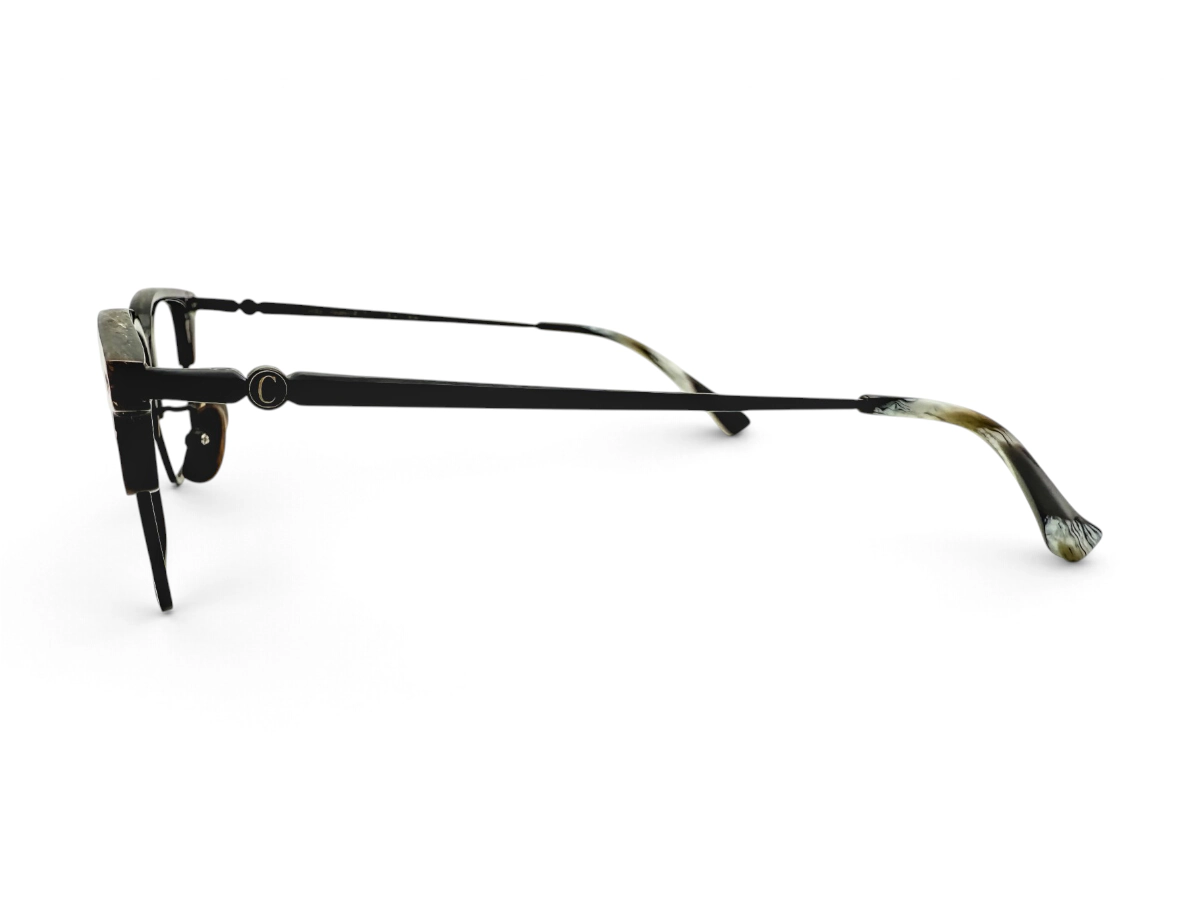
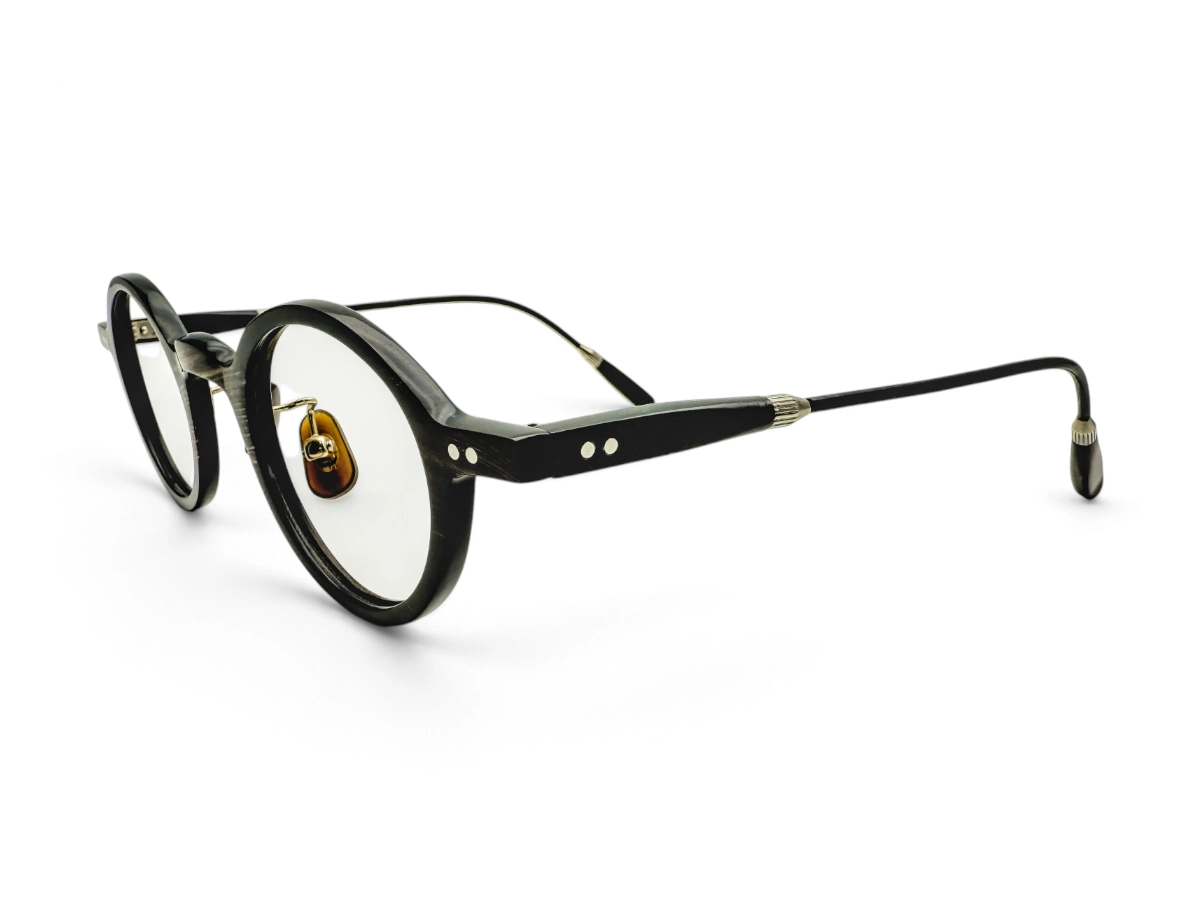
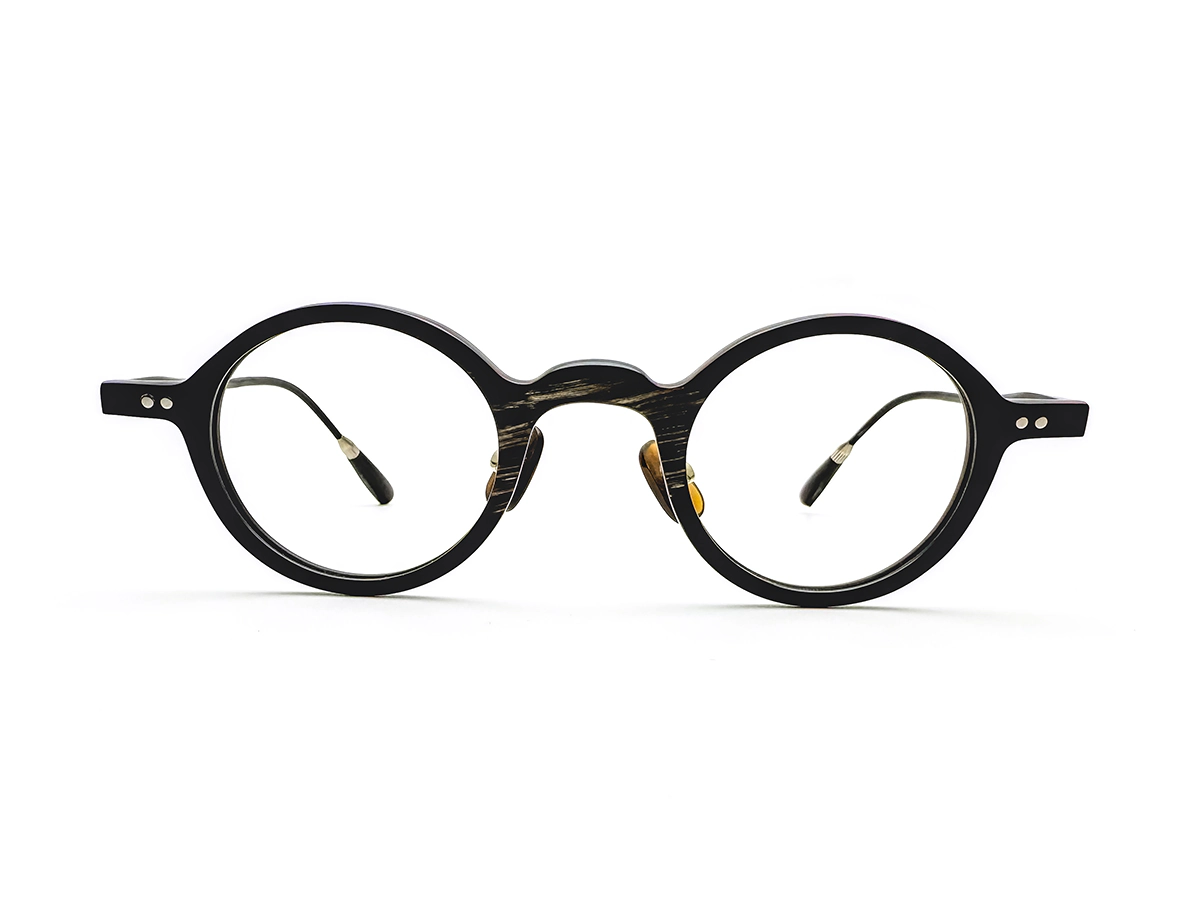
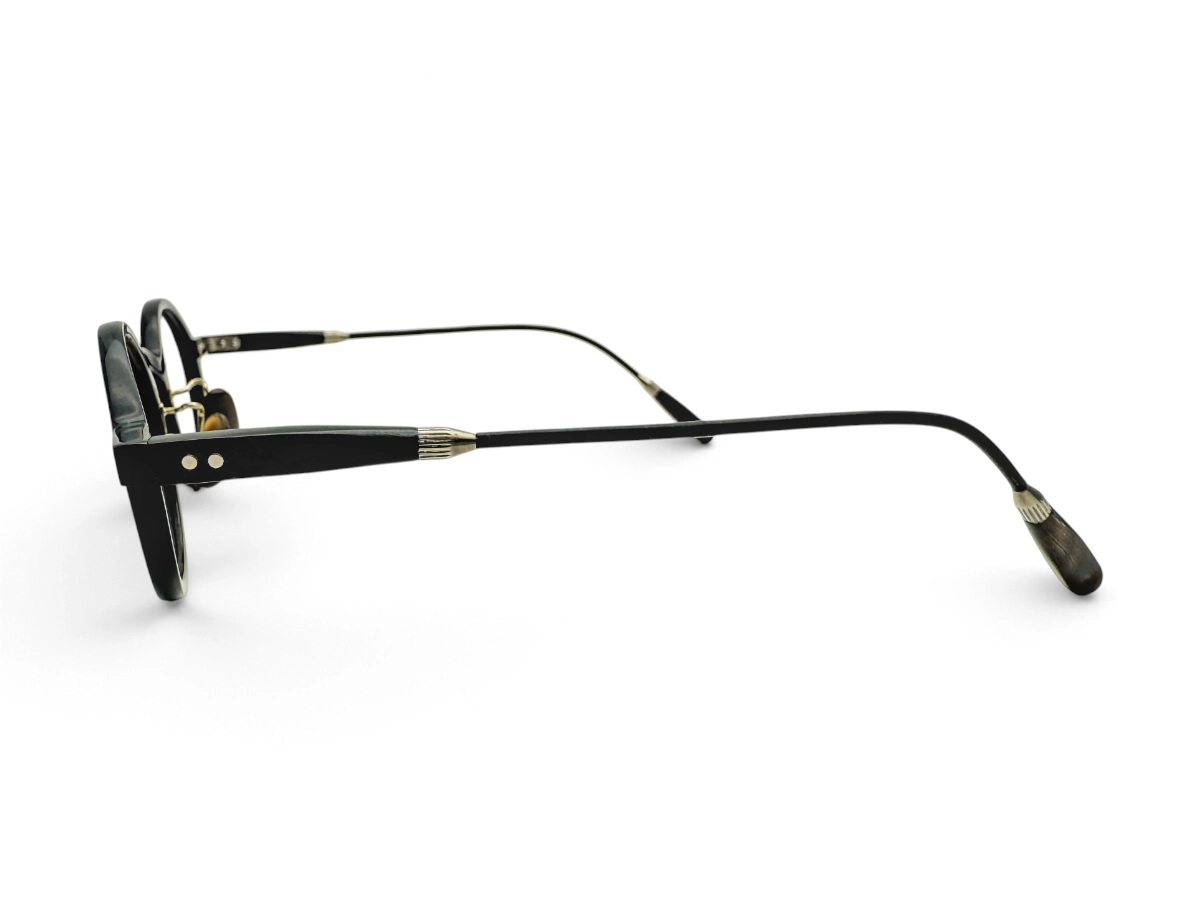
Horn introduces visible tonal variation and a surface character that contrasts with metal and titanium. In mixed-material eyewear, a key design issue is how those materials meet: junction geometry, alignment and the transition from front to temple need to work as one frame structure.
SHM-B6199
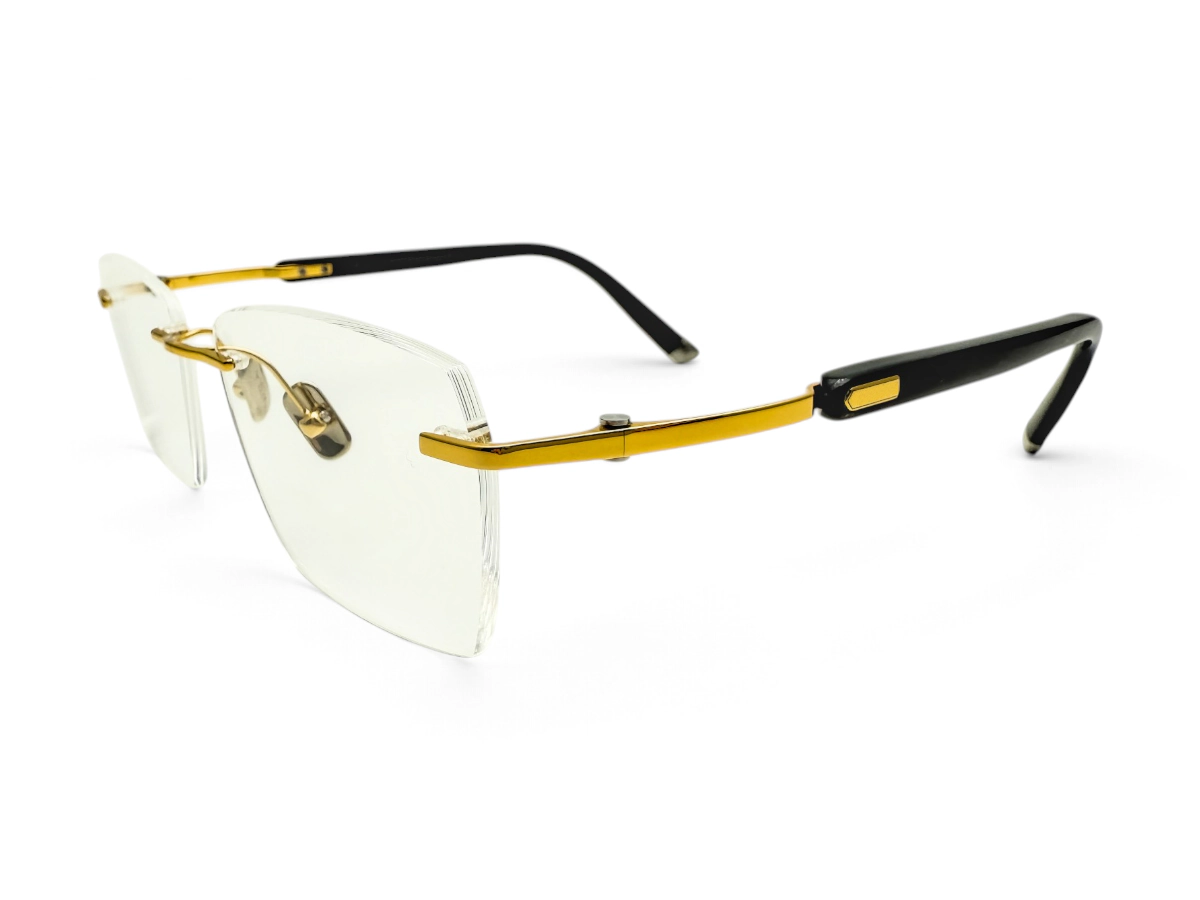
Here, the rimless front is carried by the metal structure, while dark horn sections continue the temples. Their junction is concentrated beside the lenses, making the side connection and alignment visible.
Horn · Metal
SHM-B5827
Two materials share the same front: horn forms the upper brow, while a fine metal rim completes the lower lens shape. This puts the outer corners and rim alignment directly in view.
Horn · Metal
SHT-B4553
The thicker horn front changes to fine titanium temples at the outer connection. Because the material transition is exposed, its alignment and proportion can be checked directly from the side.
Horn · Titanium
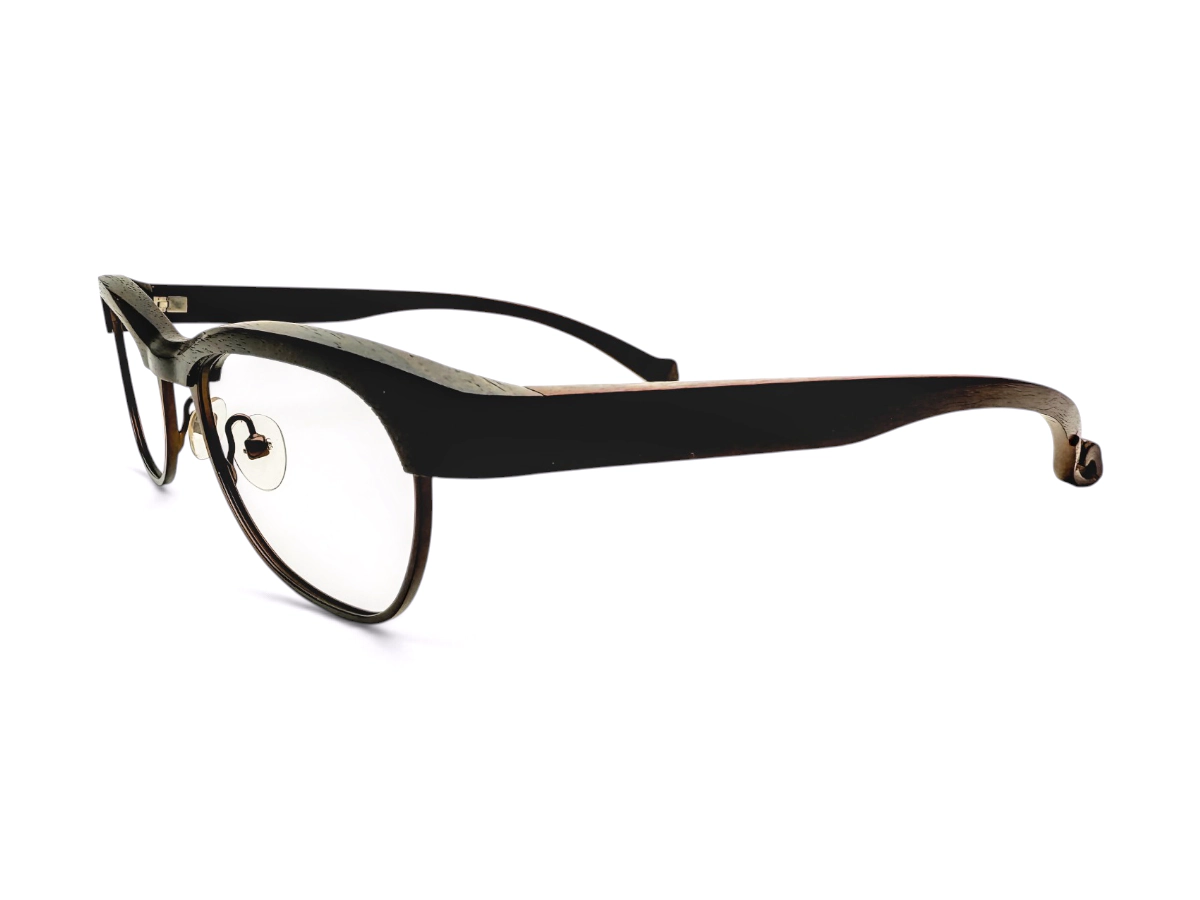
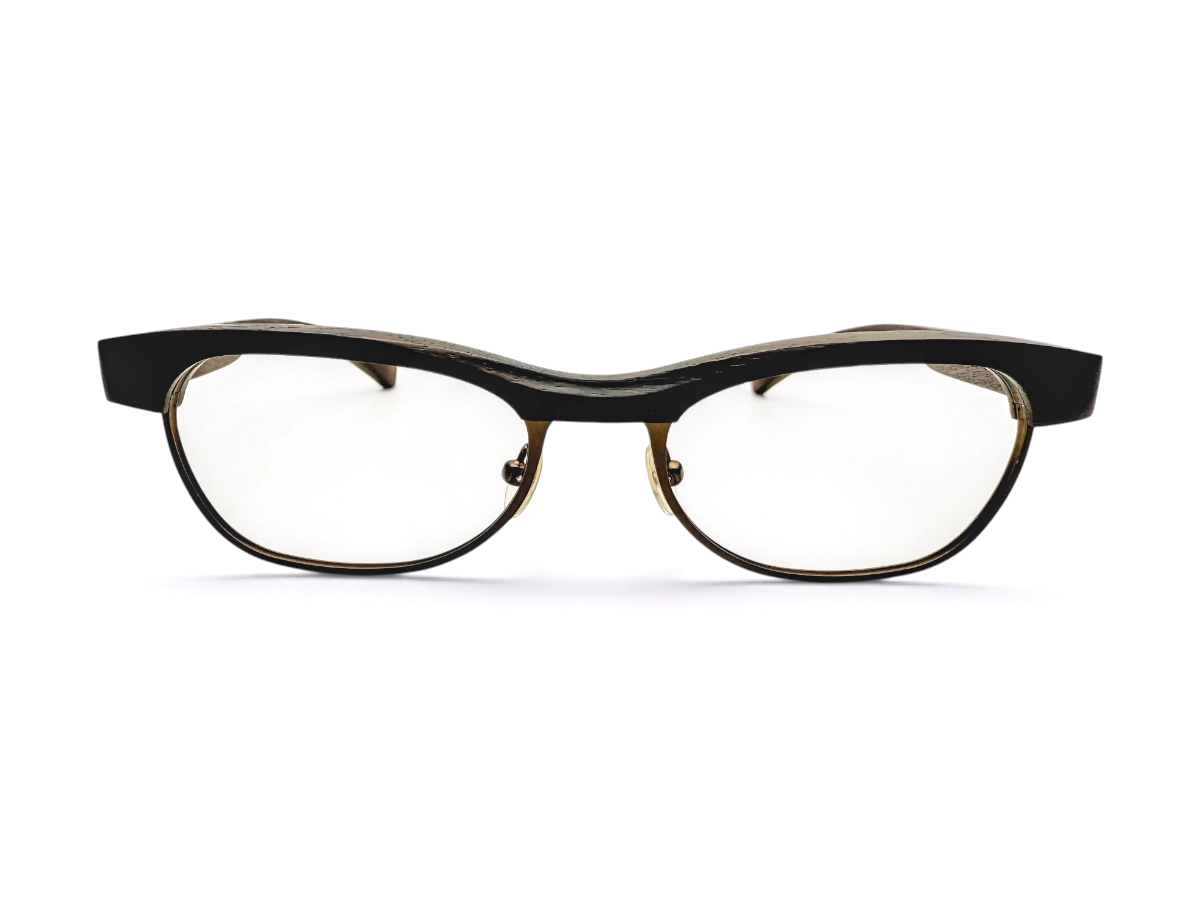
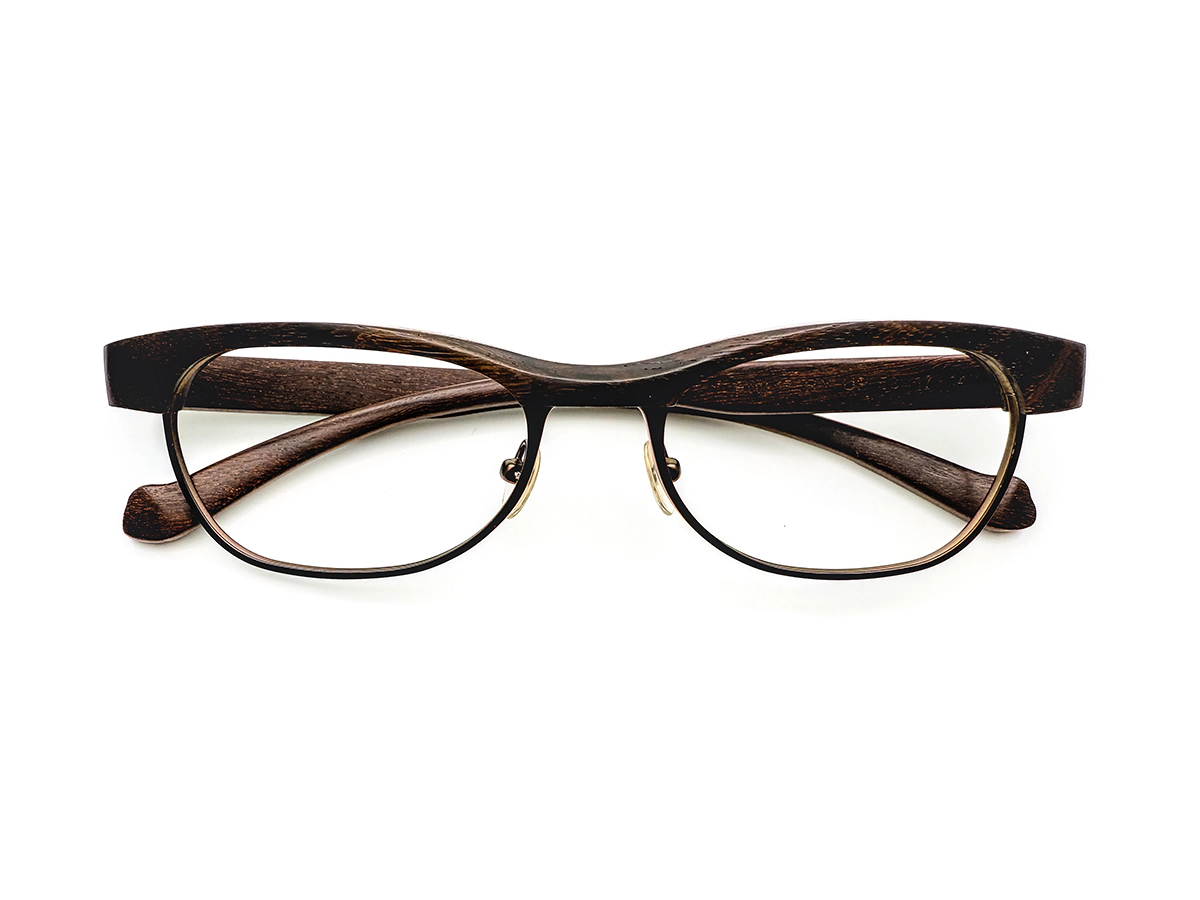
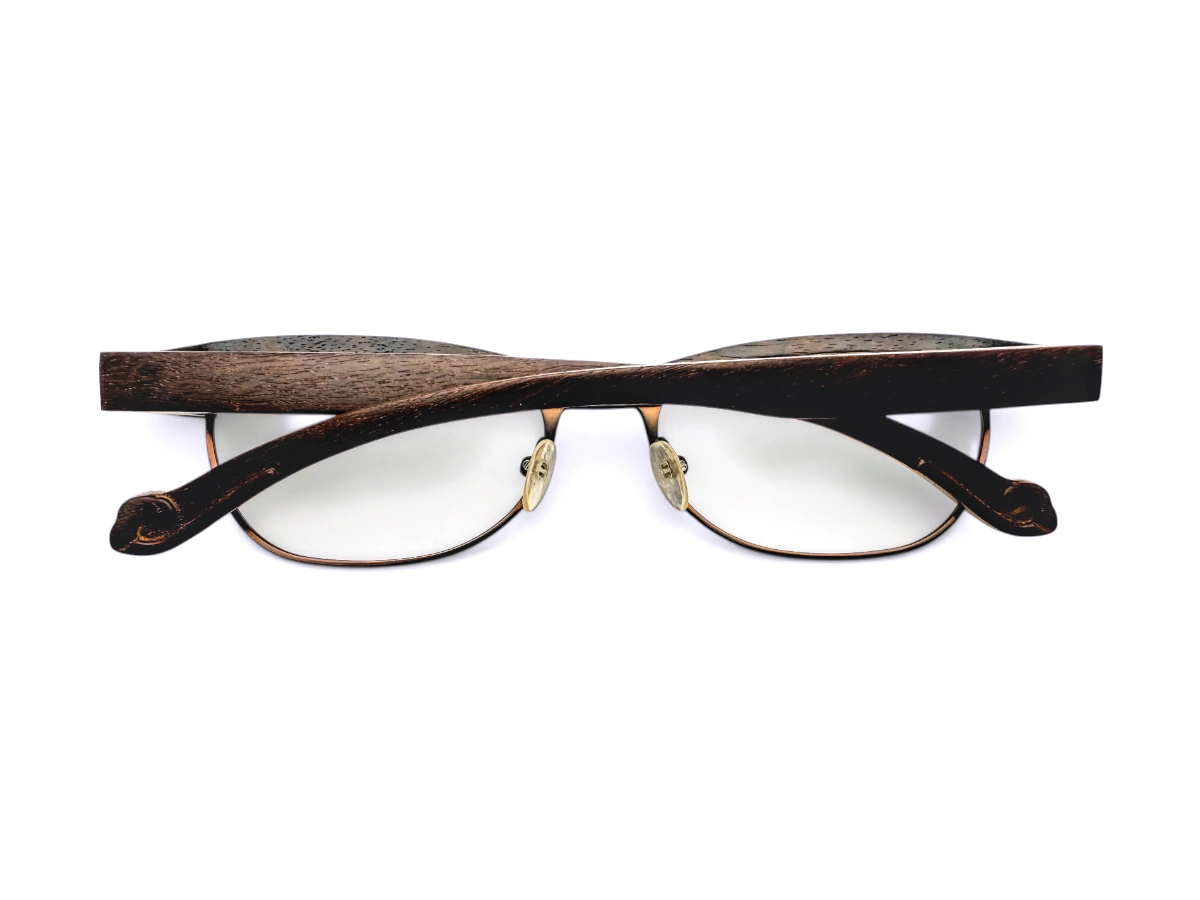
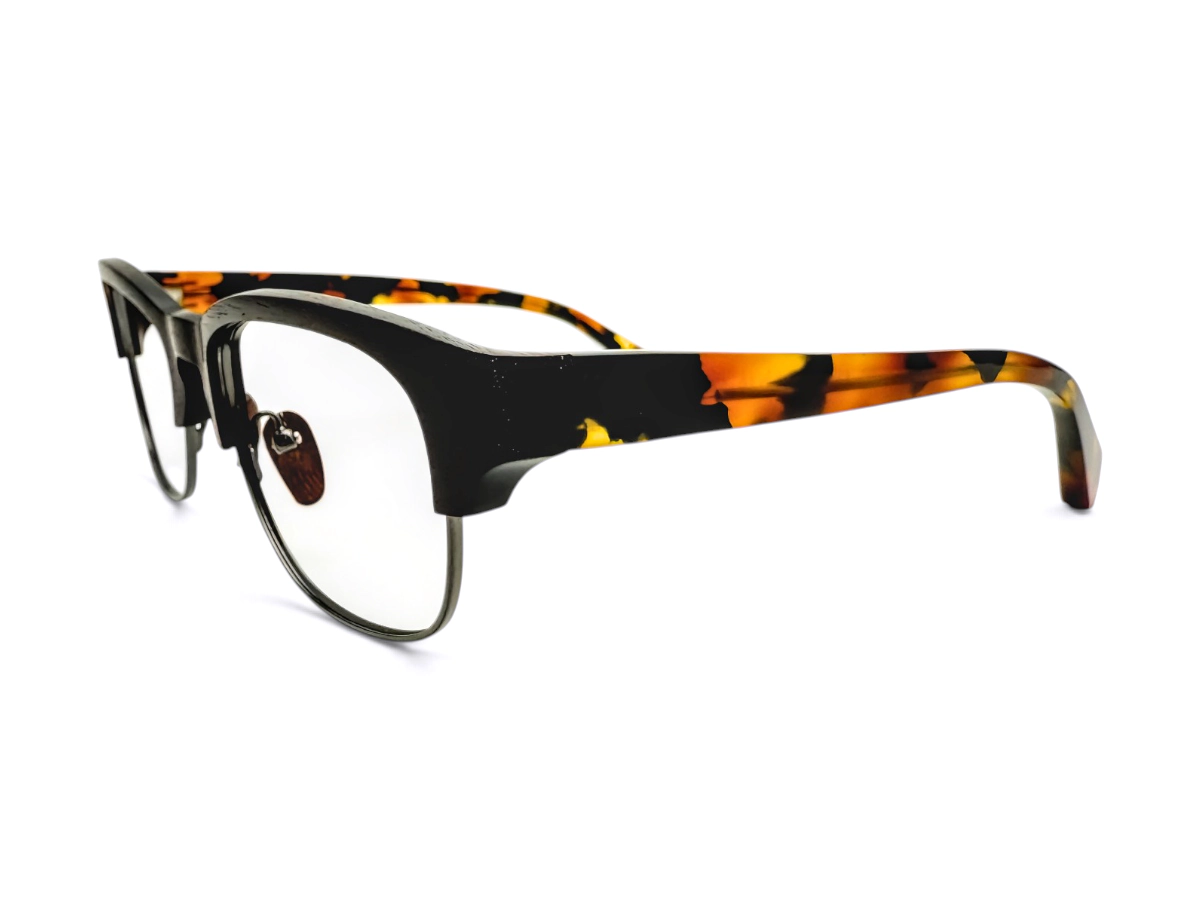
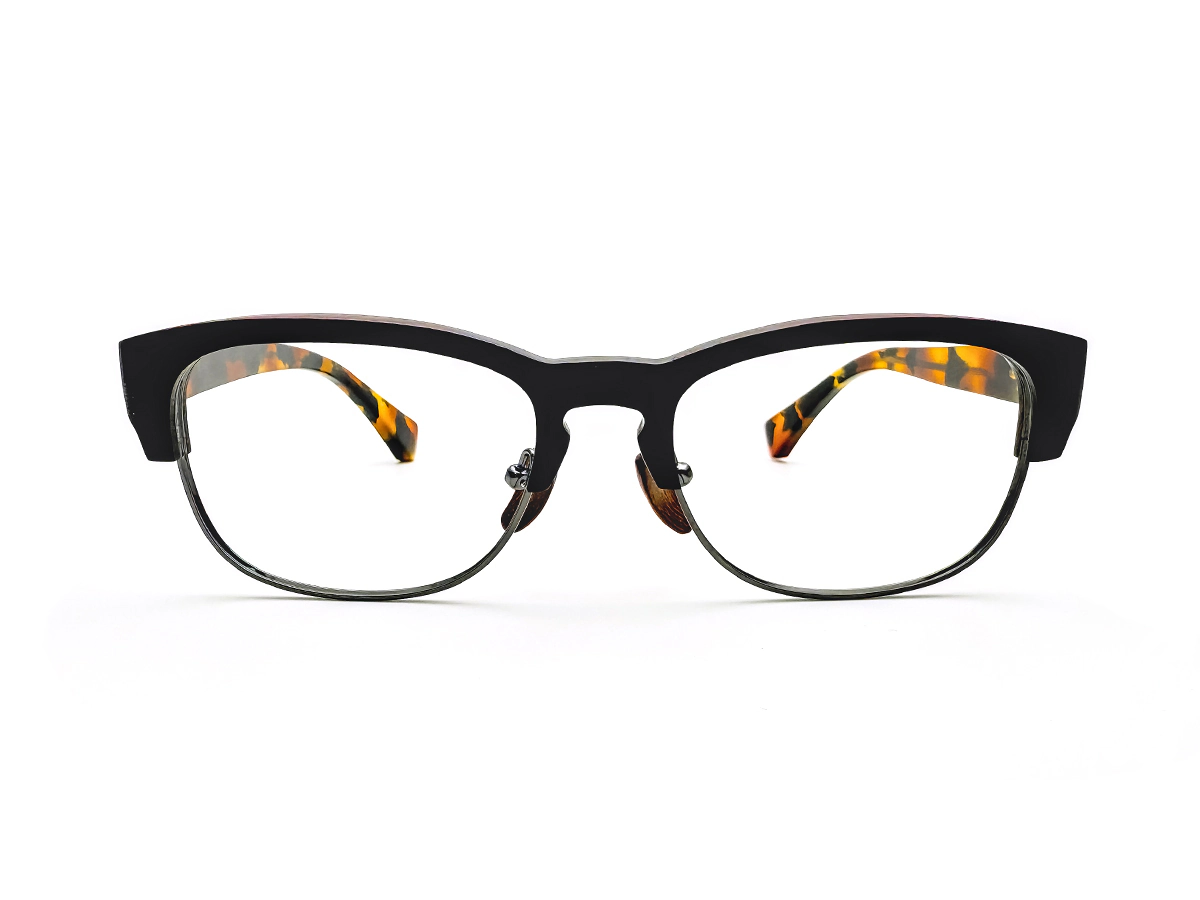
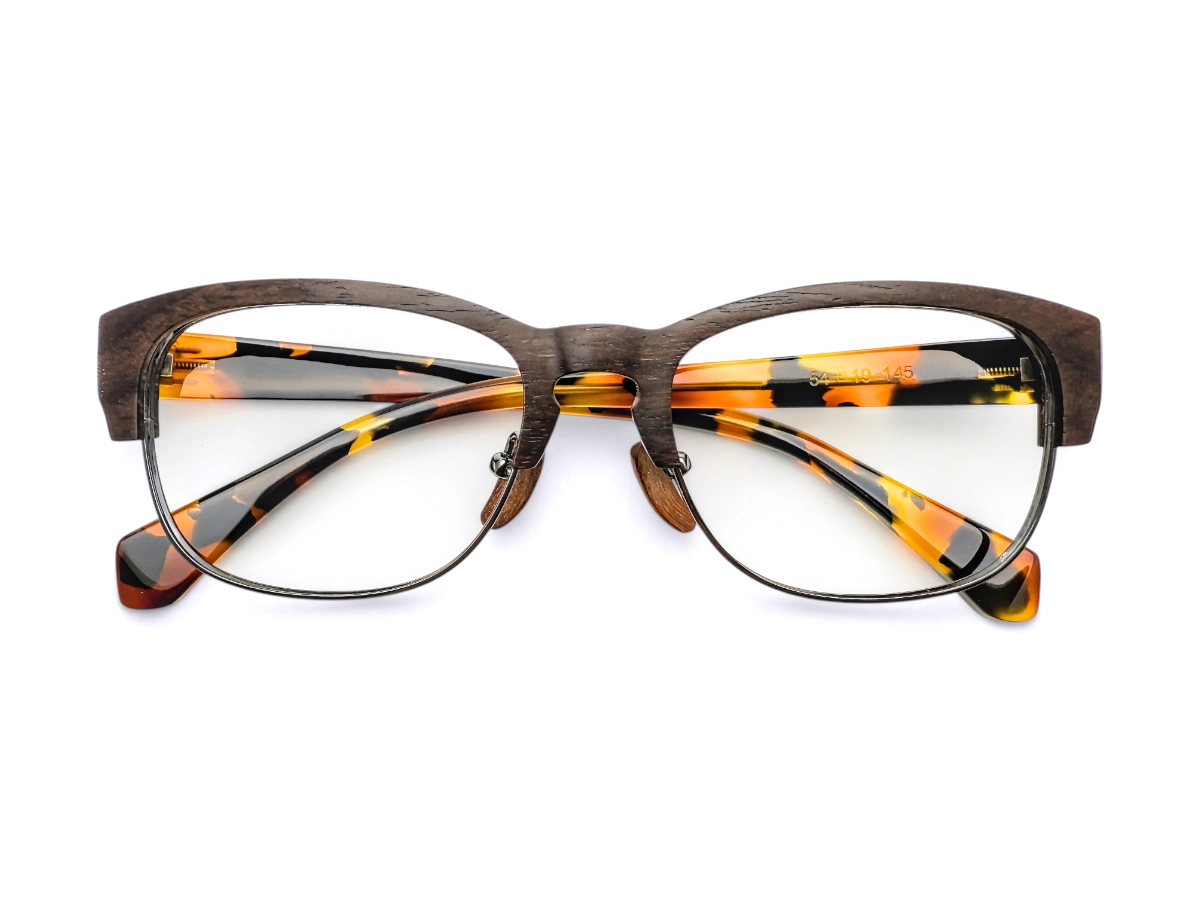
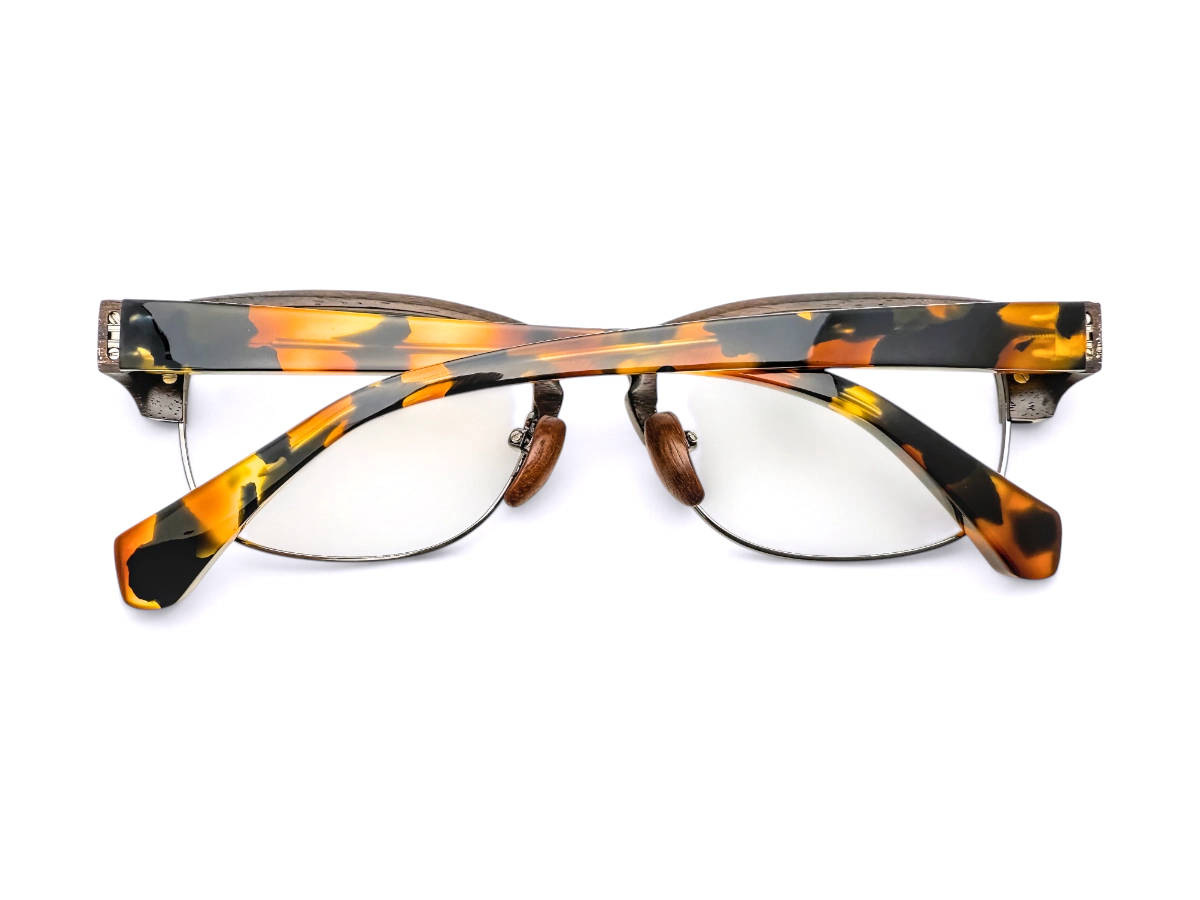
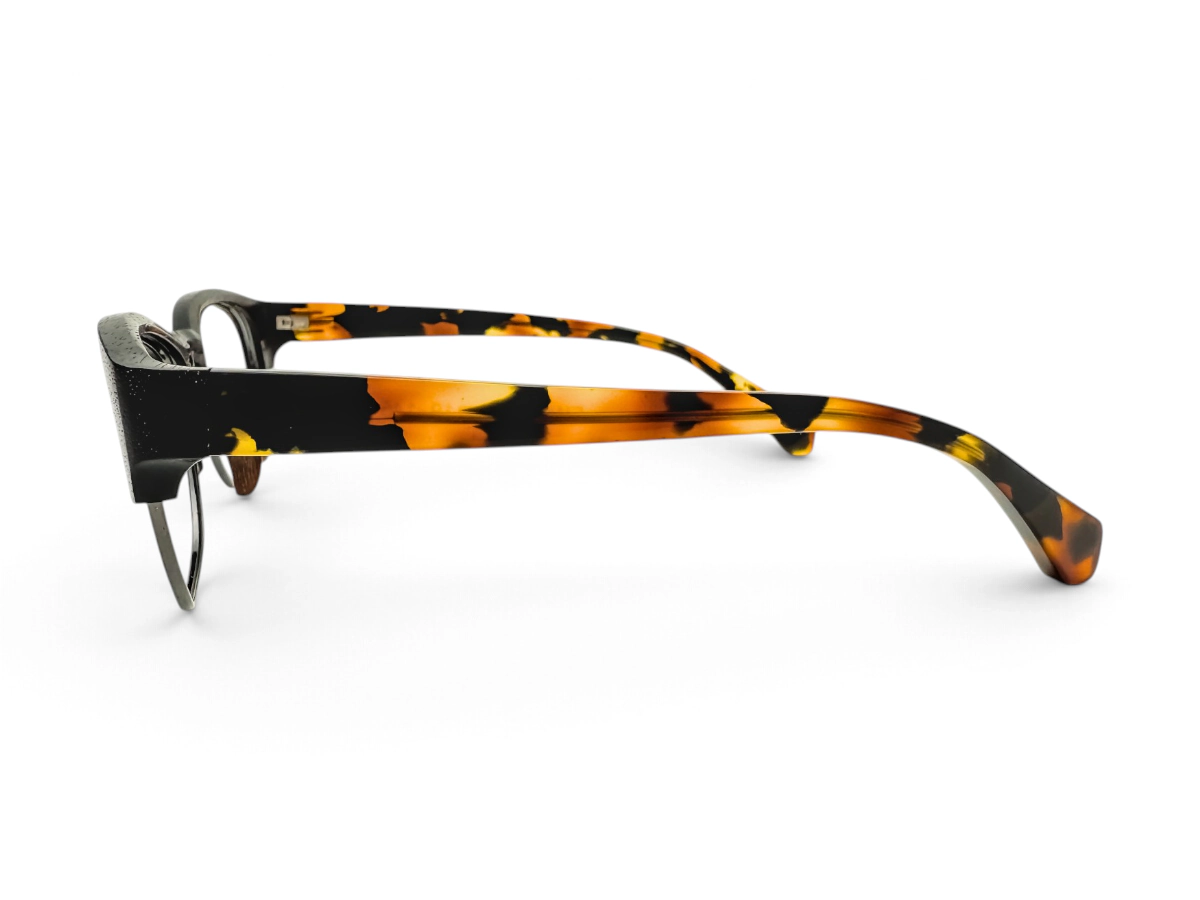
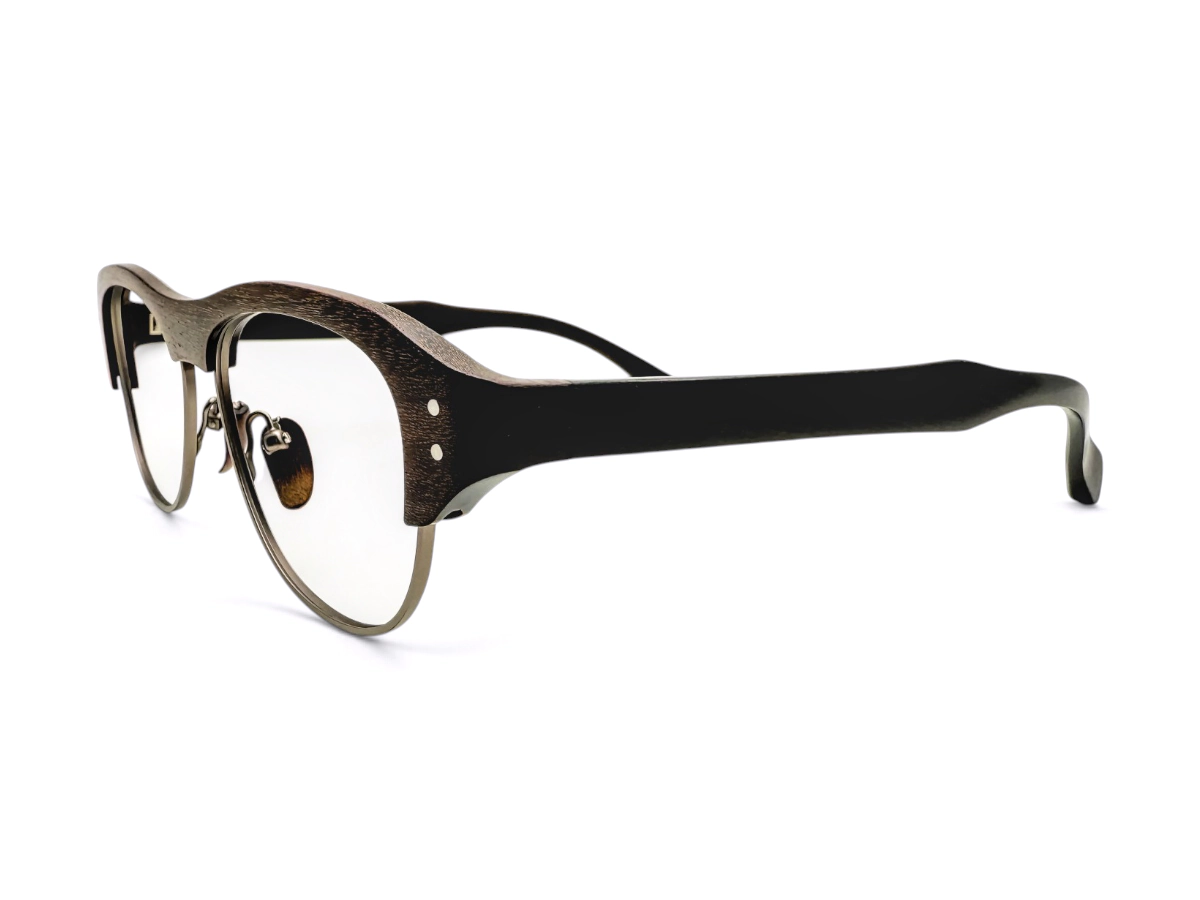
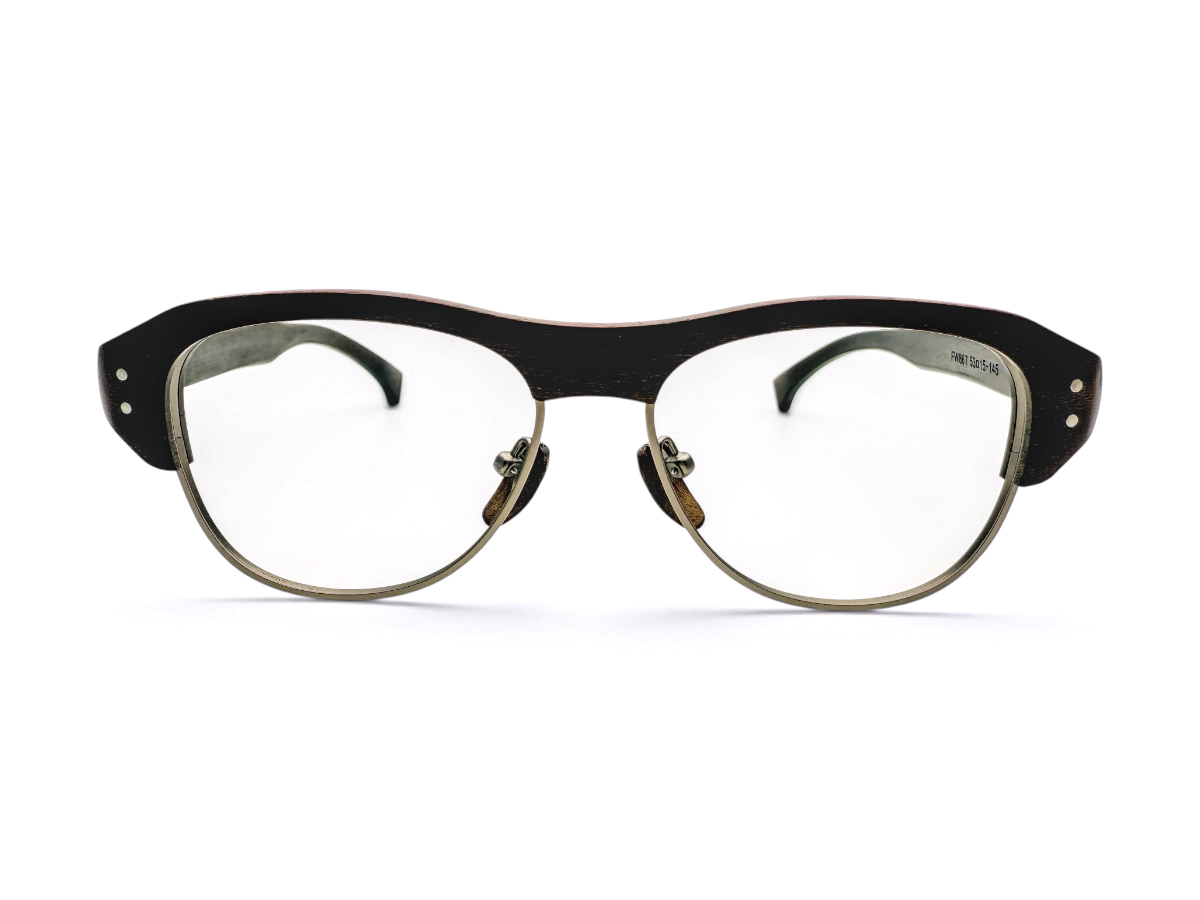
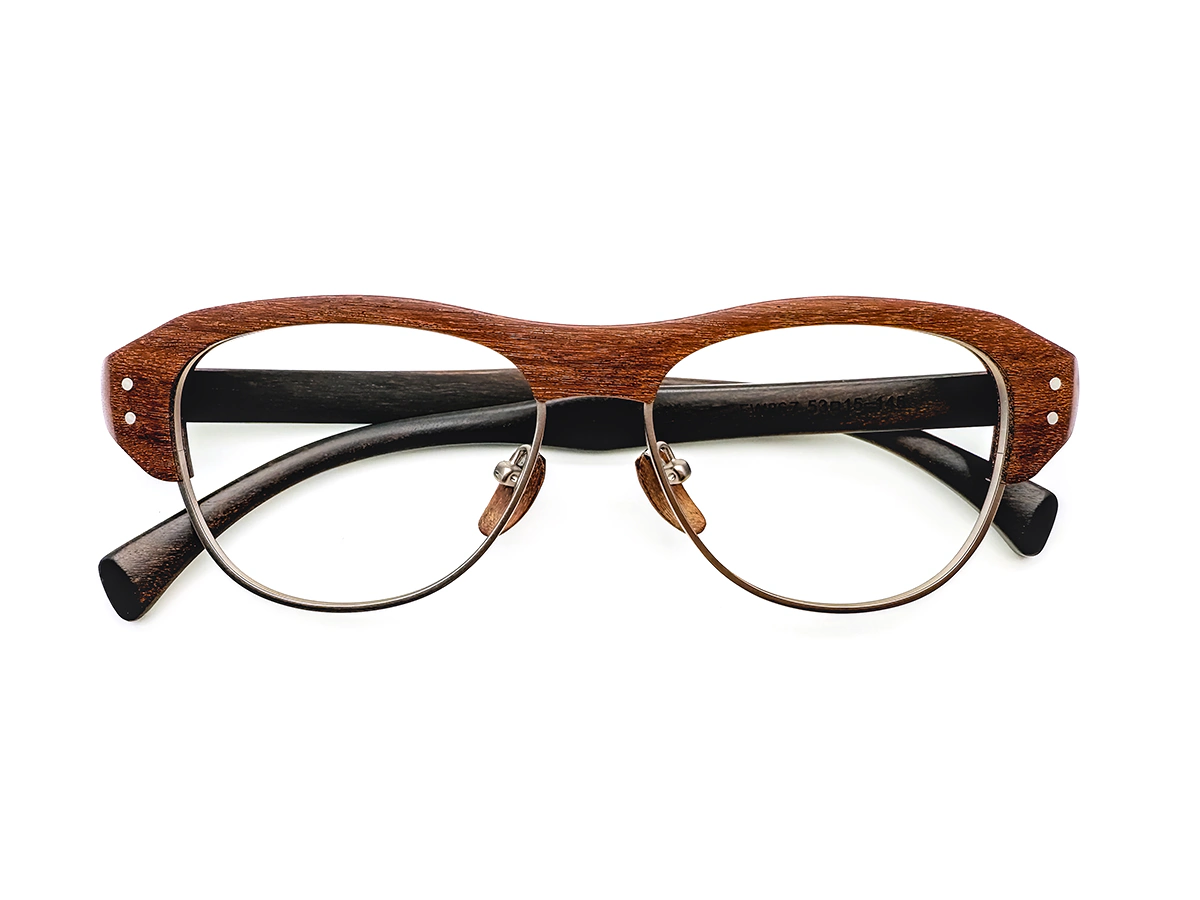
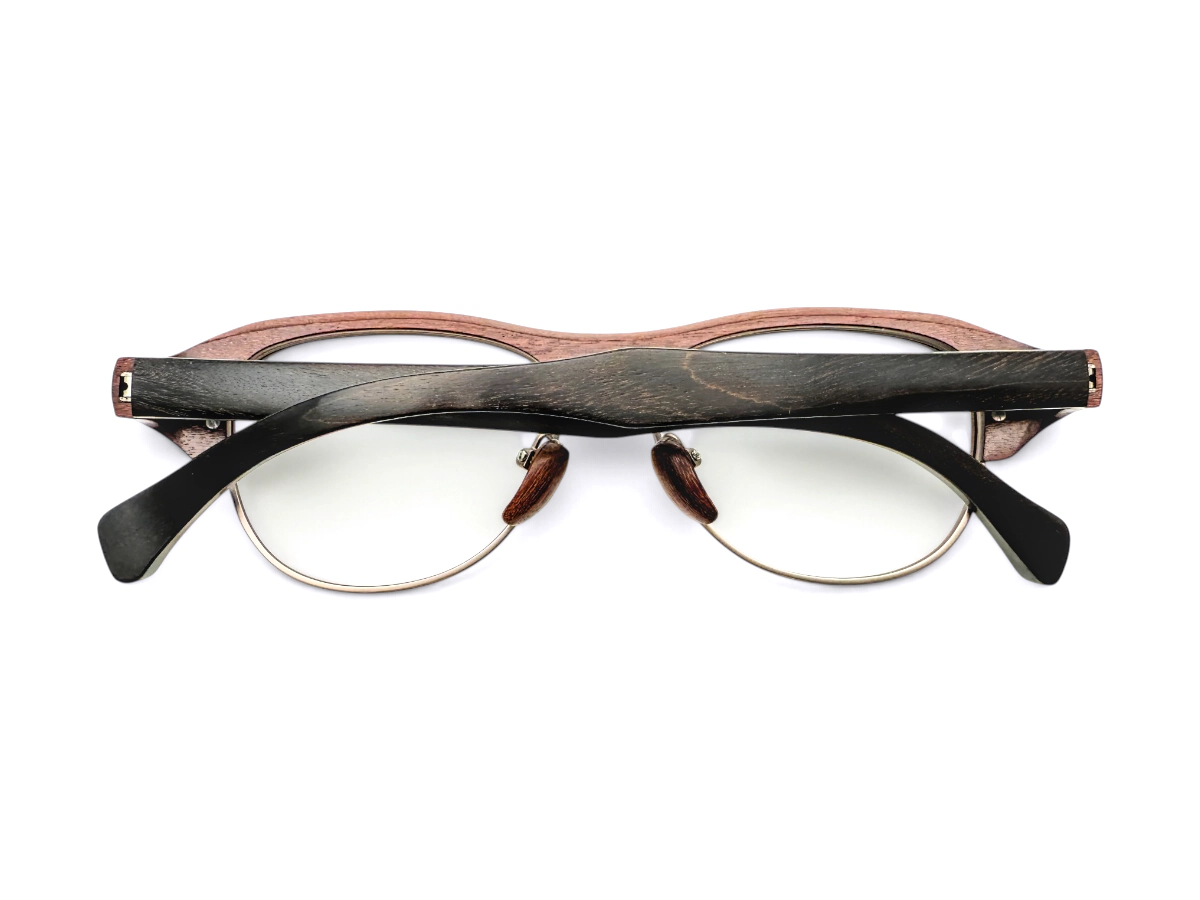
Wood changes the surface character of a frame, while metal allows finer rims, bridges and connection points. Adding acetate introduces another color and thickness variable. In these mixed-material eyewear structures, the key issue is how the materials meet: junction geometry, component fit and the transition from front to temple need to be resolved as part of the frame rather than treated as separate decorative choices.
SW-B6873
A shaped wood upper section sits above the finer metal rim, making the material transition part of the front profile. The connection needs to remain visually clean where the two structures meet around the outer front.
Wood · Metal
SW-B5314
Acetate moves the color contrast into the temples while wood and metal define the front. With three materials in one frame, the side transition and component alignment become more visible and need to read as one construction.
Wood · Metal · Acetate
SW-B4425
Here the wood forms a broader upper contour while the metal rim completes the lower lens shape. The contrast makes alignment between the two materials especially visible across the bridge and outer corners.
Wood · Metal
MATERIAL ARCHITECTURE
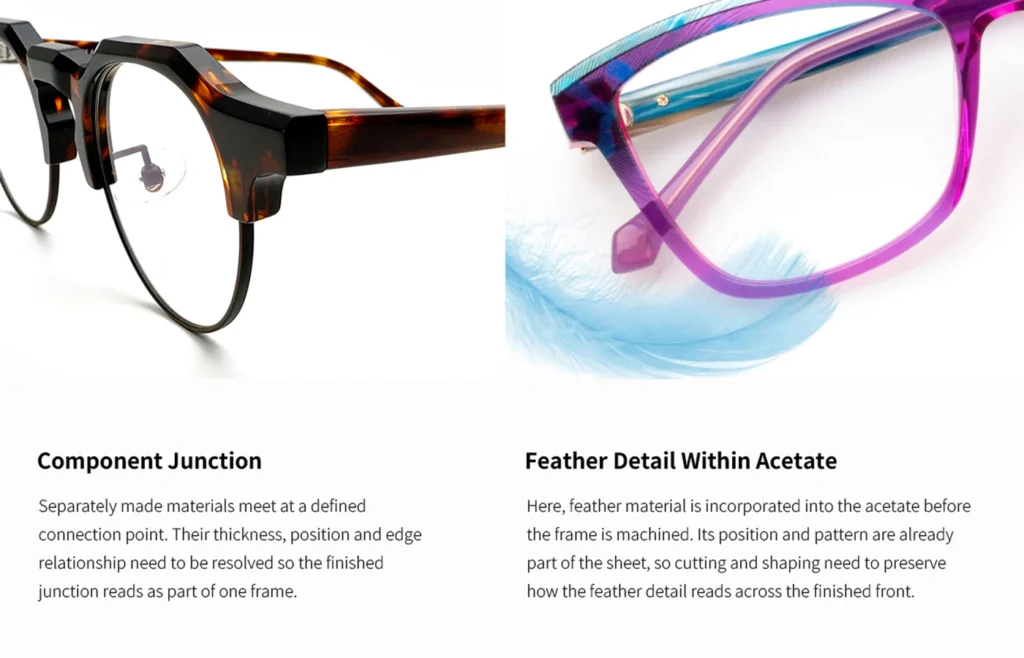
Some mixed-material frames join separately made components. Others incorporate a second material within acetate before the sheet is machined into the frame. The difference is where the material relationship is created: at a component junction or within the material itself.
The manufacturing route depends on whether the second material is joined as a finished component or incorporated before machining. That distinction changes how the later finishing and assembly steps need to be planned.
WHERE MATERIALS MEET
Different material pairings create different junction problems. In custom mixed material eyewear, thickness, surface character and component geometry need to stay visually and structurally coherent where one material meets another.
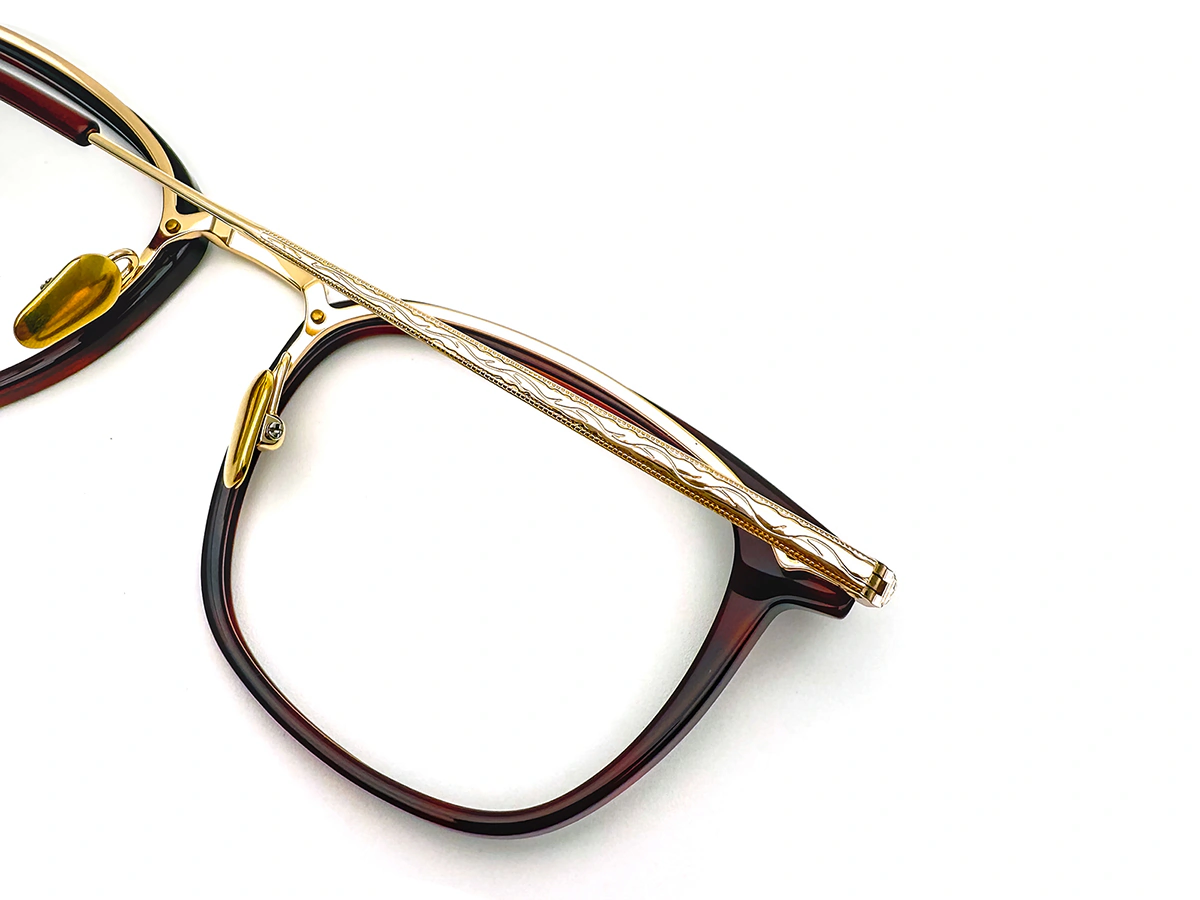
Acetate gives the front its visual mass, while the metal elements introduce a thinner structural line. Where the two meet, profile height and spacing need to stay controlled so the transition reads as one frame rather than two unrelated parts.
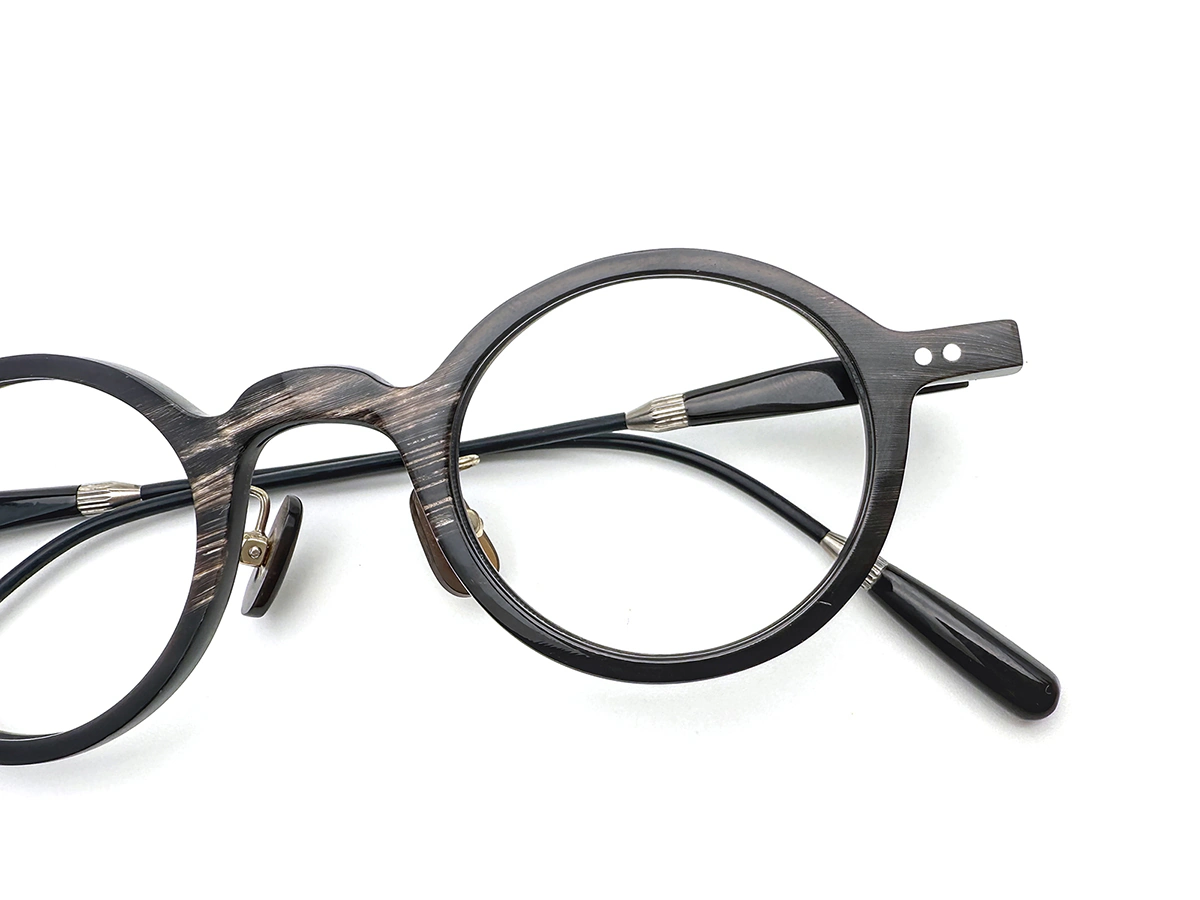
Buffalo horn brings natural tone and material depth, while titanium keeps the adjoining structure visually lighter. The transition needs to respect both the horn profile and the position of the titanium components so neither material feels forced into the other.

Floral acetate already carries strong visual variation across the frame surface. Metal details should therefore support the construction without competing with the material pattern, especially where the temple hardware meets the laminated front.
Send the drawing, reference frame or proposed material pairing. SEESUN reviews the junctions, possible process conflicts and open decisions before sampling as your mixed material eyewear manufacturer.
We use cookies to support essential website functions. You can find details about the cookies used on this site in our Cookie Policy.