Sunglasses Manufacturer | OEM & ODM Eyewear Factory | Seesun
Sunglasses Manufacturer | OEM & ODM Eyewear Factory | Seesun
EYEGLASSES FACTORY
SEESUN operates an approximately 4,000 m² eyeglasses factory in Shenzhen, producing OEM and ODM sunglasses and optical frames in acetate, metal, titanium and mixed-material constructions. The page below shows the specialized equipment, production operations and controls used to carry approved eyewear into finished orders.

CUSTOM EYEWEAR CAPABILITIES
Material and construction set the production route in a custom eyeglasses factory. Gold-foil and dried-flower acetate, fine metal assemblies and horn–titanium combinations each call for different machining, joining and finishing decisions before production begins.
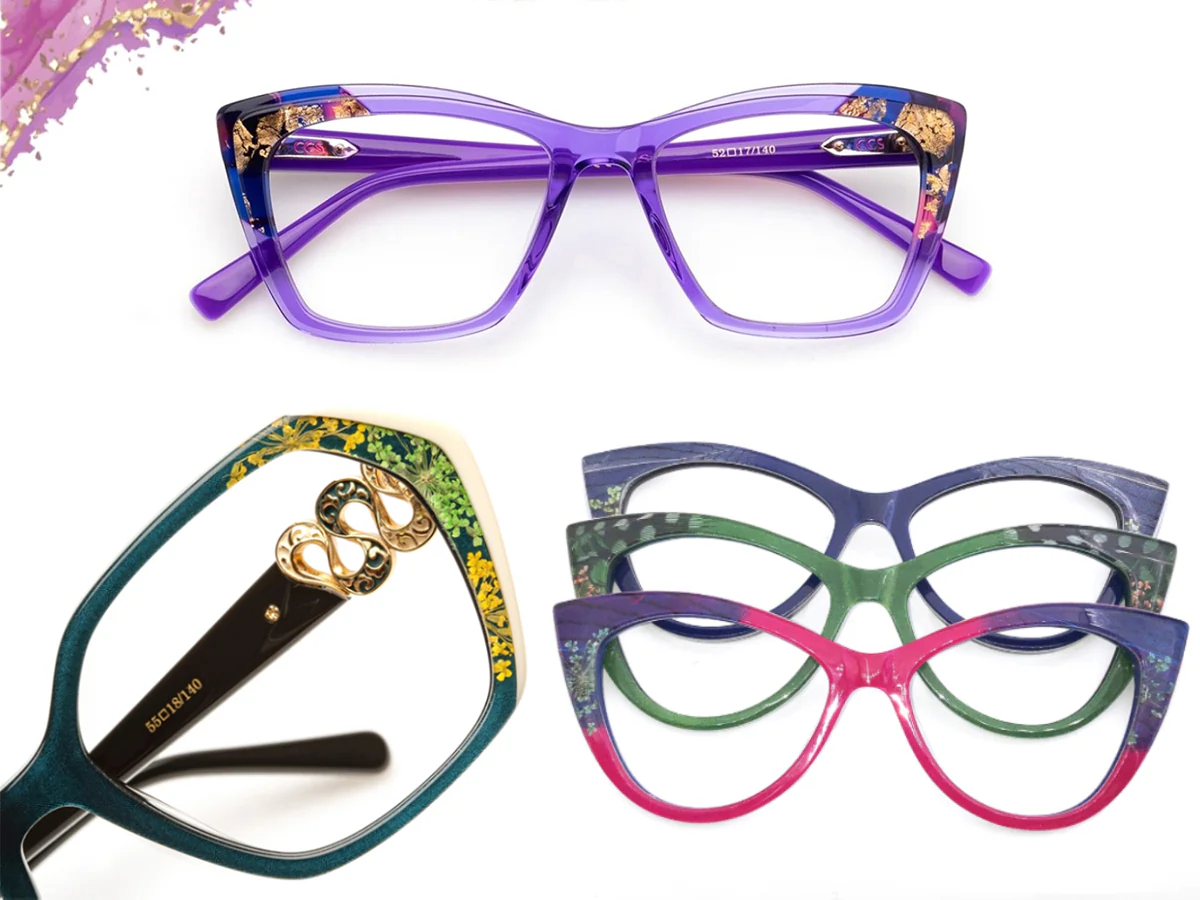
Decorative acetate development becomes more process-sensitive when gold foil, dried flowers or feather details are built into the frame. Material placement, machining and the final profile need to be considered together so the decorative effect is carried cleanly through shaping and finishing.
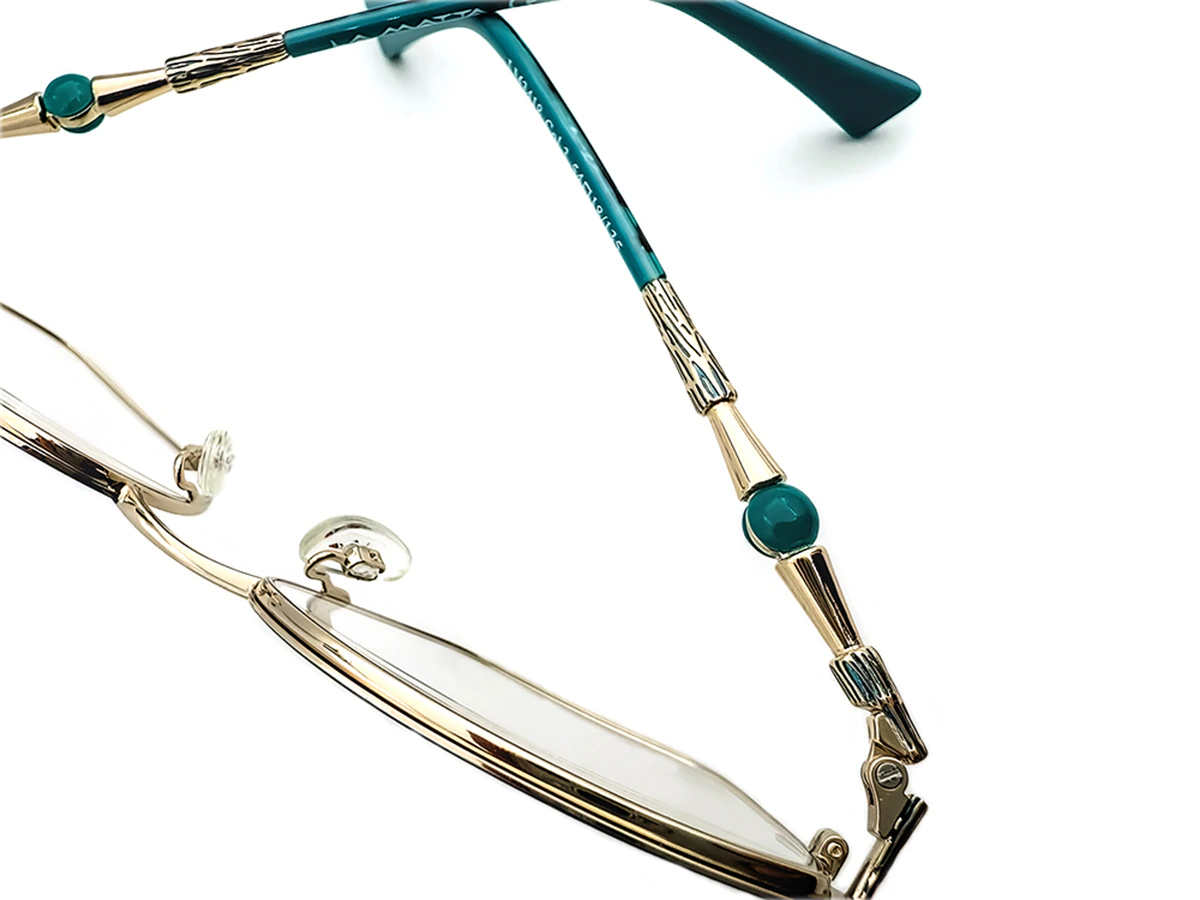
Fine metal and titanium constructions become less forgiving when decorative parts are added along narrow frame sections. Their position, connection points and alignment need to be fixed before finishing so the assembled frame remains visually consistent.
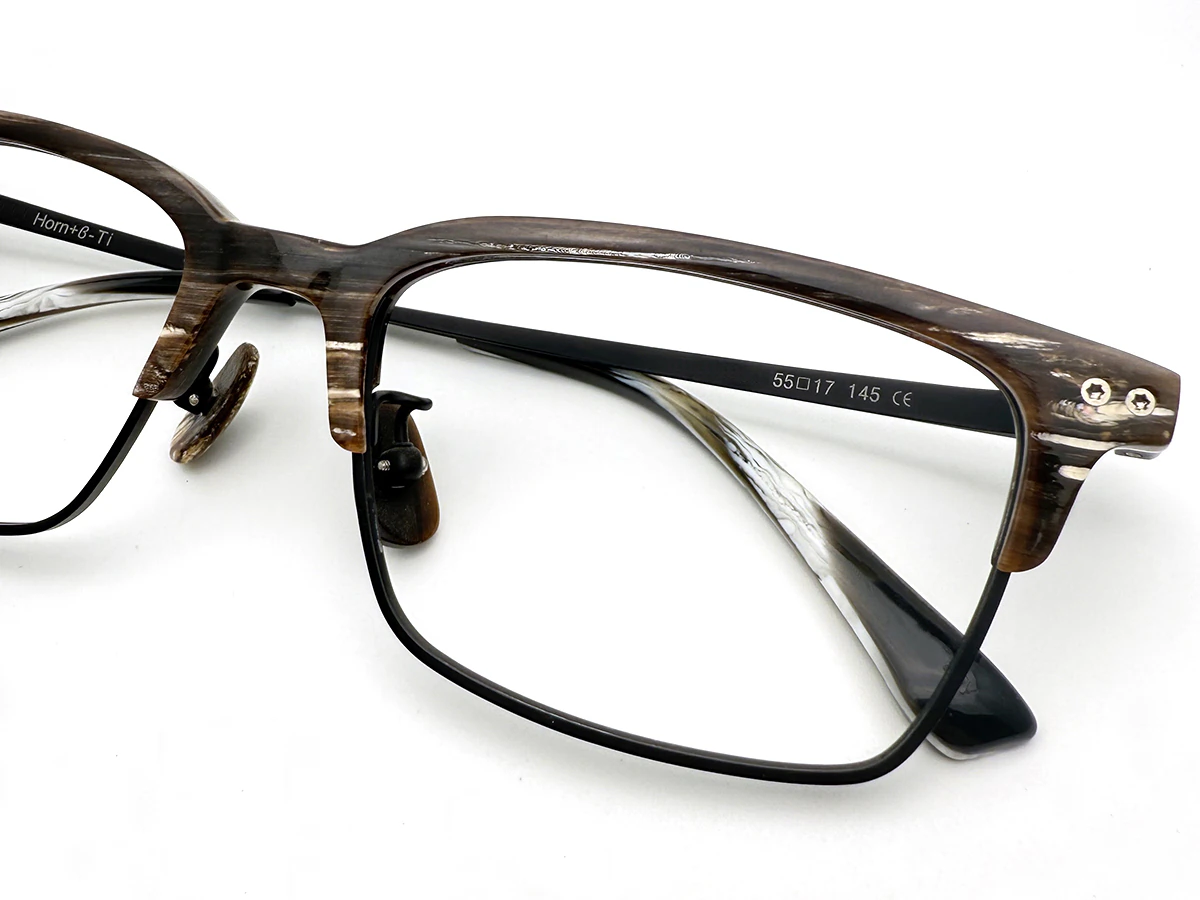
Natural horn and titanium bring two very different materials into the same frame. Connection geometry and component fit need to be resolved around both materials so the junction stays clean and the assembled frame remains properly aligned.
SPECIALIZED MANUFACTURING
Complex geometry and material combinations can change the production route. SEESUN uses specialized machining and material-integration processes for these constructions, and equipment updates are paired with internal technical training so the capability can be applied on the production floor.
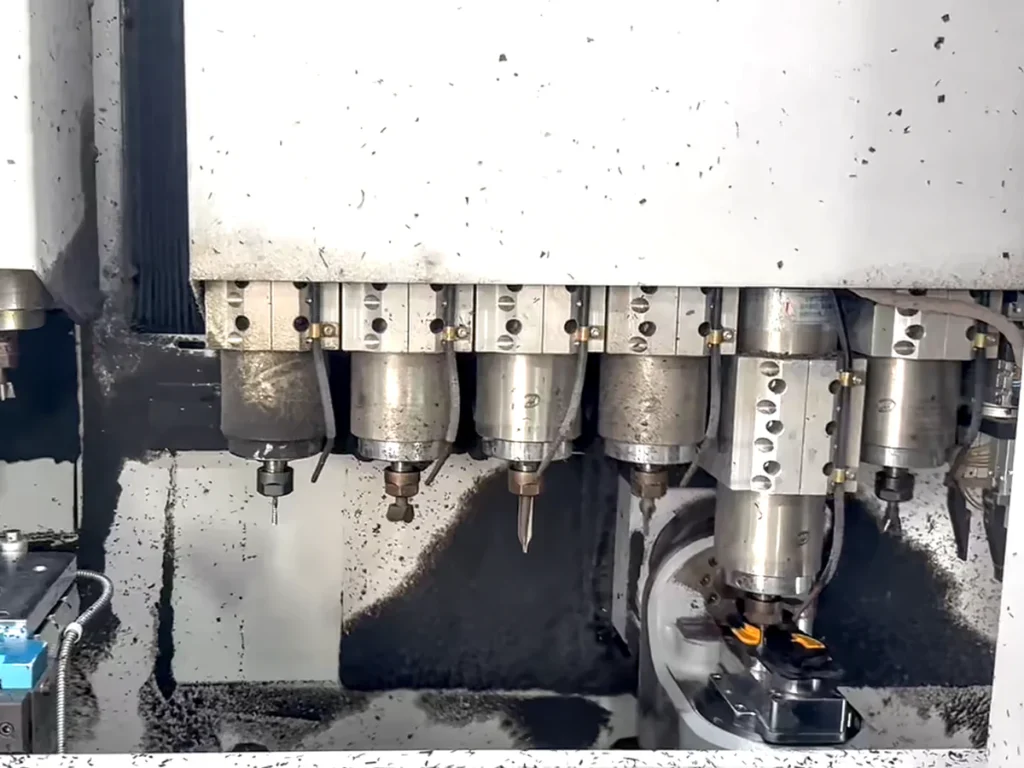
Two 5-axis machines are used for frames that require multi-surface machining, deep three-dimensional patterns or complex curved profiles. They allow several faces to be machined with fewer repositioning steps, giving technicians more control over geometry that is difficult to achieve with conventional equipment.
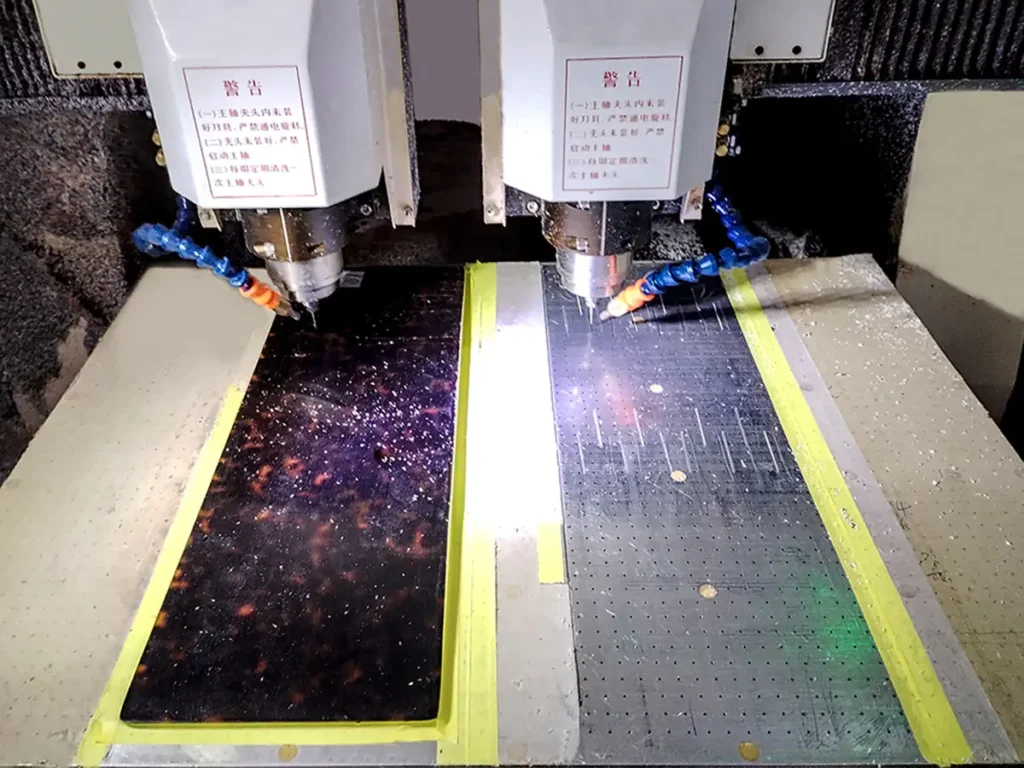
A full material sheet can be secured directly on the machining table by vacuum instead of being cut into individual blanks first. Reducing movement and repeated clamping helps control positioning, improve material utilization and support high-mix, lower-volume production more efficiently.
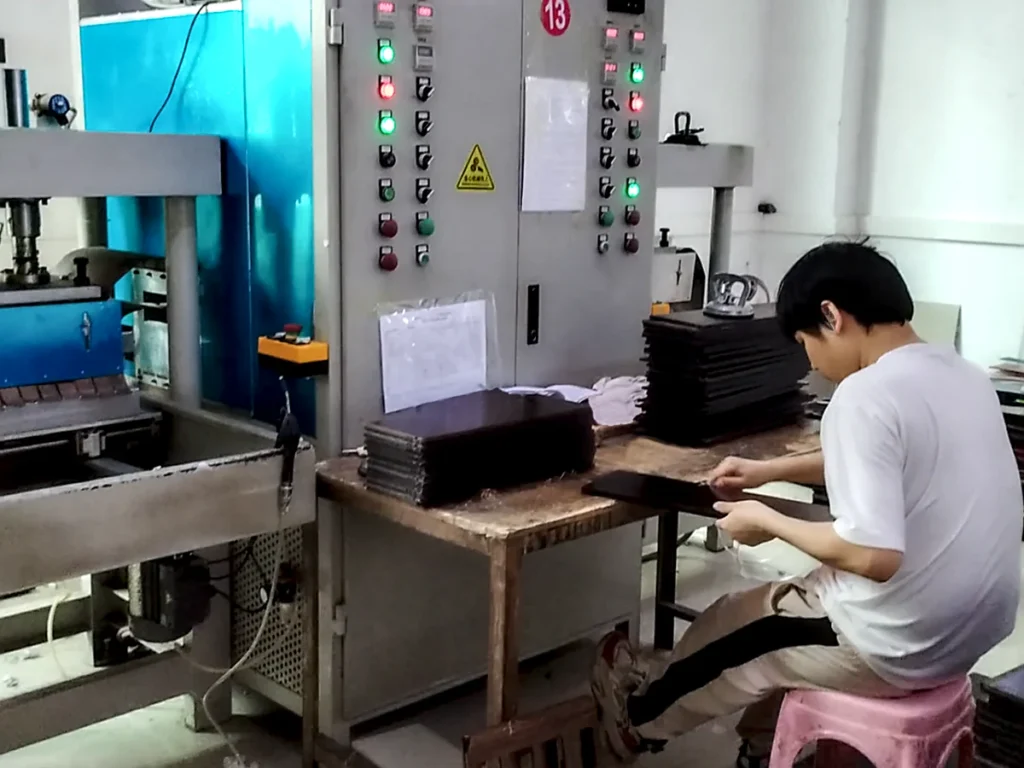
High-frequency bonding is used in our eyeglasses factory when conventional hot or cold lamination cannot achieve the required material construction. The process allows acetate to be combined with metal or titanium rim structures, or with decorative layers such as real feathers, dried flowers and ultra-thin fabrics.
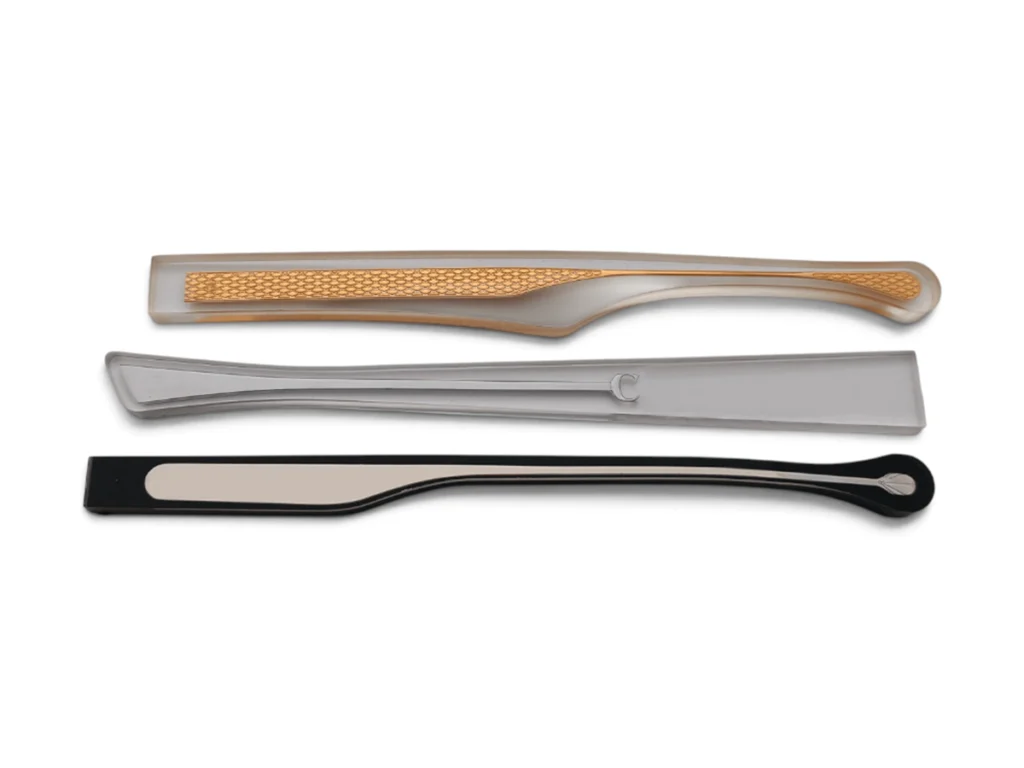
Metal infusion allows different metal materials to be embedded directly within acetate-based material, creating a seamless visual transition. Depending on the design, the process can form fine metal details, embedded patterns or internal structures while keeping each element accurately positioned inside the frame. Multiple metals can also be integrated within the same construction where placement, bonding and material transition need to remain controlled.
PRODUCTION FLOOR
The examples below show selected operations from acetate and metal or titanium production. They are not a fixed sequence: the route changes with frame material and construction.
For acetate frames, the examples below show machining, forming and hinge fitting before later finishing and assembly.
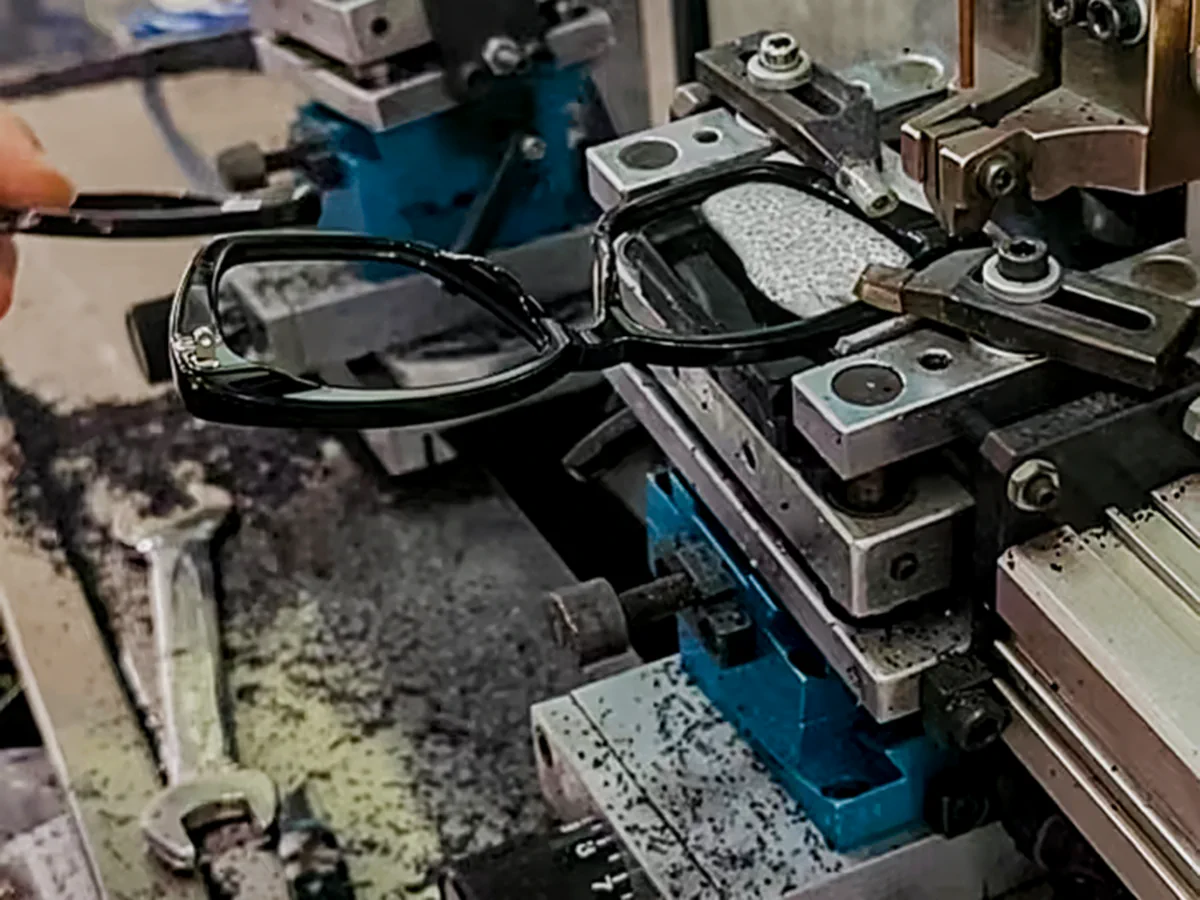
Hinge pockets and components are fitted so the front and temples can assemble in the intended position.
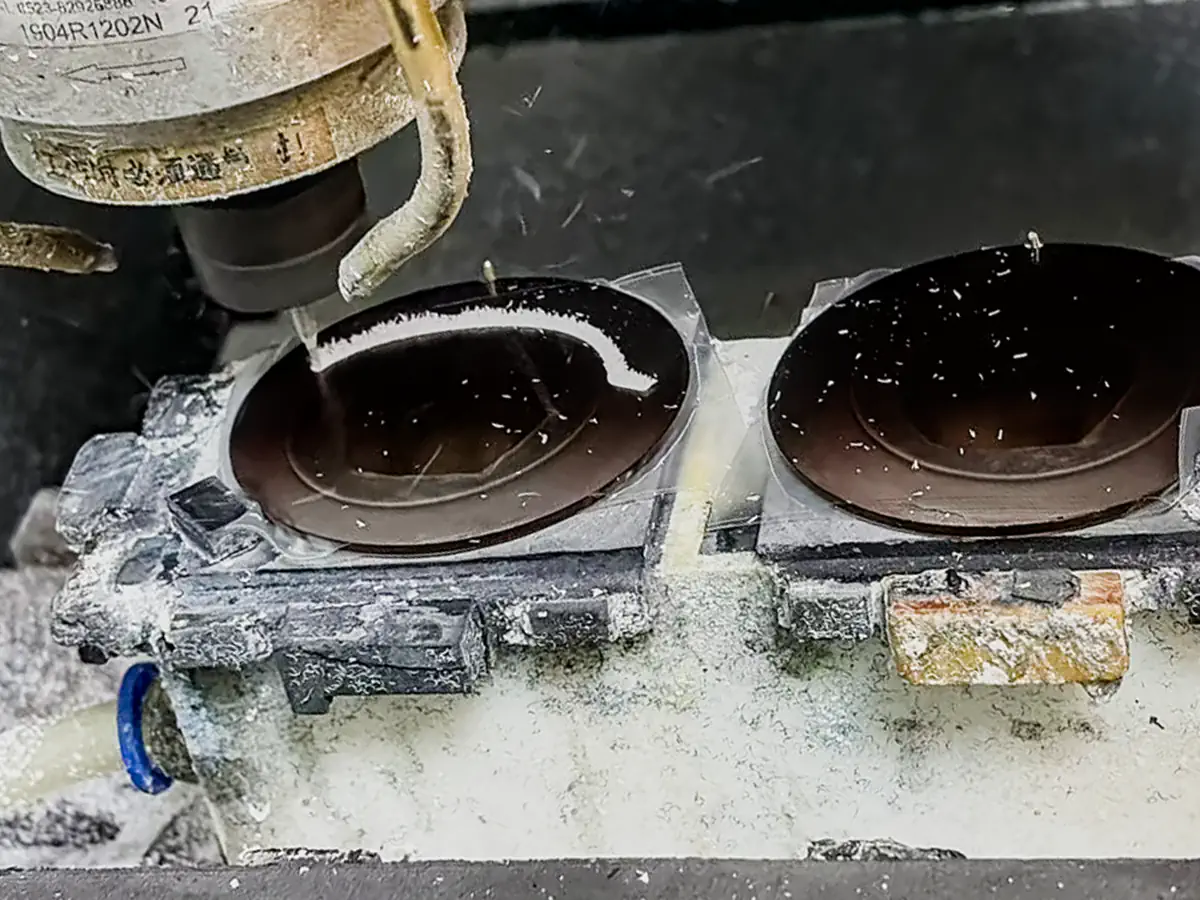
In our eyeglasses factory, acetate frame fronts are milled to the required profile before later shaping, fitting and finishing.
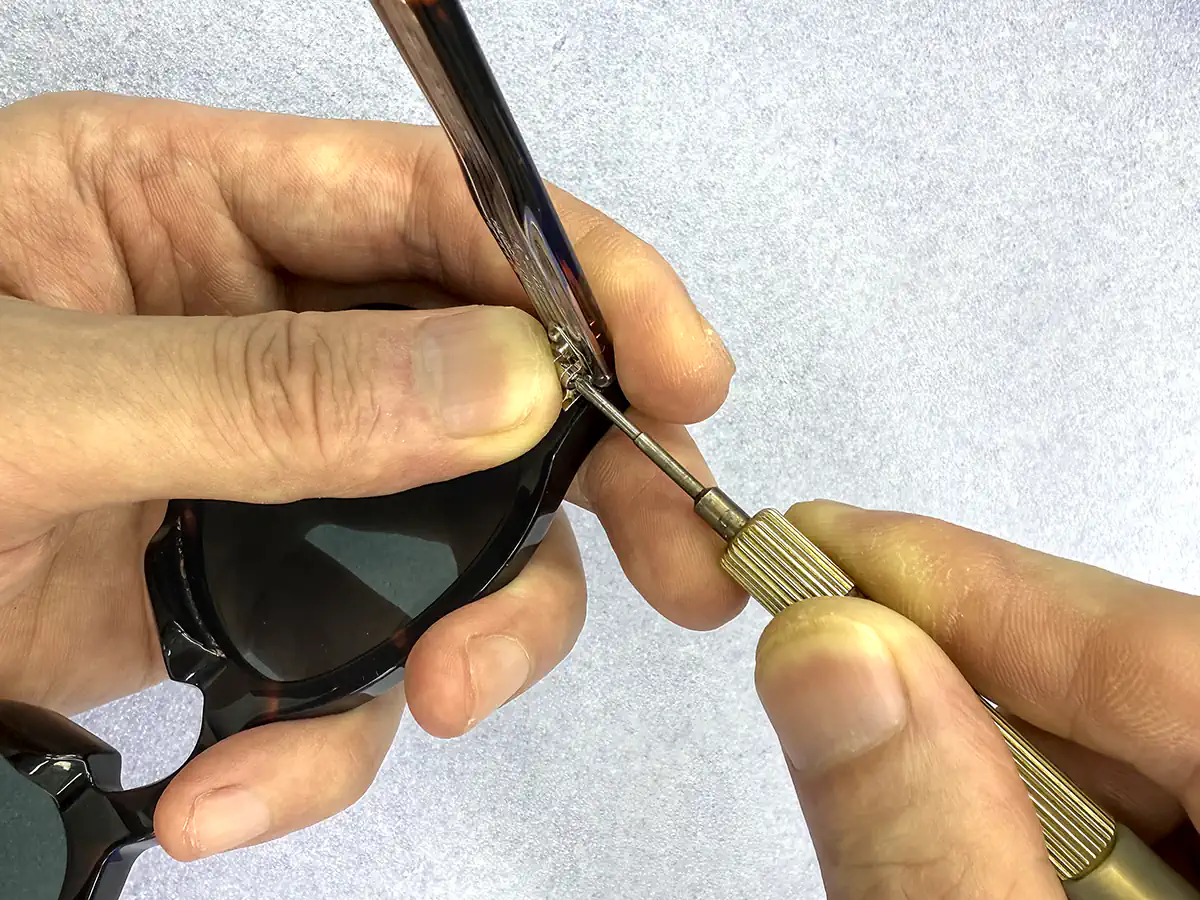
During eyewear manufacturing, frame components are fitted and adjusted by hand to confirm connection and movement before the next production stage.
Metal and titanium components are formed and joined before finishing, final assembly and inspection. The exact operations depend on the frame construction.
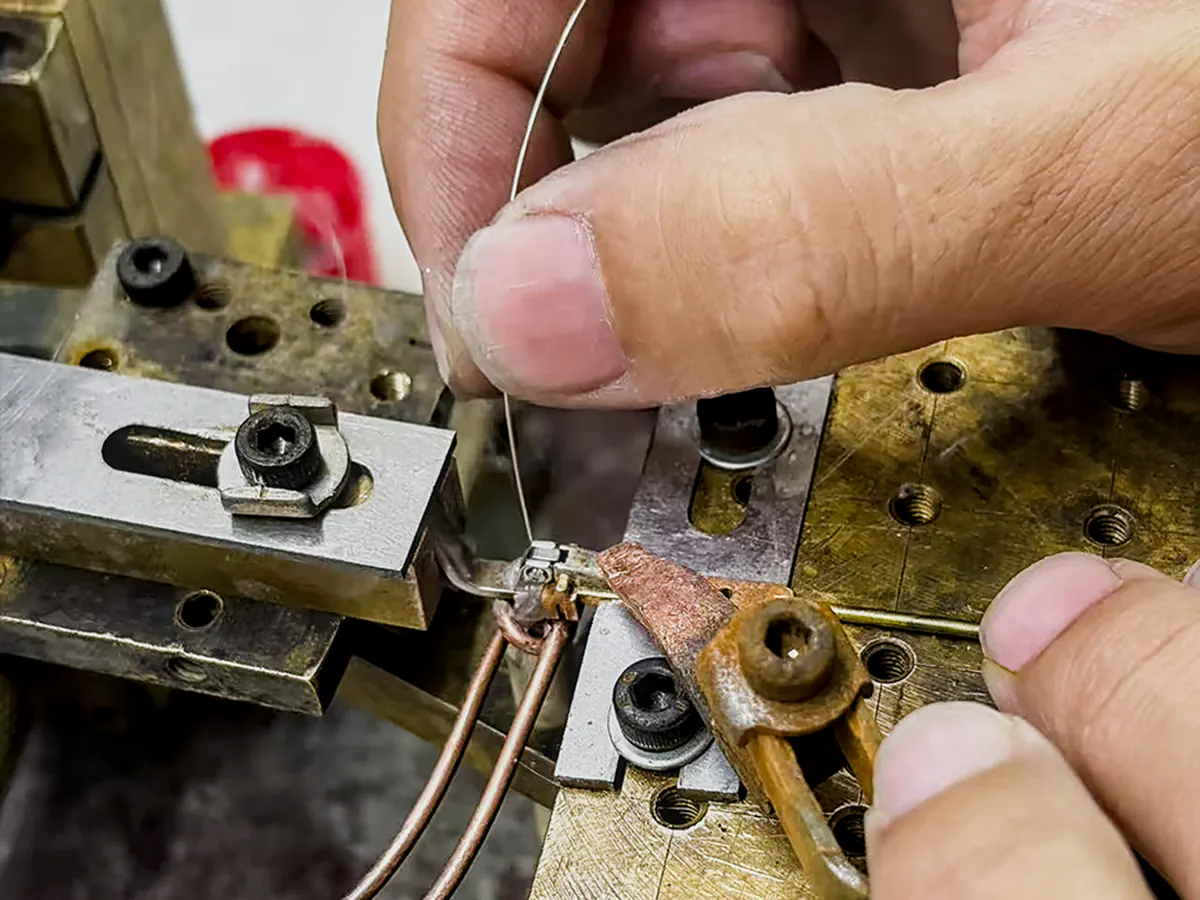
Fixtures hold metal components in position during welding so the intended geometry can be maintained through joining.
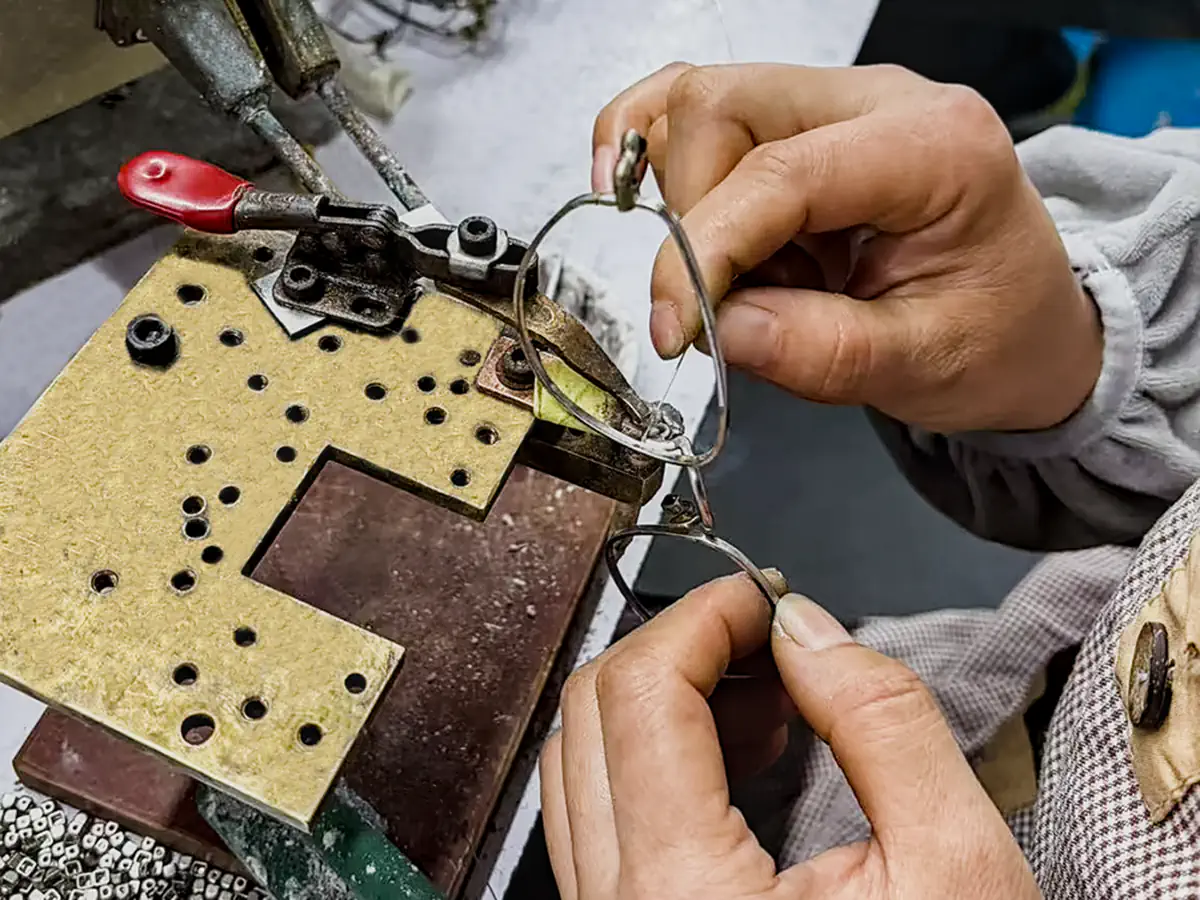
Hinge and temple components are joined before later assembly and finishing, with connection position matched to the frame construction.
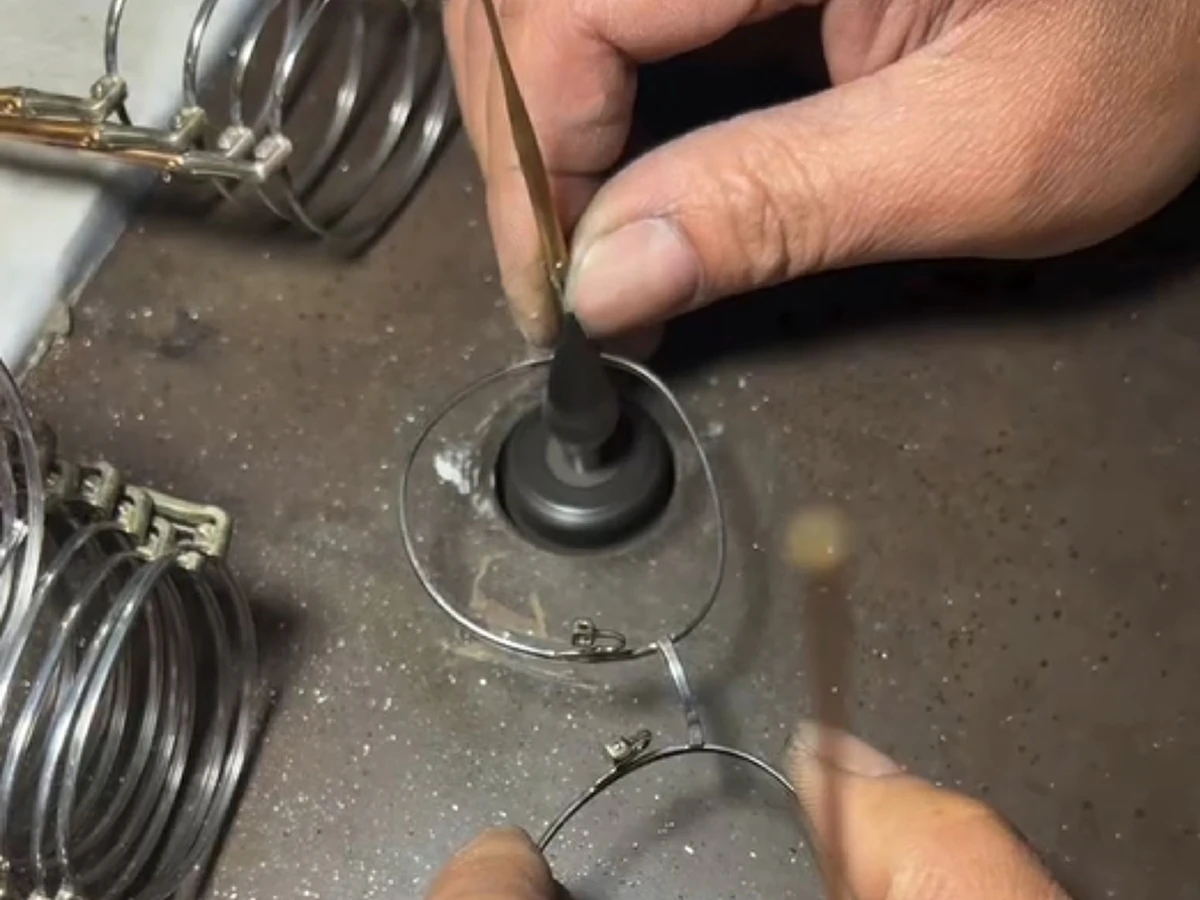
Welded joints are ground and finished by hand to smooth the connection before later surface finishing.
MASS PRODUCTION CONTROL
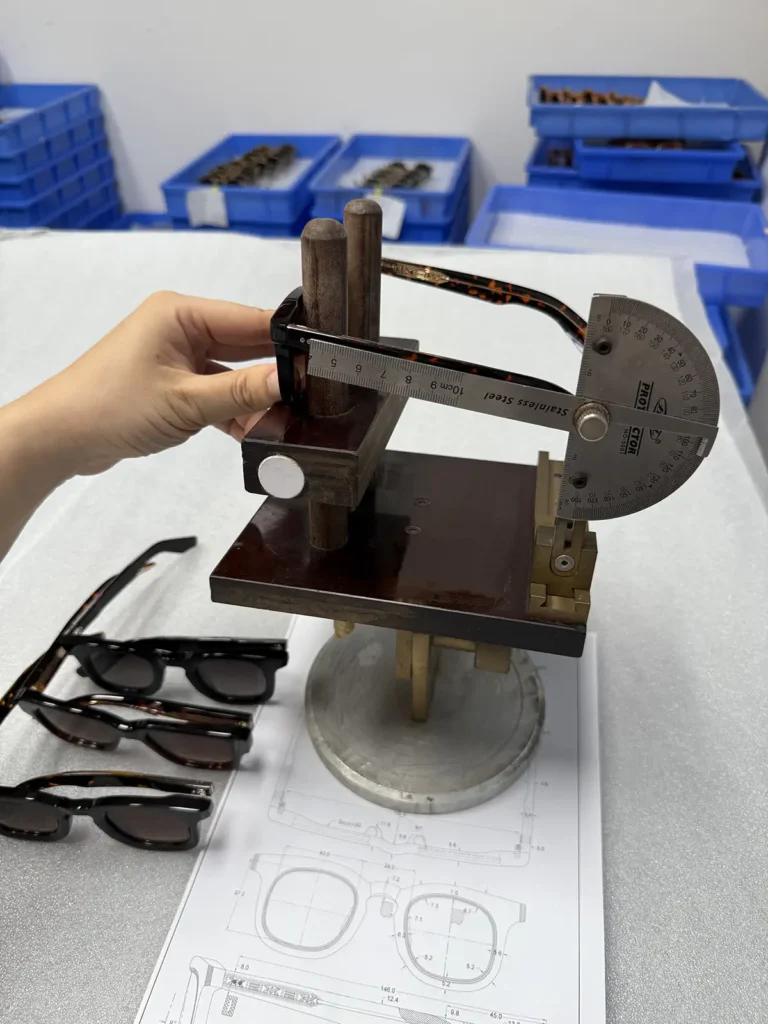
For brands evaluating an eyeglasses factory in China, an approved standard only matters if it can be carried through the batch. We use the master sample as the working reference and focus checks on the stages where dimensions, fit, finish or component function can still drift from that reference.
Coordinated workflows reduce unnecessary handling and help keep multi-style production organized as different frames move through different routes.
Flexible scheduling helps accommodate high-mix, lower-volume orders and different production priorities without forcing every project into the same batch pattern.
01
The approved sample, drawings, materials, colors and key components are confirmed before production release.
02
Frame processing follows the approved dimensions, construction and workmanship requirements.
03
Checks at key stages identify variation while it can still be corrected before moving downstream.
04
Finish, fit, hinge operation and assembly are compared with the confirmed sample.
05
Finished frames are checked for appearance, alignment and function, then packed to the approved requirements.
If you need a custom eyewear factory to take an approved sample or defined specification into production, share your drawings, sample or production requirements. We’ll review the production route and the points that still need confirmation.
Need development support first? Explore Custom Manufacturing →
We use cookies to support essential website functions. You can find details about the cookies used on this site in our Cookie Policy.