Sunglasses Manufacturer | OEM & ODM Eyewear Factory | Seesun
Sunglasses Manufacturer | OEM & ODM Eyewear Factory | Seesun
BUYER GUIDE
Reviewed by SEESUN Eyewear Manufacturing Team
•
8 min read
•
If you’re considering how to start a private label sunglasses brand, the first production decision is how much of the frame needs to be developed. An existing open style may be the sensible choice if its shape and fit already suit your collection. A modified design can give the collection a more distinctive look without requiring every component to be developed from scratch. Fully custom development makes more sense when the frame’s proportions, materials or construction are central to your brand.
Each route affects tooling, sample approvals, minimum quantities and timing. That decision helps determine which customization options are practical and how much development work is needed.
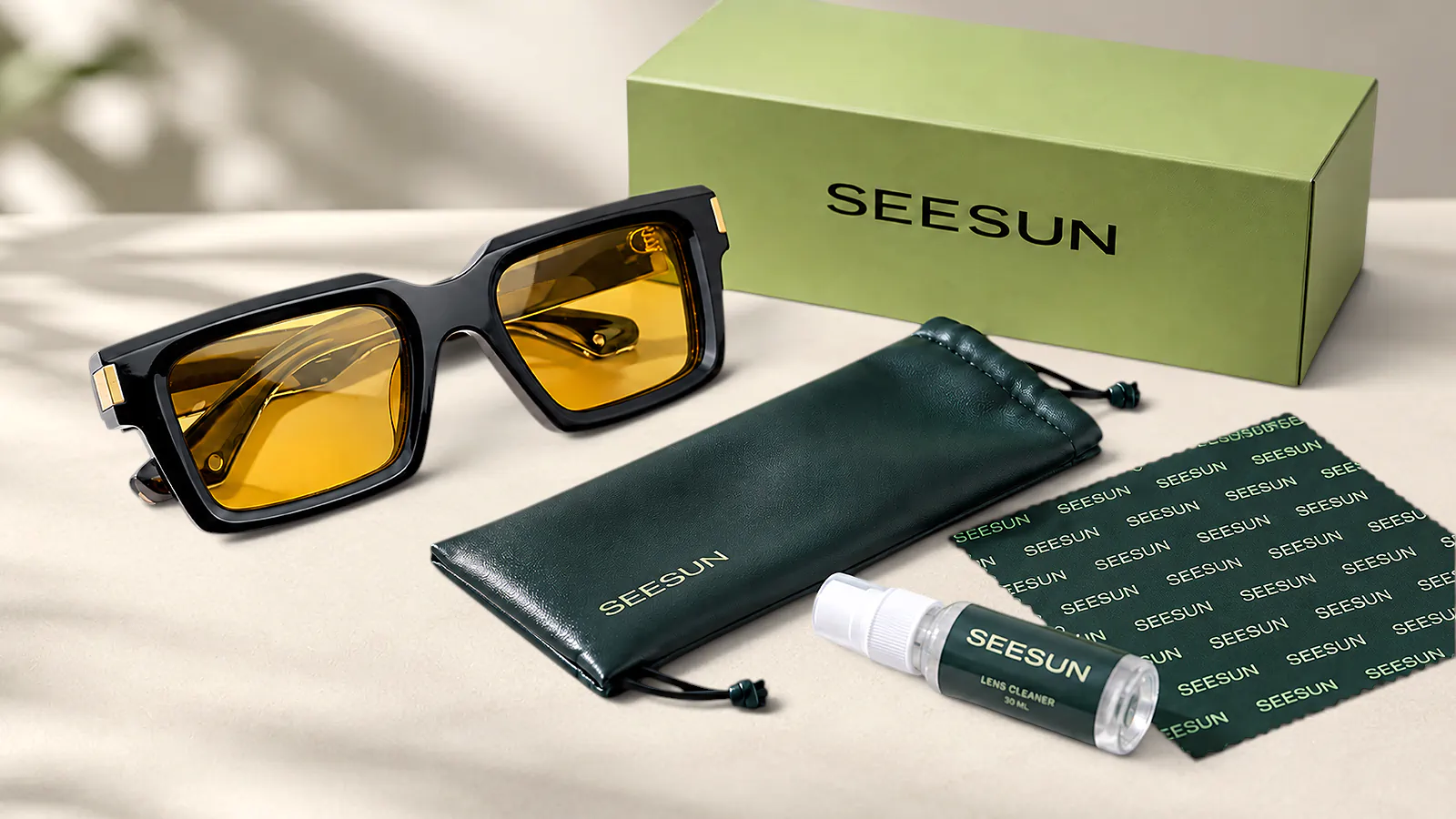
For private label sunglasses, putting a logo on an existing frame and commissioning a new frame from a sketch are very different assignments. The development route determines which parts can remain unchanged and which will need drawings, samples and separate approval.
| Route | What changes | What to consider |
|---|---|---|
| Existing open frame | Logo and limited details compatible with the frame | Less development work, but limited design differentiation |
| Modified design | Frame or temple shape, decoration and selected components | Additional drawings, samples and possibly new tooling |
| Fully custom | Proportions, materials and construction developed for the concept | More design control, with more engineering decisions to approve |
An existing style must be an open design that the supplier is entitled to offer, not a confidential frame developed for another customer. On suitable styles, changes may be limited to temple branding, lens marking or a small metal decoration. Altering the front or hinge moves the project beyond straightforward branding.
The label white label sunglasses is also used for ready-made, non-exclusive products sold under different brands. Confirm which definition the supplier uses and whether any requested modification can be reserved for your brand.
Adjusting the end-piece length, reshaping a temple or adding a branded metal part can make an existing design more distinctive. Changes like these may need additional samples or new tooling, particularly for embossed acetate details, custom hinges or decorative core wires.
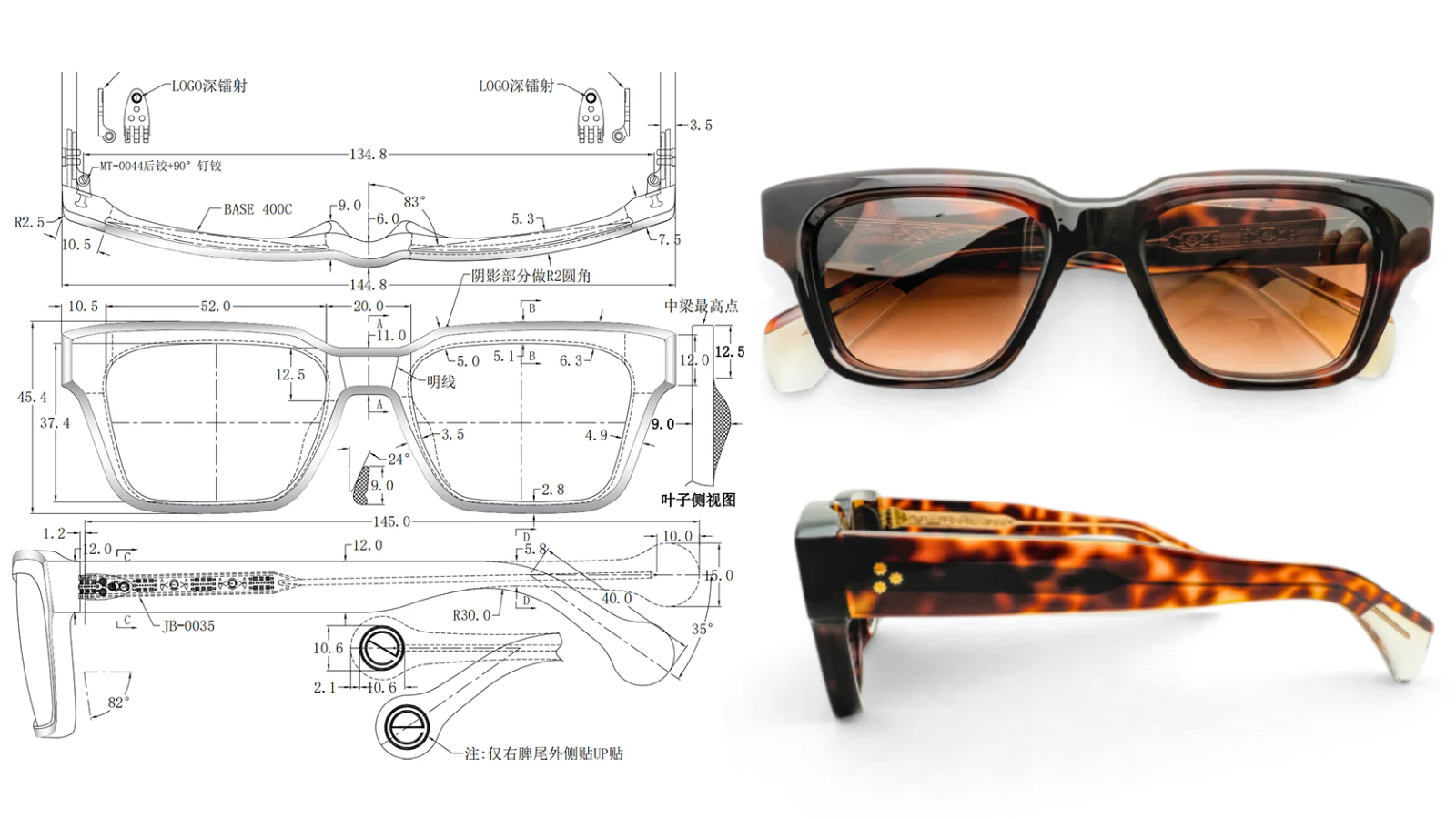
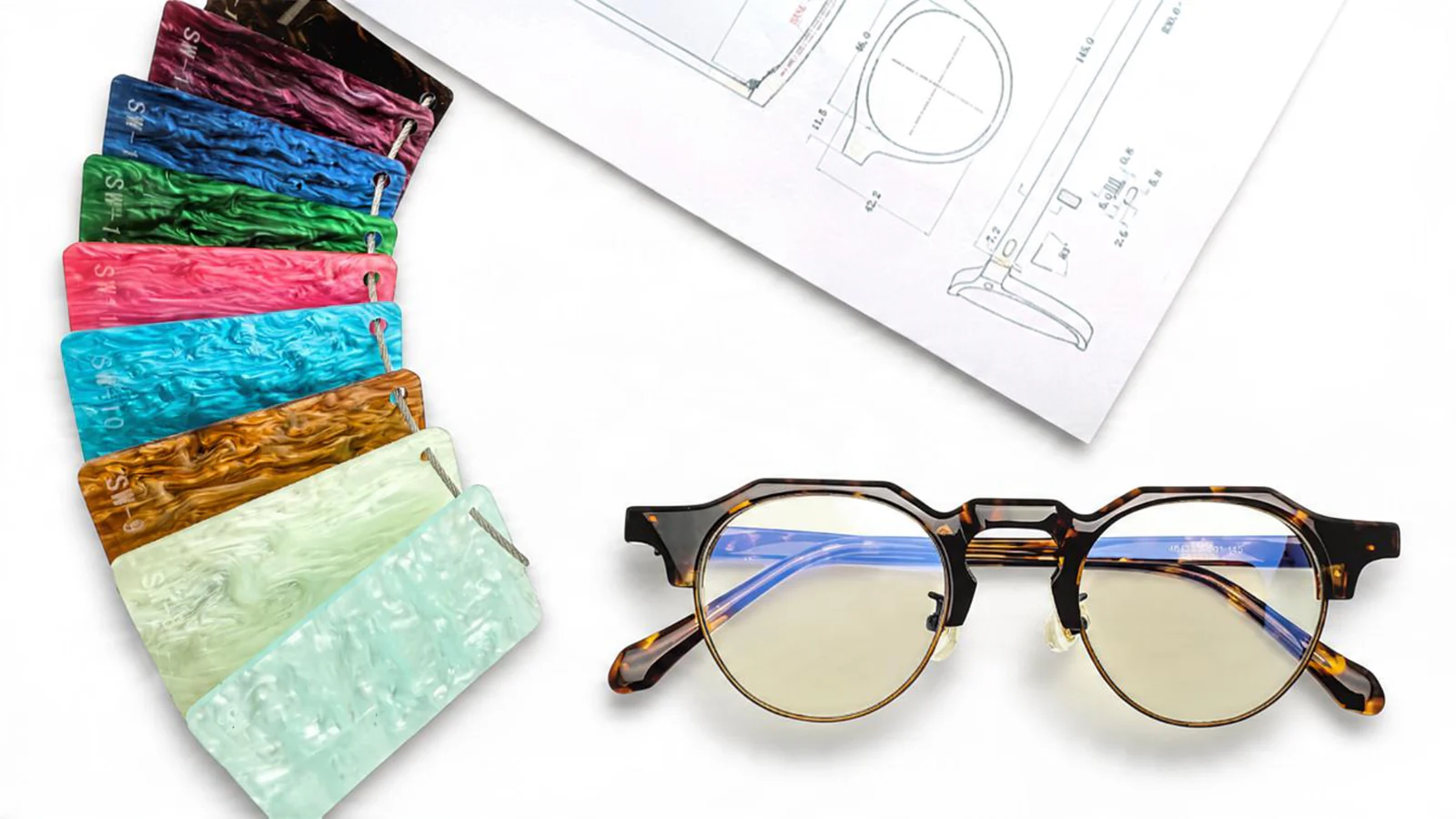
For fully custom eyewear development, reference photos, sketches, CAD drawings or a physical sample can provide the starting point. Engineering still needs to review dimensions and structural connections. These development routes also apply to private label eyewear beyond sunglasses. For private label eyeglasses, however, optical frame specifications and lens requirements need separate consideration.
A logo or color chosen on screen still has to work on the actual frame material.
Acetate offers domestic and imported sheet colors, but special colors may have material minimums. In laminated acetate, the position of the joins also affects the result. TR90 uses different color and printing options. Metal and titanium styles require agreement on plating finishes and hardware details before samples are approved.
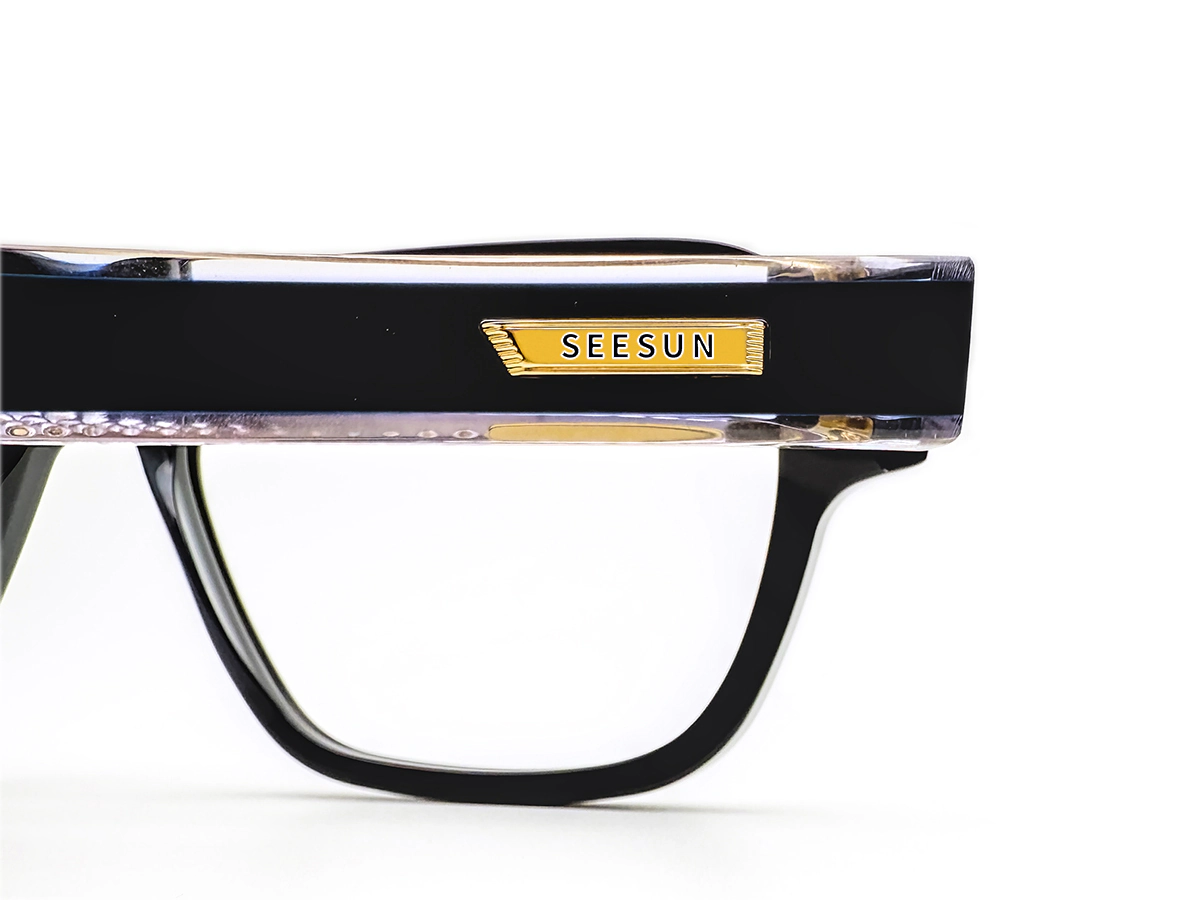
For custom logo sunglasses, choose the marking method with the actual surface in mind. Laser marking, pad printing, hot stamping and custom metal parts do not produce the same appearance or require the same preparation.
The raised metal plaque shown here, for example, needs its size and seating against the acetate surface checked. A fine inscription inside the temple is a different job. View the finished sample at normal distance and close up before signing off the placement and finish.
Lens tint should be approved against a physical or otherwise agreed reference. A photograph on a screen is rarely a reliable final color standard.
Packaging has separate specifications and minimums. Confirm case dimensions, lining, printing and logo placement alongside the eyewear. For more on available branding options, see SEESUN’s private label sunglasses services.
For private label eyewear, approve the exact open frame or modified version together with its brand-specific details: material color, lens tint, logo artwork and placement, metal decoration and packaging. Screen images can help select a direction, but physical color and finish need an agreed reference.
A change to the frame geometry or structural connection requires a separate drawing and physical-sample approval. A 3D-printed model can clarify shape; it cannot replace a sample made in the intended material. Identify each approved configuration and revision before releasing the order.
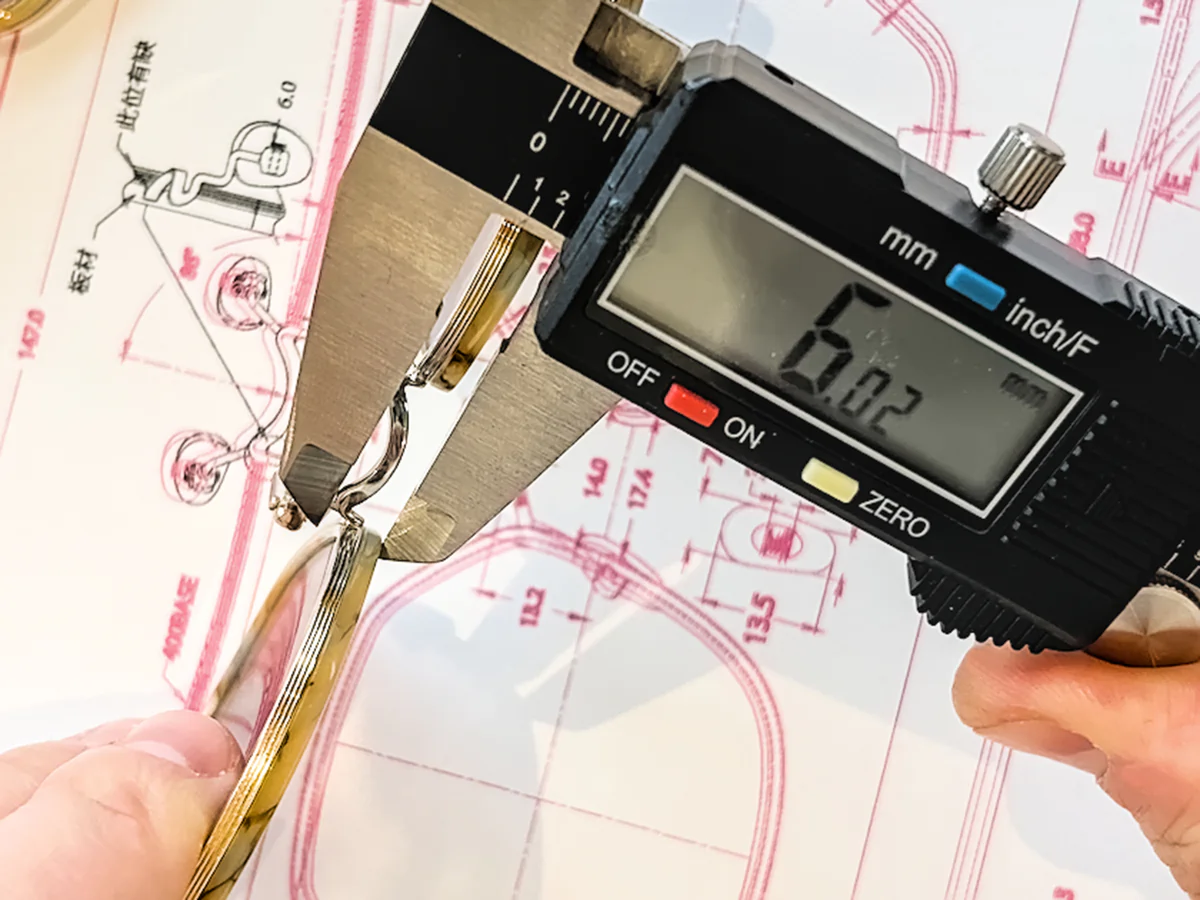
For a private label repeat order, the approved frame and branding references must stay together. Check that the logo position, lens tint, metal details, case print and labels match the signed-off configuration; a new packaging supplier or color batch should not quietly change the result. SEESUN’s factory quality control process covers the wider inspection route.
Keep a clear record of which branded configuration and sample revision have been approved for production.
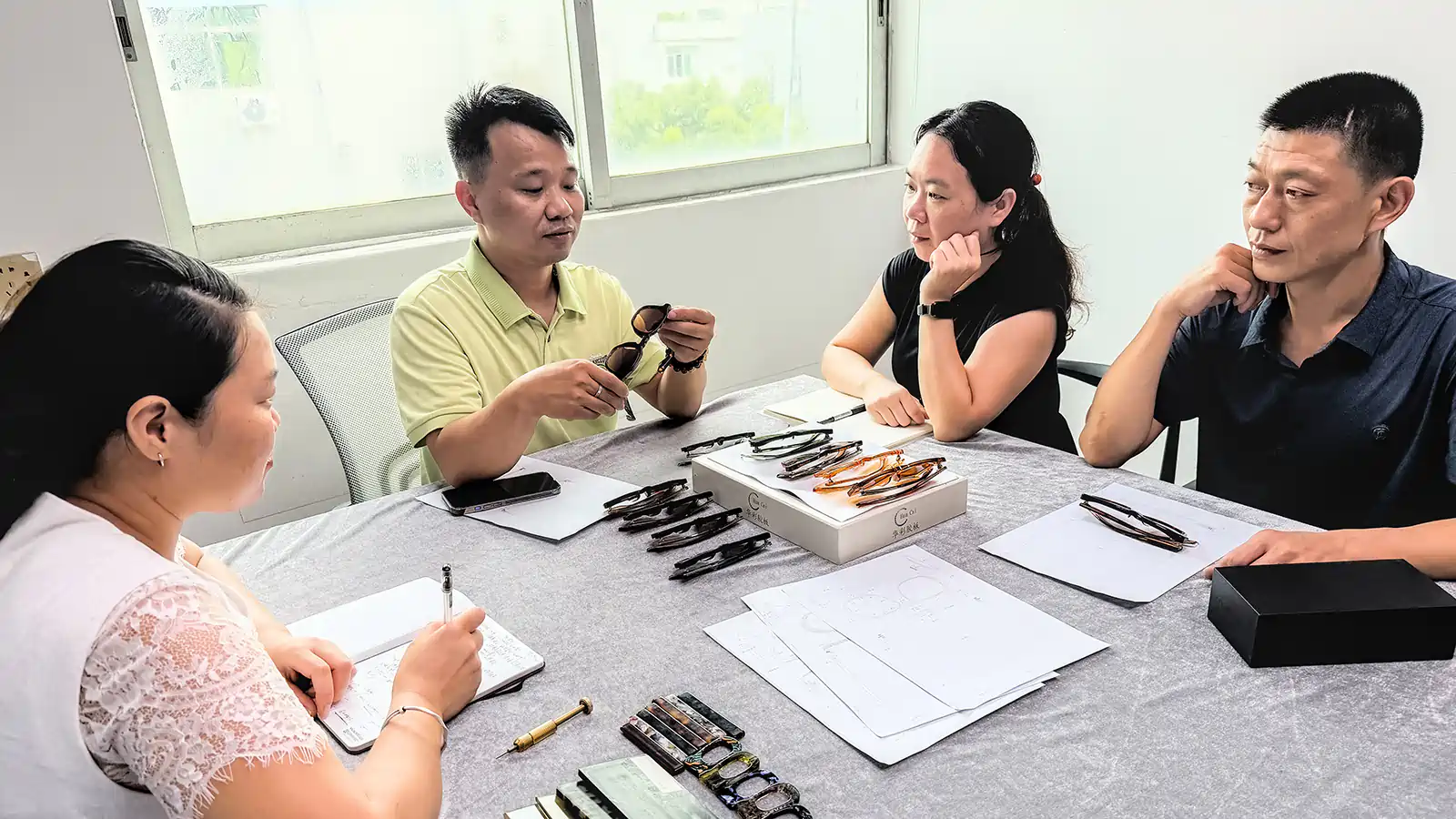
The U.S. brand had a logo and a direction for its collection, but no in-house eyewear designer. Its team gathered reference styles and colors; SEESUN’s design team developed drawings around those preferences, using sizing references from other U.S.-market projects.
It took five rounds of drawing changes to settle six styles for sampling. The customer then gathered feedback from friends and customers who tried the samples during everyday activities, beach outings and surfing. Four styles received positive feedback on their appearance, dimensions, comfort and quality, and production orders followed for those designs.
The other two were not ready. On one style, the end pieces were too long, leaving the front looking out of proportion. The customer requested a 5 mm reduction. On another, the decorative detailing did not match the intended look. Both went back for revisions and another sample round.
The buyer moved ahead with four styles after the wear trials and kept two in development. The difference was not the number of design rounds, but whether the physical samples had met the buyer’s launch expectations.
In a separate project, a European watch company was adding sunglasses to its range. It provided preliminary drawings but had limited experience with eyewear construction. One acetate frame used a metal bridge fastened by screws; the acetate around a screw hole was too thin and raised a risk of breakage.
To address the risk without changing the front appearance, the engineering team increased the acetate thickness around the screw hole by revising the top-view profile. The front-view dimensions and the metal bridge dimensions stayed unchanged. The revised sample passed the project’s structural and bending checks without breaking at that location.
The revised bridge left the front appearance unchanged, but the attachment no longer matched the original construction. Its new geometry therefore needed approval on its own drawing and sample before the buyer could release the frame for production.
A private label launch can involve separate minimums for frames and packaging. Completed SEESUN projects have included orders of 300 pairs per style, divided across up to three colors, with a separate 500-set minimum for custom packaging. These are real project references, not fixed terms for every new order. Special materials or components may require different quantities.
An existing open frame using available colors and components may need little extra sourcing. A modified style with a new metal logo, special hinge or custom acetate color can carry a separate purchase minimum or tooling cost. Fully custom development may add tooling before frame production begins. The practical budget depends on which route the collection takes, not just the number of finished pairs.
For an initial order of private label sunglasses, ask for a breakdown by style, color and packaging version, with custom components listed separately. For example, if the frame plan covers 300 pairs but branded cases have a 500-set minimum, agree how the unused cases will be handled. Do not assume they can automatically be held for later orders.
Small trial orders may be considered according to the design and materials. Before approving the first order, compare the full cost of the sellable collection, including extra branded packaging or components, and confirm what would need to be reordered for a repeat run.
A logo added to an open frame identifies your brand, but it does not grant exclusive rights to the shape. Before launching, establish whether the frame, a custom colorway or a decorative component will remain available to other buyers. Treat exclusivity as an agreed commercial term, not an automatic outcome of personalization.
For a modified open frame, confirm in writing which changes, if any, are reserved for your brand and whether the underlying style remains available to others. A fully custom project may need separate terms for drawings, tooling and reuse. SEESUN’s open-style range does not include confidential customer designs. An NDA protects unreleased information, but it does not by itself grant exclusivity.
An open frame may need only a suitable color, logo and packaging to become a workable first collection. A distinctive temple or bridge is different: it needs development time and an agreed sample before the brand can commit to production. Approve the configuration you intend to reorder, not just the look you first selected.
Send a reference frame, drawing or sketch, the details you want to change and your estimated quantities. SEESUN can review the development route and flag the decisions that need to be made before sampling.
We use cookies to support essential website functions. You can find details about the cookies used on this site in our Cookie Policy.