Sunglasses Manufacturer | OEM & ODM Eyewear Factory | Seesun
Sunglasses Manufacturer | OEM & ODM Eyewear Factory | Seesun
Buyer Guide
Reviewed by SEESUN Eyewear Manufacturing Team
•
9 min read
•
A low quote and an impressive factory video are easy to compare. How a supplier handles a loose hinge, an unstable frame or a late design change is harder to judge. Before placing an order with a sunglasses manufacturer in China, establish who reviews manufacturability, what the approved sample will be checked against and who takes responsibility when a problem arises.
That matters with acetate, metal, titanium and mixed-material frames, where a small change at a joint or in finishing can affect the assembled product. This guide shows eyewear brands what evidence to ask for and how to compare manufacturers against the same requirements, beyond price and MOQ.
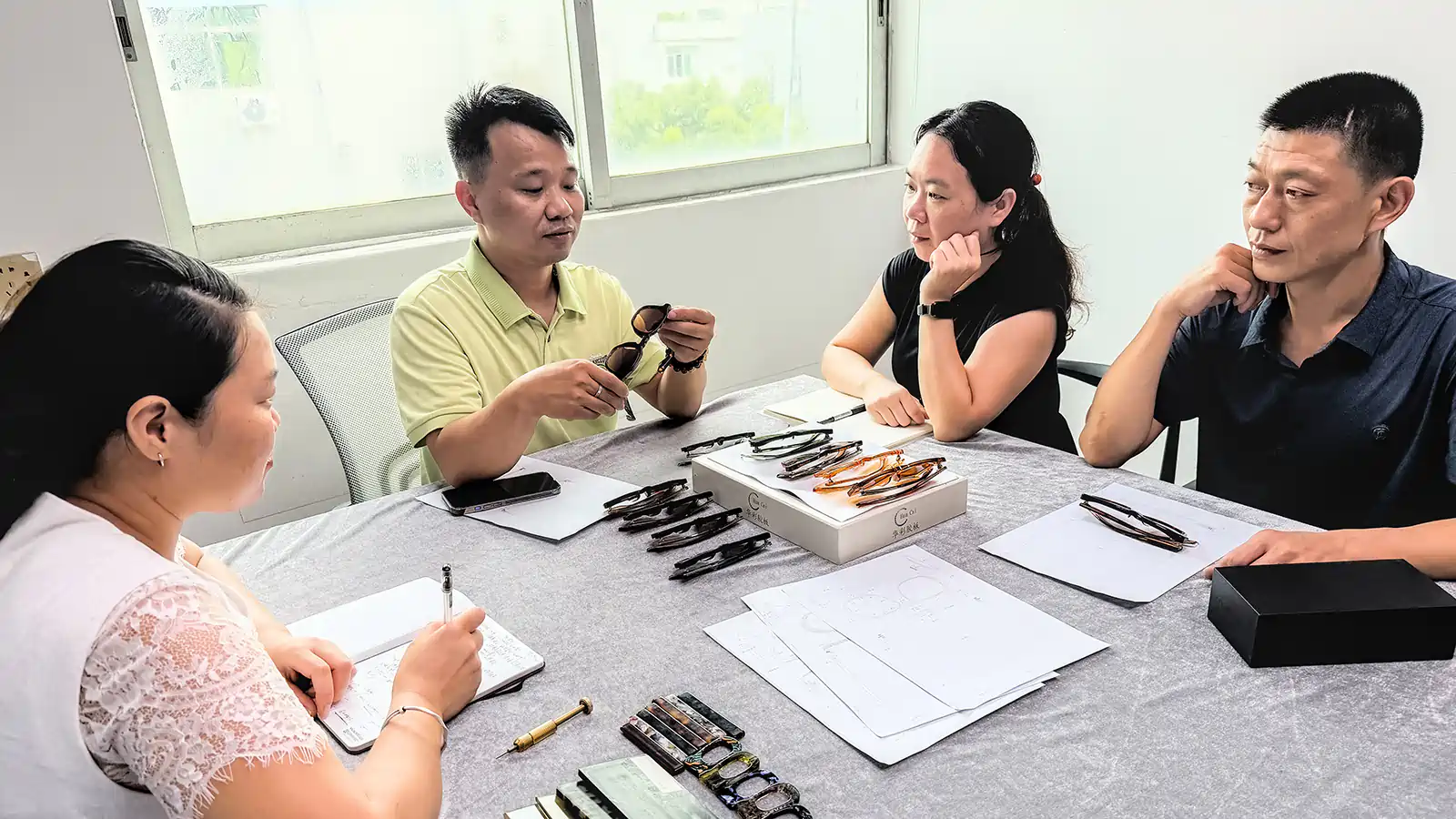
Until suppliers receive the same project brief, their quotations may cover different work. The first test is whether each factory can assess the proposed design on consistent terms.
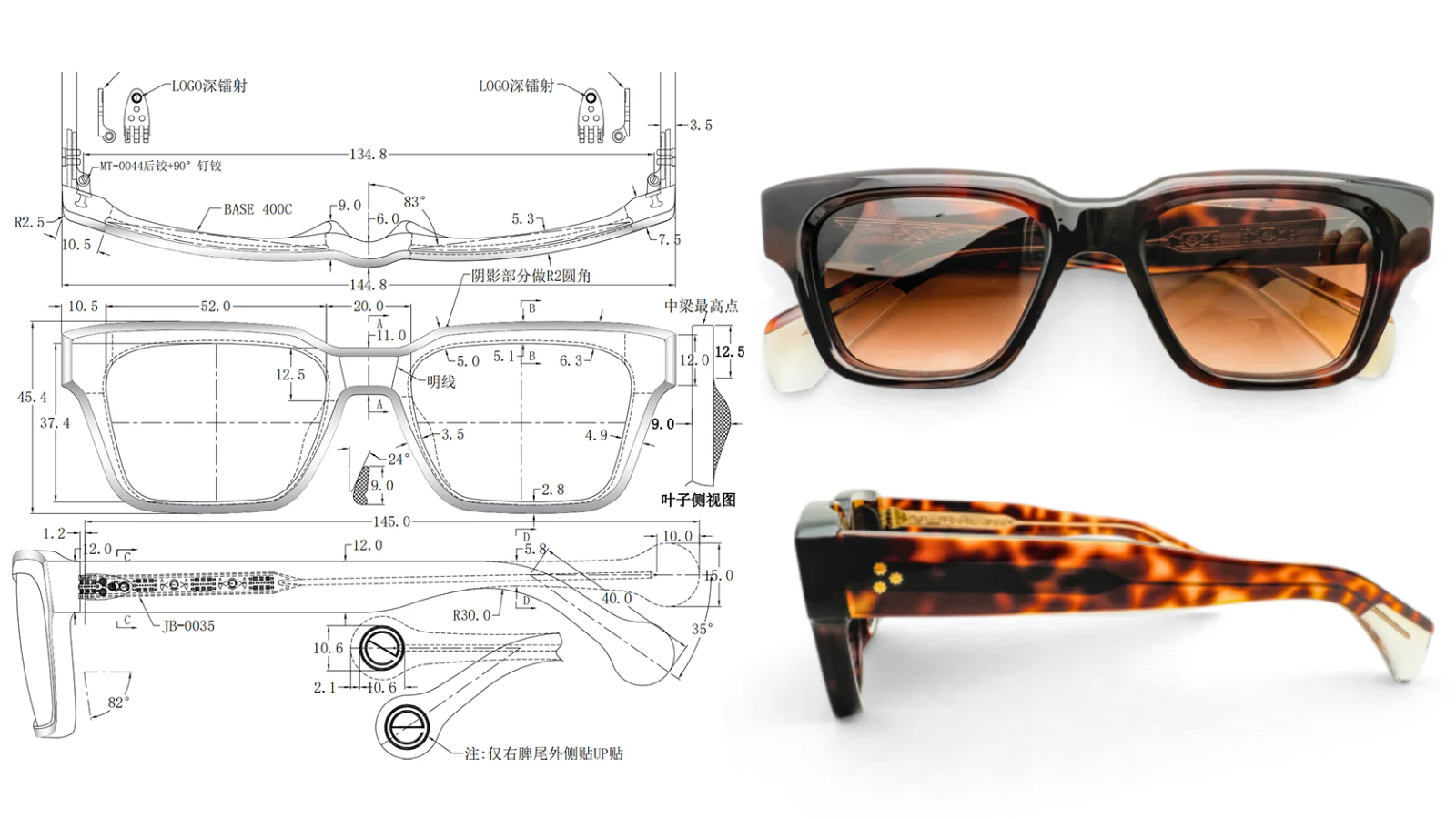
A project might start with a sketch, CAD file, physical reference or an existing frame requiring modification. If the goal is a private label sunglasses collection built around existing styles, state that clearly. Give each shortlisted supplier the confirmed specifications, expected quantities and unresolved decisions. Then ask it to identify assumptions, excluded components and items requiring separate prices.
At SEESUN, the technical director reviews incoming custom projects for engineering feasibility. That includes the structure, component connections, proposed manufacturing route and prospects for repeatable production. A one-off sample can look acceptable even when its construction still needs attention before a bulk run.
For example, one supplier may include tooling for a specified hinge while another quotes only the finished frame. Without a common scope, a price comparison tells the buyer very little.
Buyer question: Which details are included in the quotation, and which still require a technical or commercial decision?
Comparing Chinese sunglasses manufacturers by workshop size tells only part of the story. A factory visit or video is useful when it shows operations relevant to your particular frame. The next step is to understand which stages the supplier controls and how it handles work completed elsewhere.
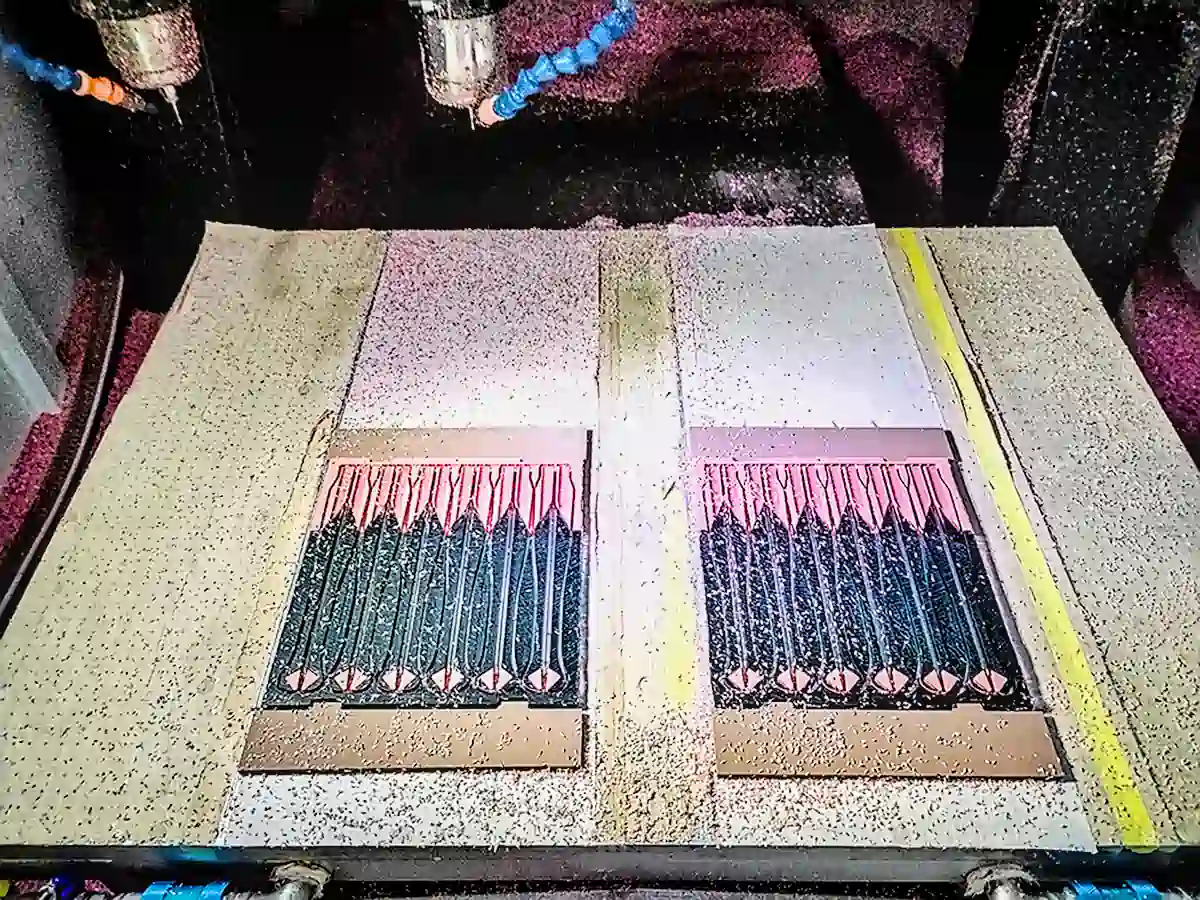
For acetate eyewear, SEESUN’s eyeglasses factory capabilities cover in-house material preparation and conditioning, CNC machining, tumbling, engraving, hinge insertion, polishing, laser marking, pad printing, assembly and packaging. Specialist lens-cutting and certain decorative finishing operations are coordinated with outside suppliers.
The split is different for metal eyewear. Small-component tooling, hydraulic pressing, welding and tumbling are carried out in-house, while some larger or more complex tooling, wire cutting, rim forming, polishing and plating involve specialist suppliers. Buyers should know where responsibilities change hands, especially when a finish or component must meet an approved specification.
A sunglasses factory in China may use specialist partners without losing control of the finished product. The buyer should be able to trace the specification sent to that partner, the incoming check and the person responsible for corrective action. Experience in routine acetate frames is also no proof of competence with titanium, carbon fiber or a difficult metal-to-acetate junction.
When a brand asks an eyewear manufacturer in China to reproduce a TR90 frame in acetate, the engineering review needs to go beyond appearance.
The two frames may look alike, but the original frame thickness, temple construction and hinge attachment may no longer be suitable. Front and temple geometry, decorative metal details and assembly points all need review before the drawing can be approved for production.
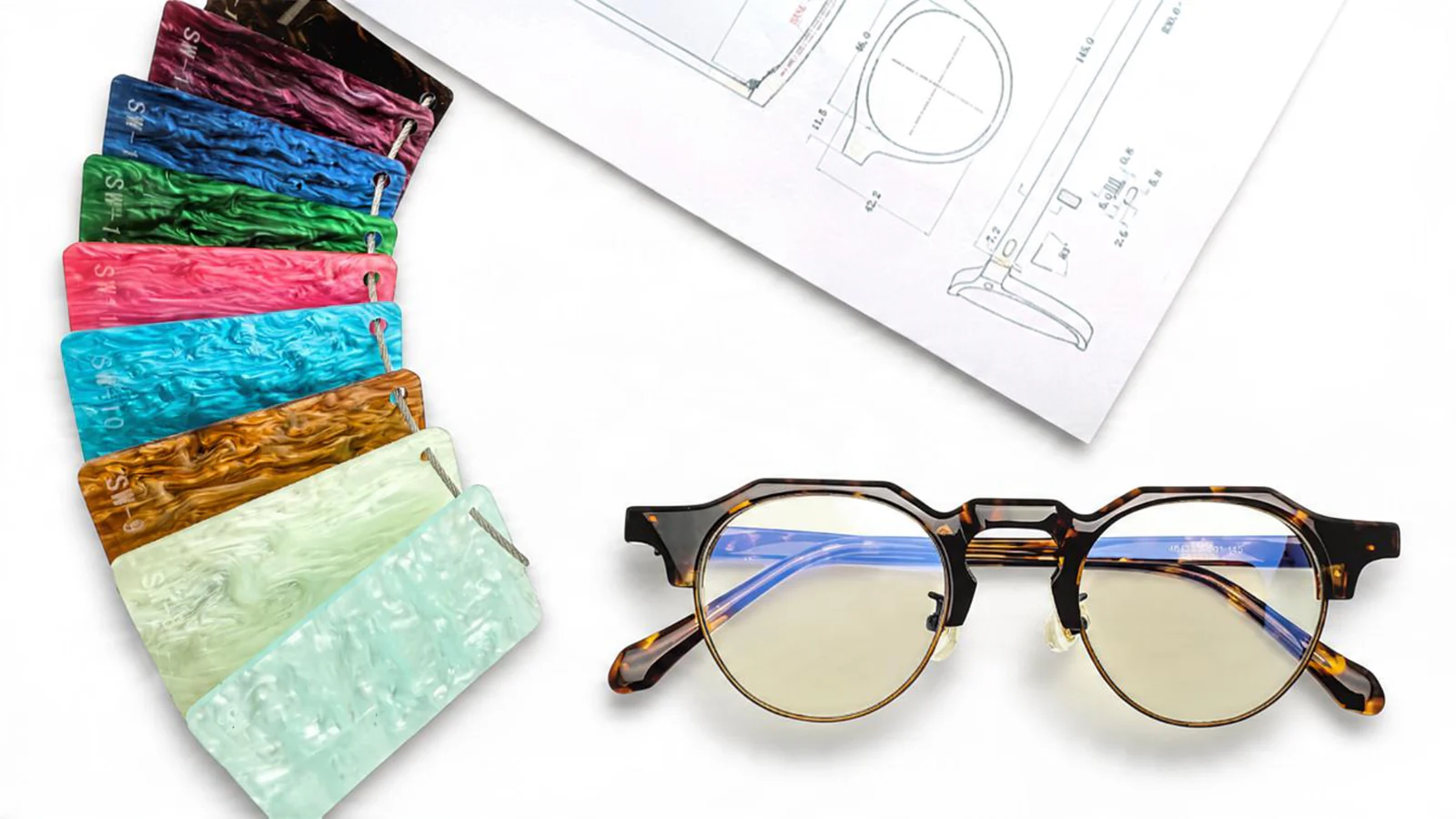
Other designs bring their own constraints. A metal-and-acetate frame depends on the strength and alignment of its material junctions. A complex acetate profile may call for new tooling or five-axis machining. With multicolor acetate, the choice between cold lamination, heat lamination and high-frequency joining must account for color boundaries, shrinkage marks and the risk of breakage during processing.
Hinge construction, wire cores, custom metal logos and plated parts may introduce further tooling or finishing decisions. Those choices also affect cost. If an initial concept exceeds the brand’s target, the engineering discussion should identify what can change while preserving the intended design as closely as possible.
During custom eyewear development, a useful supplier response explains the trade-off: what needs changing, why it matters in production and what the brand must approve before sampling.
Sampling reveals how a factory responds when a prototype is wrong. Some problems, however, surface only after a customer has worn the frame for a while. In both situations, a sunglasses manufacturer in China should investigate the cause before choosing a correction. One completed SEESUN project illustrates this distinction.
The problem: A U.S. customer’s frame used an imported OBE spring hinge with its original matching screw. After a period of use, the temples no longer opened as smoothly and the hinge began to loosen.
What the team found: The screw and assembly were possible causes, but discussions with the hinge supplier pointed instead to the construction of that particular hinge.
What changed: A dedicated lubricant was introduced inside the hinge mechanism for this project.
Observed result: Based on the warranty feedback available for this project, there were no further reports of the same opening or loosening problem.
The hinge treatment addressed a problem specific to that mechanism and project; it should not be read as general advice to lubricate spring hinges. When reviewing a supplier, ask what evidence led to the diagnosis and how the team monitored the result after the change.
A frame approved in the sample room can still move out of alignment in production or transit. With thick acetate, conditioning, adjustment and packing pressure all deserve attention.
Ask which dimensions are controlled during production, which tolerances apply at final inspection and how the frames are protected before shipment. A perfect-looking approval sample is useful only if those controls can reproduce it across the order.
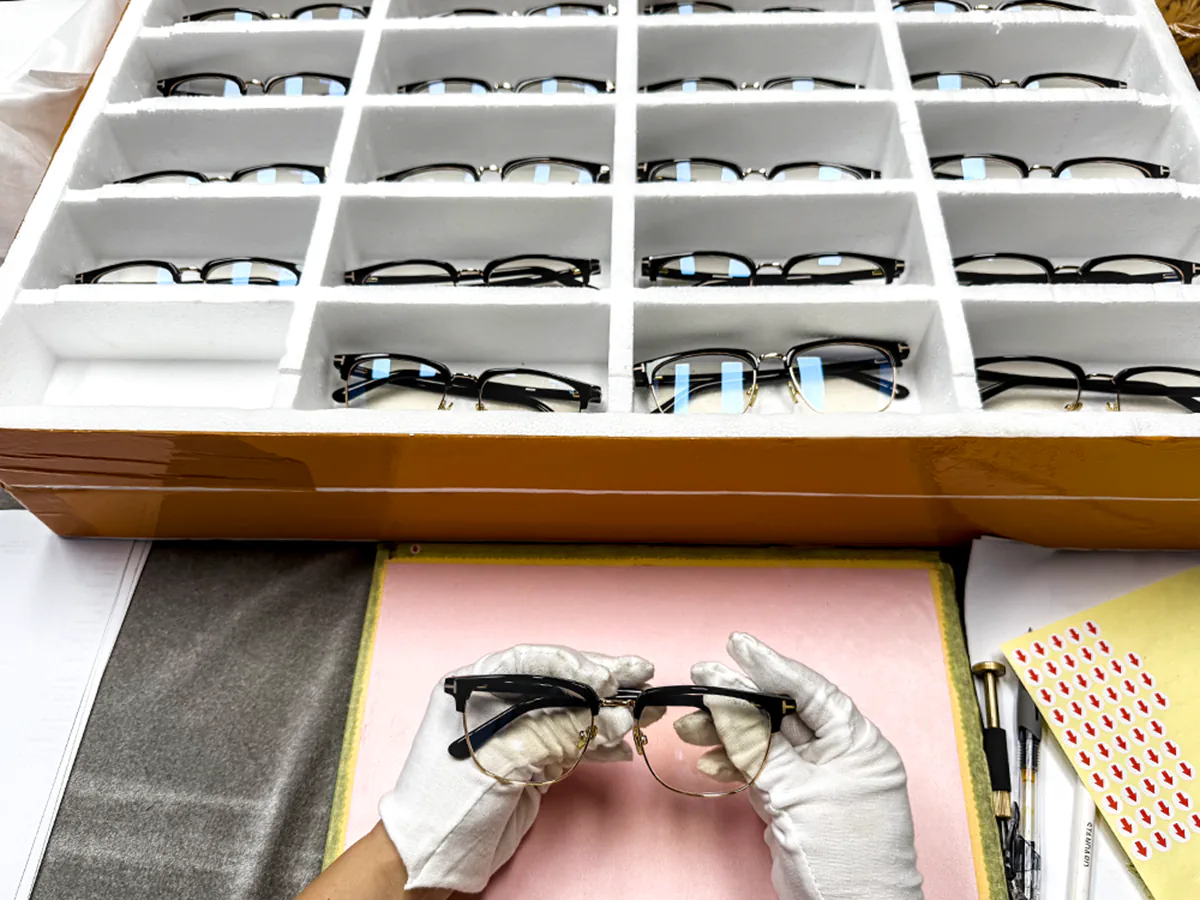
The problem: A European customer had experienced deformation in earlier shipments of thick, heavy acetate frames, with the problem more noticeable during hot summer conditions.
Our assessment: Acetate can respond to heat and mechanical stress. The practical objective was to keep the finished frames within the agreed tolerances; promising that no frame would ever move would have been unrealistic.
What changed: The team extended material conditioning at several stages, added further stabilization after CNC machining and introduced additional shaping after frame adjustment. Weight consistency was also tightened. For frames more vulnerable to pressure, individual packing was changed to keep them better separated in transit.
Observed result: Following those changes, the frames arrived without obvious deformation and were reported to be within the required tolerance range for that project.
Ask an eyewear manufacturer in China where front curvature and temple alignment are checked, what falls outside the agreed tolerances and how those problems are corrected before packing. At SEESUN, the documented control stages include incoming material IQC, lens IQC, in-process QC and finished-product QC. Final inspection is necessary, but it cannot undo every problem introduced earlier in production.
MOQ and production lead time are only meaningful when the quotation explains how they are calculated. A quote from a China sunglasses supplier should state whether the minimum applies per model, per colorway or across the entire order. Custom hardware, material colors, lenses and packaging can all change what is practical for a particular design.
SEESUN can consider small-batch trial orders, subject to project review. The regular sampling and production ranges below reflect completed SEESUN projects; priority schedules remain conditional on design requirements, available components and production capacity. None is a guaranteed lead time for a new order.
Project Timing References
Stage
Project Reference
Standard Custom Sampling
25–30 days
Priority Sampling*
7–15 days
Standard Mass Production
75–90 days
Priority Mass Production*
45–60 days
*Priority sampling is available for selected straightforward designs that require no new tooling. Priority production may be possible for standard frames when materials are in stock or can be prepared within approximately 15 days, subject to available production capacity.Lead times are confirmed after project review. New tooling, complex structures and additional material sourcing may extend the schedule.
Time estimates can change when new tooling is needed, custom components are not yet available or sample revisions continue. When a sunglasses factory in China quotes a lead time, establish which approval or material milestone starts the clock, what is included and which conditions would allow an urgent order to move faster.
The shortest quoted lead time is not necessarily the most useful one. A schedule that states its assumptions gives your team something it can actually plan around.
A small change can delay production if its approval is not properly recorded. A revised hinge position, component substitution or new color approval should be tied to the current specification, especially after the sample has been signed off.
For an overseas brand working with an eyewear manufacturer in China, each technical change should refer to a specific drawing or sample revision and approval recorded by an authorized brand contact. Agree early on who manages the project, who receives issue reports and which decisions require the brand’s sign-off. When a problem arises, a useful update explains the cause, available options, effect on cost or timing and the recommended next step.
Approval ownership is explained further in the OEM and ODM eyewear projects comparison. During supplier evaluation, check whether every design change reaches an authorized decision-maker and is recorded before production, regardless of the model chosen.
Drawings for unreleased collections and reference samples should also be handled as confidential project materials. SEESUN can sign an NDA when required for drawings, samples and other confidential project information.
For teams researching how to choose a sunglasses manufacturer in China, the checklist below provides a consistent basis for comparison. Record what each supplier can substantiate, not just what its sales presentation promises.
Engineering review: What design risks were identified before sampling, and who approves the proposed changes?
Materials and structures: Has the team worked with the construction and material combinations your frame requires?
Production route: Which operations are in-house, which are subcontracted and who checks the incoming work?
Sampling: When a problem appears, can the supplier explain its cause and document the correction?
Quality control: Where are incoming materials, in-process parts and completed frames checked?
MOQ and timing: Does the quote define quantity units, lead-time milestones and conditions for an accelerated schedule?
Communication: Who owns the project record, revision approvals and escalation of production issues?
IP protection: Are confidential drawings and commercial information covered by suitable handling arrangements or an NDA?
Ask for evidence that connects the initial engineering review to the approved sample and the eventual production run. A supplier that can explain a defect, document a correction and show where it checks the result gives buyers more to evaluate than a low unit price alone.
Apply that standard to every shortlisted factory, including SEESUN as a potential eyewear manufacturing partner.
If your project starts with a drawing, CAD file, reference sample or an existing frame that needs changes, share the available specifications and point out what is still undecided. SEESUN Glasses can review the proposed materials, structure and development route before sampling begins.
We use cookies to support essential website functions. You can find details about the cookies used on this site in our Cookie Policy.